Transform your form administration with Divorce Court Motions

Your workflows always benefit when you can easily locate all of the forms and documents you need on hand. DocHub provides a huge selection of document templates to ease your daily pains. Get hold of Divorce Court Motions category and easily discover your document.

Begin working with Divorce Court Motions in several clicks:

  1. Access Divorce Court Motions and get the form you need.
  2. Click Get Form to open it in our online editor.
  3. Begin modifying your document: add fillable fields, highlight sentences, or blackout sensitive data.
  4. The application saves your modifications automatically, and once you are ready, you can download or distribute your form with other contributors.

Enjoy smooth form managing with DocHub. Check out our Divorce Court Motions online library and find your form today!


Commonly Asked Questions about Divorce Court Motions

The decision of the court shall be rendered within sixty days after the cause or matter is finally submitted or within sixty days after a motion under rule 4403, whichever is later, unless the parties agree to extend the time.
A motion is an application to the court made by the prosecutor or defense attorney, requesting that the court make a decision on a certain issue before the trial begins. The motion can affect the trial, courtroom, defendants, evidence, or testimony. Only judges decide the outcome of motions.
There is a process for making a motion without giving notice. This type of motion is called an Order to Show Cause. This alternative motion does not have to wait eight days and can be heard at any time the court directs. In real emergencies, the court may even hear a motion in a matter of hours.
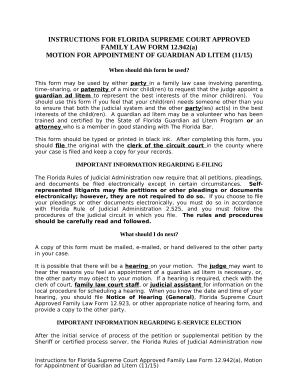
In order to get a temporary order in place during a divorce proceeding, an official request for that order must be made to the court. Formally, this request is known as a motion, and a motion for a temporary order in divorce will explain what is being requested and why this request is being made.
The main things the judge will consider are: Each of your current and future finances. The standard of living enjoyed by the family before the break-up of the marriage. The age of the spouses, the length of the marriage, and the length of time the spouses lived together. Understanding Divorce and Judicial Separation - Family Law courts.ie divorce things-to-consider courts.ie divorce things-to-consider
At the Final Hearing, the court will listen to the evidence of both parties and the submissions made on their behalf by their lawyers. At the conclusion of the hearing, the judge will deliver a judgment and make a final determination as to the financial arrangements. Divorce Court Process - Financial Resolution - Stewarts Law stewartslaw.com divorce-and-family div stewartslaw.com divorce-and-family div
A motion is an application to the court made by the prosecutor or defense attorney, requesting that the court make a decision on a certain issue before the trial begins. The motion can affect the trial, courtroom, defendants, evidence, or testimony.
A Petition is generally the formal document filed to start a new legal matter; for example, a Petition for Dissolution of Marriage or a Petition to Establish Paternity. A motion, on the other hand, is a formal request made to the court within an ongoing case. Motions are important in Illinois divorce proceedings.
A motion in a US court is when a lawyer asks the judge for something (could probably be anything, but its really just a request that the court do something). An order is given by the judge and is the judge telling someone to do something.
A motion is a legal action that an attorney takes to get an issue into the courtroom and for a judge to rule on it. When you file the petition for divorce, your attorney could request a motion for temporary child support while waiting.