Create your District Court Legal Form from scratch

Start Building Now
Title decoration

Here's how it works

01. Start with a blank District Court Legal Form
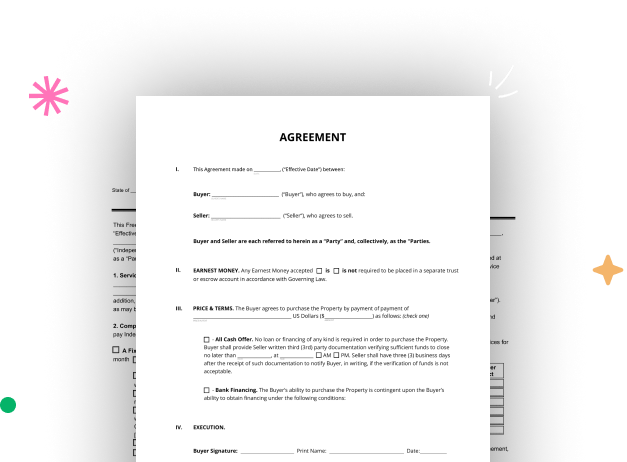
Open the blank document in the editor, set the document view, and add extra pages if applicable.
02. Add and configure fillable fields
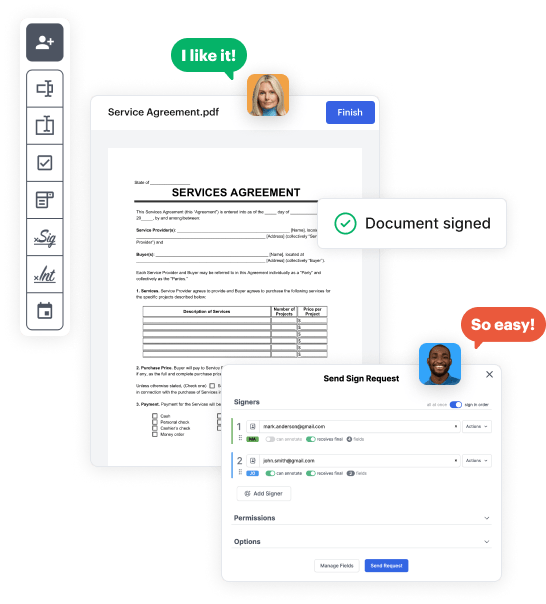
Use the top toolbar to insert fields like text and signature boxes, radio buttons, checkboxes, and more. Assign users to fields.
03. Distribute your form
Share your District Court Legal Form in seconds via email or a link. You can also download it, export it, or print it out.

Craft District Court Legal Form from scratch with these step-by-step instructions
Form edit decoration

Step 1: Start off by launching DocHub.

Start by signing up for a free DocHub account using any available sign-up method. Simply log in if you already have one.

Step 2: Register for a free 30-day trial.

Try out the complete collection of DocHub's advanced features by signing up for a free 30-day trial of the Pro plan and proceed to build your District Court Legal Form.

Step 3: Build a new empty document.

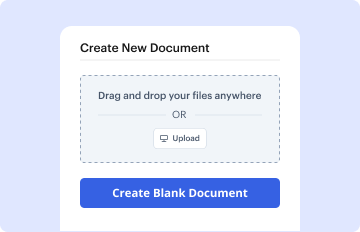
In your dashboard, hit the New Document button > scroll down and hit Create Blank Document. You’ll be taken to the editor.

Step 4: Organize the document’s layout.

Use the Page Controls icon marked by the arrow to switch between different page views and layouts for more flexibility.

Step 5: Start adding fields to create the dynamic District Court Legal Form.

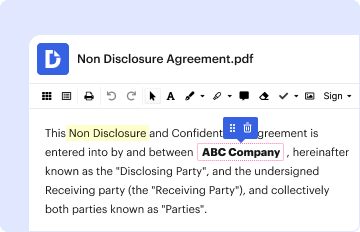
Use the top toolbar to place document fields. Insert and configure text boxes, the signature block (if applicable), insert images, etc.

Step 6: Prepare and customize the added fields.

Configure the fillable areas you added per your desired layout. Customize each field's size, font, and alignment to ensure the form is easy to use and polished.

Step 7: Finalize and share your form.

Save the finalized copy in DocHub or in platforms like Google Drive or Dropbox, or create a new District Court Legal Form. Distribute your form via email or use a public link to engage with more people.

be ready to get more

Build your District Court Legal Form in minutes

Start creating now

Got questions?

We have answers to the most popular questions from our customers. If you can't find an answer to your question, please contact us.
Contact us
The U.S. Constitution, Article III, establishes the federal court system with the U.S. Supreme Court and permits Congress to create lower federal courts, namely circuit and district courts.
The Federal Court System Today The modern-day Supreme Court is composed of the Chief Justice of the United States and eight associate justices. Congress also has created 13 courts of appeals and 94 district courts.
More specifically, federal courts hear criminal, civil, and bankruptcy cases.
Learn more about the different types of federal courts. Supreme Court. The Supreme Court is the highest court in the United States. Courts of Appeals. There are 13 appellate courts that sit below the U.S. Supreme Court, and they are called the U.S. Courts of Appeals. District Courts. Bankruptcy Courts. Article I Courts.
Jurisdiction Jurisdiction over the person (or business or organization) you want to sue, called personal jurisdiction; AND. Jurisdiction over the legal issue or dispute you are suing about, called subject-matter jurisdiction.
be ready to get more

Build your District Court Legal Form in minutes

Start creating now

Related Q&A to District Court Legal Form

Your complaint must be legibly handwritten or typewritten on 8 x 11 paper. The complaint must be signed by an Attorney admitted to the Bar of this Court, or by the pro se plaintiff. In order for the complaint to be filed, it must be accompanied by the filing fee of [Click here for current fee ].

Additional resources on building your forms