Get and handle Deeds of Property Transfer online

Improve your form administration with our Deeds of Property Transfer category with ready-made templates that suit your requirements. Get your form template, change it, fill it, and share it with your contributors without breaking a sweat. Begin working more effectively together with your documents.

The best way to use our Deeds of Property Transfer:

  1. Open our Deeds of Property Transfer and search for the form you want.
  2. Preview your document to ensure it’s what you want, and click on Get Form to start working on it.
  3. Modify, include new text, or highlight important information with DocHub features.
  4. Fill out your form and preserve the adjustments.
  5. Download or share your document template with other people.

Examine all the opportunities for your online document management using our Deeds of Property Transfer. Get your totally free DocHub profile right now!


Video Guide on Deeds of Property Transfer management

video background

Commonly Asked Questions about Deeds of Property Transfer

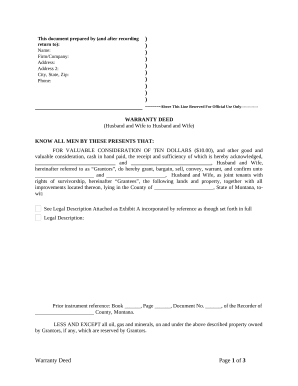
The most common way to transfer property is through a general warranty deed (sometimes called a grant deed). A general warranty deed guarantees good title from the beginning of time.
General warranty deeds: A general warranty deed provides the most protection to the buyer but gives the grantor the highest degree of liability. The grantor of a general warranty deed fully warrants good, clear title to the property. This type of deed is used in most real estate deed transfers.
The filing fee is generally $125 for residential and farm properties and $250 for all other properties. The county clerks office collects the RP-5217 filing fee. The county clerks office should be reviewing the RP-5217 forms for completeness, not for accuracy.
General warranty deeds give the grantee the most legal protection, while special warranty deeds give the grantee more limited protection. A quitclaim deed gives the grantee the least protection under the law.
A general warranty deed is often considered the most common way to transfer real property. It is used when you are aware and confident that the title to your property is good and marketable. It is most commonly used for residential real estate transactions.
Traditional sale transactions work best using general warranty deeds, and most typical real estate transactions involve a general warranty deed because it confirms the seller has the legal right to sell.
To change a deed in New York City, you will need a deed signed and docHubd by the grantor. The deed must also be filed and recorded with the Office of the City Register. Transfer documents identifying if any taxes are due must also be filed and recorded with the City Register.