

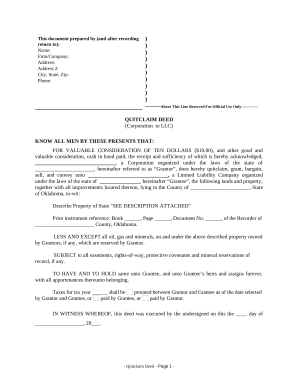
Enhance your template management with Deeds and Quitclaims Legal Forms

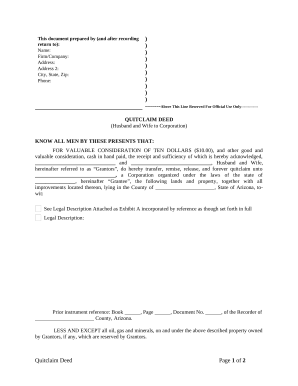
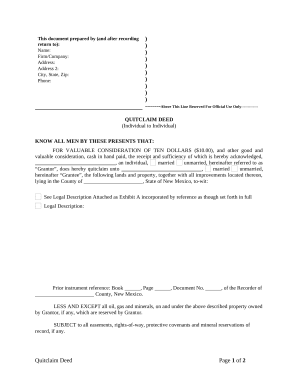
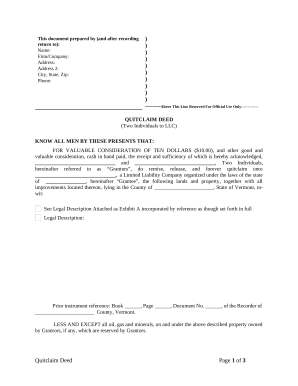
Your workflows always benefit when you can easily discover all the forms and documents you require at your fingertips. DocHub provides a vast array of forms to relieve your daily pains. Get a hold of Deeds and Quitclaims Legal Forms category and quickly find your form.

Start working with Deeds and Quitclaims Legal Forms in several clicks:

  1. Browse Deeds and Quitclaims Legal Forms and locate the form you need.
  2. Click on Get Form to open it in the editor.
  3. Start adjusting your file: add fillable fields, highlight paragraphs, or blackout sensitive information and facts.
  4. The application saves your modifications automatically, and once you are ready, you can download or distribute your file with other contributors.

Enjoy easy file management with DocHub. Check out our Deeds and Quitclaims Legal Forms collection and find your form right now!


Video Guide on Deeds and Quitclaims Legal Forms management

video background

Commonly Asked Questions about Deeds and Quitclaims Legal Forms

The fees involved in filing a quitclaim deed depend on the type of real estate being transferred. Filing a deed for a farm or residential property typically costs $125 and $250 for other types of property. There may be additional fees involved when filing your forms.
To successfully file a quit claim deed in New York, you will need to fulfill a few essential qualifications: Written consent from both parties via Form TP-584 and Form RP-5217 (oral agreements do not qualify) Official notarization of forms. Payment of associated fees. Payment of any taxes owed on the property.
The recording fee for a quitclaim deed is usually a flat $25 fee, as established under Ga. Code 15-6-77.
Michigan uses quitclaim deed Form 863, which is different in each county, so make sure to get the form at the office or website of the County Register of Deeds in the county where the property is located.
A quitclaim deed functions as a legal transfer of interest in a property from a grantor to a grantee. It entitles the grantee to the interest the grantor had prior to waiving their rights to the property, but it does not guarantee valid interest or a title that is free of issues or other interest.
