
Transform your template managing with Criminal Defense Motions

Your workflows always benefit when you are able to find all of the forms and files you need on hand. DocHub offers a vast array of documents to relieve your everyday pains. Get hold of Criminal Defense Motions category and easily discover your form.

Start working with Criminal Defense Motions in a few clicks:

  1. Browse Criminal Defense Motions and discover the form you require.
  2. Click Get Form to open it in the editor.
  3. Start editing your form: add more fillable fields, highlight paragraphs, or blackout sensitive information and facts.
  4. The app saves your adjustments automatically, and once you are all set, you are able to download or distribute your form with other contributors.

Enjoy smooth record administration with DocHub. Discover our Criminal Defense Motions collection and look for your form right now!


Video Guide on Criminal Defense Motions management

video background

Commonly Asked Questions about Criminal Defense Motions

The following are the basic steps: investigation, arrest, prosecution, indictment / information, arraignment, pretrial detention / bail, plea bargaining, trial, sentencing, appeals, punishment / rehabilitation.
Knowing what to expect at each stage can help you make better decisions for your case and give you some peace of mind during this difficult time. How does the criminal justice system work? Arrest. Initial appearance. Bail/bond hearing. Pretrial conference. Trial. Sentencing. Appeal.
Criminal Trial: 8 Main Stages Step 1: Arrest. A criminal case starts when a person is arrested for the crime. Step 2: Bail. Step 3: Arraignment. Step 4: Preliminary hearing. Step 5: Pre-trial conference. Step 6: Jury trial. Step 7: Sentencing. Step 8: Appeal.
MENU Steps in the Federal Criminal Process Investigation. Charging. Initial Hearing / Arraignment. Discovery. Plea Bargaining. Preliminary Hearing. Pre-Trial Motions. Trial.
There are several types of criminal defenses available in law, including but not limited to: innocence, alibi, self-defense, insanity, duress, entrapment, statute of limitations and constitutional rights.
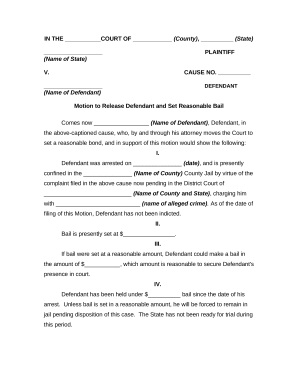
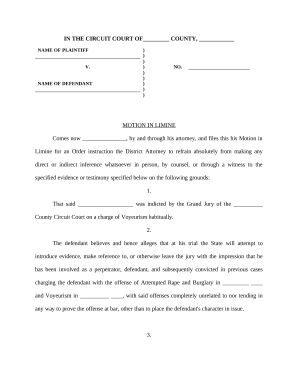
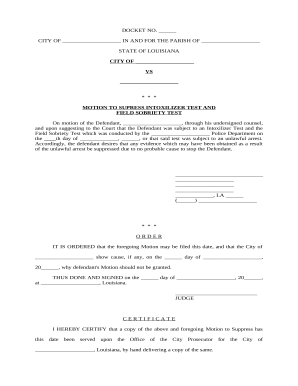
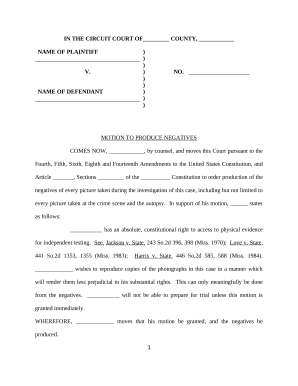
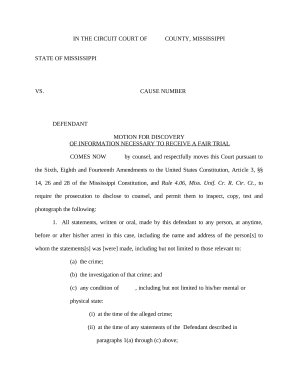
Common pre-trial motions include: Motion to Dismiss an attempt to get the judge to dismiss a charge or the case. This may be done if there is not enough evidence, if the alleged facts do not amount to a crime. Motion to Suppress an attempt to keep certain statements or evidence from being introduced as evidence.
For example, a criminal defendant may argue that a co-defendant told him that if he didnt commit a burglary, the co-defendant would kill him. Finally, under a necessity defense, the criminal defendant may argue that he or she committed the crime in order to prevent a more docHub harm.
Q-Chat Trial Initiation. Trial begins. Jury Selection. Members of the jury are chosen. Opening Statements. The prosecutor or defense attorney describing the facts they are going to present during the trial to prove the case. Presentation of Evidence. Closing Arguments. Judges Charge to the Jury. Jury Deliberations. Verdict.
