Create your Connecticut Rental Agreement from scratch

Start Building Now
Title decoration

Here's how it works

01. Start with a blank Connecticut Rental Agreement
Open the blank document in the editor, set the document view, and add extra pages if applicable.
02. Add and configure fillable fields
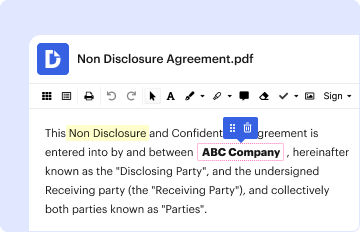
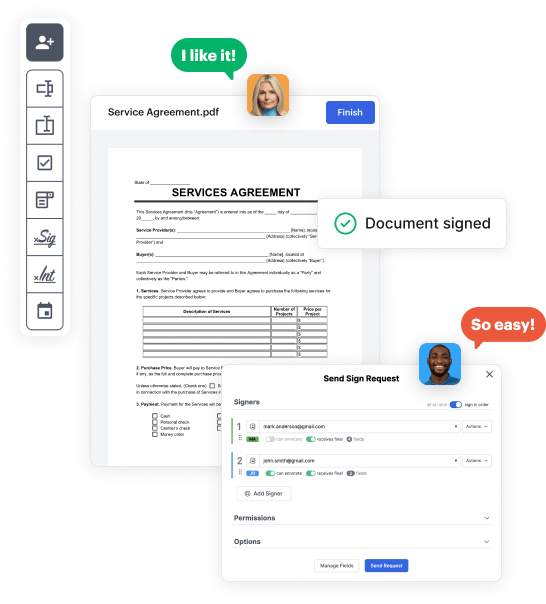
Use the top toolbar to insert fields like text and signature boxes, radio buttons, checkboxes, and more. Assign users to fields.
03. Distribute your form
Share your Connecticut Rental Agreement in seconds via email or a link. You can also download it, export it, or print it out.

A simple tutorial on how to set up a polished Connecticut Rental Agreement

Form edit decoration

Step 1: Sign in to DocHub to create your Connecticut Rental Agreement.

First, log in to your DocHub account. If you don't have one, you can simply sign up for free.

Step 2: Head to the dashboard.

Once you’re in, access your dashboard. This is your central hub for all document-related tasks.

Step 3: Initiate new document creation.

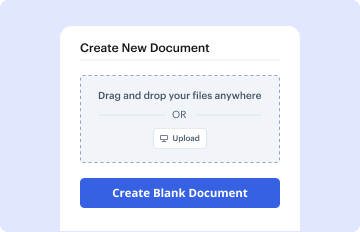
In your dashboard, click on New Document in the upper left corner. Opt for Create Blank Document to design the Connecticut Rental Agreement from the ground up.

Step 4: Incorporate template fillable areas.

Place numerous elements like text boxes, photos, signature fields, and other options to your template and designate these fields to certain users as needed.

Step 5: Adjust your template.

Customize your document by including instructions or any other vital information leveraging the text feature.

Step 6: Double-check and adjust the form.

Meticulously review your created Connecticut Rental Agreement for any errors or necessary adjustments. Make use of DocHub's editing features to fine-tune your template.

Step 7: Distribute or download the template.

After finalizing, save your file. You can select to keep it within DocHub, export it to various storage solutions, or forward it via a link or email.


be ready to get more

Build your Connecticut Rental Agreement in minutes

Start creating now

Got questions?

We have answers to the most popular questions from our customers. If you can't find an answer to your question, please contact us.
Contact us
A month-to-month rental agreement in Connecticut is a tenant and landlord contract. Under this agreement, the tenant pays the landlord a monthly fee or rent in exchange for the propertys right to occupy. The rental agreement automatically renews each month until either party gives proper notice to terminate it.
Since the tenants agreement is tied to the property, they have the right to stay there after the property is sold. If no arrangements are made for the lease to terminate legally, the new landlord must honor the lease until it expires. If the new landlord wants the tenant out, they can form a cash for keys agreement.
Steps to Add a Tenant to an Existing Lease Acquire a Written Request to Add a Tenant. Check the Units Occupancy Limit. Require a Completed Rental Application. Screen and Approve/Deny the New Tenant. Review the Details With Each Tenant.
Changing the tenancy agreement A tenancy agreement can normally only be changed if both you and your landlord agree. If you both agree, the change should be recorded in writing, either by drawing up a new written document setting out the terms of the tenancy or by amending the existing written tenancy agreement.
This form is a residential tenancy agreement (standard lease). Landlords of most private residential rental units must use this form (standard lease) when they enter into a tenancy with a tenant.
be ready to get more

Build your Connecticut Rental Agreement in minutes

Start creating now

Related Q&A to Connecticut Rental Agreement

Frequently Asked Questions. Does a Lease need to be docHubd in Connecticut? No, Connecticut Lease Agreements do not need to be docHubd. The Lease is legally binding and fully enforceable as long as its signed by both parties.
A Connecticut standard lease agreement is a fixed contract that allows a landlord to rent property to a tenant in exchange for rent payments. This type of contract has a start and end date.

Additional resources on building your forms