


Create your Connecticut Housing Law from scratch

Start Building Now
Title decoration

Here's how it works

01. Start with a blank Connecticut Housing Law
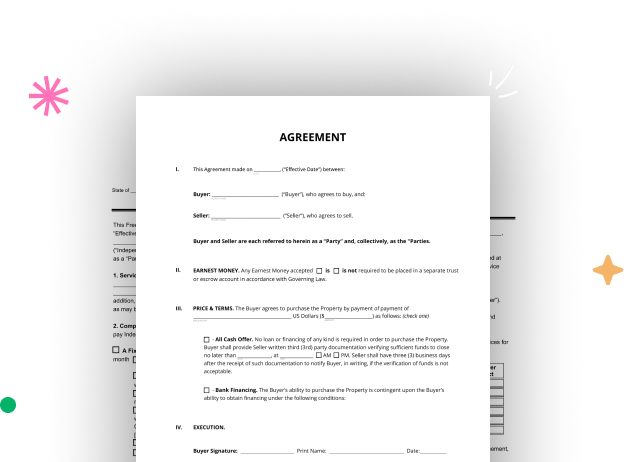
Open the blank document in the editor, set the document view, and add extra pages if applicable.
02. Add and configure fillable fields
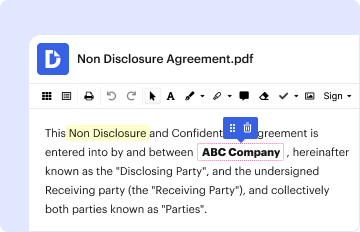
Use the top toolbar to insert fields like text and signature boxes, radio buttons, checkboxes, and more. Assign users to fields.
03. Distribute your form
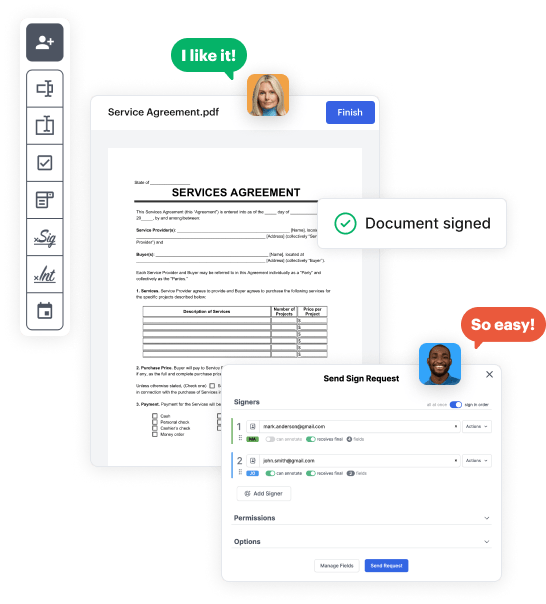
Share your Connecticut Housing Law in seconds via email or a link. You can also download it, export it, or print it out.

A detailed walkthrough of how to design your Connecticut Housing Law online

Form edit decoration

Step 1: Start with DocHub's free trial.

Navigate to the DocHub website and register for the free trial. This provides access to every feature you’ll require to build your Connecticut Housing Law with no upfront cost.

Step 2: Access your dashboard.

Sign in to your DocHub account and navigate to the dashboard.

Step 3: Craft a new document.

Hit New Document in your dashboard, and choose Create Blank Document to create your Connecticut Housing Law from the ground up.

Step 4: Use editing tools.

Insert various elements such as text boxes, radio buttons, icons, signatures, etc. Organize these elements to match the layout of your document and designate them to recipients if needed.

Step 5: Organize the form layout.

Organize your document in seconds by adding, moving, removing, or merging pages with just a few clicks.

Step 6: Craft the Connecticut Housing Law template.

Convert your freshly designed form into a template if you need to send multiple copies of the same document numerous times.

Step 7: Save, export, or share the form.

Send the form via email, share a public link, or even publish it online if you want to collect responses from more recipients.


be ready to get more

Build your Connecticut Housing Law in minutes

Start creating now

Got questions?

We have answers to the most popular questions from our customers. If you can't find an answer to your question, please contact us.
Contact us
Landlords cant require more than two months rent as a security deposit. This limit is reduced to one months rent if a tenant is 62 years of age or older.
Beginning October 1, 2023, Landlords are prohibited from charging prospective tenants an application fee. Landlords, however, may still require a security deposit, advance payment of the first months rent or a deposit for a key or any special equipment, or a fee for a tenant screening report.
Landlord-Tenant / Security Deposits: Effective July 1, 2024, a landlord is capped at collecting one months rent as a security deposit for new tenancies in addition to the first months rent.
While there are no specific requirements to become a landlord in Connecticut, it is recommended to familiarize yourself with the states landlord laws, understand the responsibilities involved, and ensure compliance with fair housing requirements and other regulations.
Fair housing in Connecticut also means you may freely choose a place to live without regard to your age, ancestry, marital status, sexual orientation or lawful source of income (which means that income from social security, SSI, housing assistance, child support, alimony, public or general assistance should not
be ready to get more

Build your Connecticut Housing Law in minutes

Start creating now

Related Q&A to Connecticut Housing Law

When Do Landlords Have To Return Security Deposits? Landlords must return security deposits with interest or give tenants written notice of damages being claimed within thirty days of when tenants move.
Required Interest on Security Deposits Landlords in Connecticut are now required to pay interest on security deposits as per the Required Interest on Security Deposits law. This is an important update to the states security deposit law in 2024. The interest is calculated annually at a rate of 1.5%.

Additional resources on building your forms


