Raise your productivity with Commercial Leasing Forms

Form management takes up to half of your office hours. With DocHub, it is possible to reclaim your office time and enhance your team's productivity. Access Commercial Leasing Forms online library and investigate all document templates relevant to your day-to-day workflows.

Effortlessly use Commercial Leasing Forms:

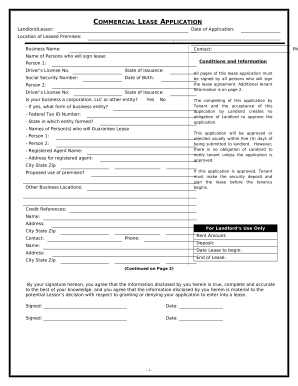
  1. Open Commercial Leasing Forms and utilize Preview to obtain the suitable form.
  2. Click on Get Form to start working on it.
  3. Wait for your form to open in the online editor and start editing it.
  4. Add new fillable fields, icons, and pictures, modify pages order, etc.
  5. Complete your form or set it for other contributors.
  6. Download or share the form by link, email attachment, or invite.

Improve your day-to-day file management with our Commercial Leasing Forms. Get your free DocHub profile today to explore all templates.


Video Guide on Commercial Leasing Forms management

video background

Commonly Asked Questions about Commercial Leasing Forms

Gross leases are most common for commercial properties such as offices and retail space. The tenant pays a single, flat amount that includes rent, taxes, utilities, and insurance.
In commercial real estate, a Letter of Intent is a preliminary agreement that is negotiated between a tenant and landlord or buyer and seller. The LOI or Letter of Intent states the primary economics and deal points with proposed terms.
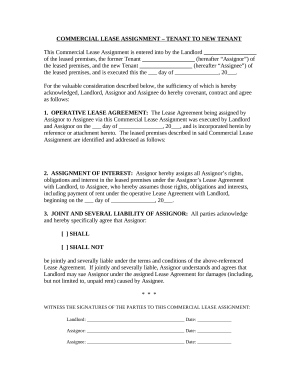
Assignments of Business Leases It is open to a landlord to request a guarantor or a rent deposit if the incoming tenant is of poor covenant strength. Once the landlords consent has been obtained, the tenant and assignee can enter into a deed of assignment to transfer the lease to the assignee.
A commercial lease termination letter typically includes the following information: Date of planned property vacancy. Date of key surrender. Request for inspection. New business address. Contact information for a business representative. Reasoning behind the early termination.
Dear (Landlord name), My name is (Your name), and Im writing to you to express my interest in the home at (address or property name). I would love to live in this place because (reasons you want to rent the property). I currently am a tenant at (current address) but am ready to move because (reason for moving).
A letter of intent sits at the intersection of intention and commitment in many real estate transactions. This document may set forth the broad strokes or even some details of a proposed transaction, and by signing it, both parties express their intention to move forward.
Commercial leases are typically three to five years. That guarantees enough rental income for the landlords to recoup their investment. Leases are often negotiable, but for a commercial lease, landlords frequently allow customization of the space for the sake of the renting business.
The letter of intent should include the following six things: A Statement Declaring Your Interest in Leasing the Space. A Description of Your Company. An Outline of On-Site Employees, Equipment, and Machinery. Your Business Hours. An Overview of Your Current Space. Contact Details.