Supercharge your work productivity with Colorado Real Estate Deeds

Papers managing takes up to half of your business hours. With DocHub, you can easily reclaim your time and improve your team's productivity. Access Colorado Real Estate Deeds online library and investigate all document templates relevant to your everyday workflows.

Effortlessly use Colorado Real Estate Deeds:

  1. Open Colorado Real Estate Deeds and use Preview to find the suitable form.
  2. Click on Get Form to begin working on it.
  3. Wait for your form to upload in the online editor and begin modifying it.
  4. Add new fillable fields, symbols, and pictures, change pages order, and many more.
  5. Fill your document or set it for other contributors.
  6. Download or deliver the form by link, email attachment, or invite.

Speed up your everyday file managing with the Colorado Real Estate Deeds. Get your free DocHub profile right now to explore all forms.


Video Guide on Colorado Real Estate Deeds management

video background

Commonly Asked Questions about Colorado Real Estate Deeds

No such unrecorded instrument or document shall be valid against any person with any kind of rights in or to such real property who first records and those holding rights under such person, except between the parties thereto and against those having notice thereof prior to acquisition of such rights.
have appropriate fees to pay for the recording of the document. name the parties involved (Grantor/Grantee) Transferring deeds are required to have the mailing address for the Grantee (buyer of the property) and a complete legal description.
For any type of real estate title transfer, youll need to fill out the appropriate forms and have all parties sign in front of a notary. The new owner is responsible for filling out a Real Property Transfer Declaration form and recording the deed at both the recorders and county clerks offices.
In California: An unrecorded instrument is valid as between the parties thereto and those who have notice thereof.
Not recording a deed can cause problems for the grantee. They may be unable to obtain a mortgage, insure the property, or sell it. Even more problematic, an unrecorded deed may make it possible for the grantor to sell the property to a buyer and subsequently sell the same property to a different buyer.
You might also contact the Clerk Recorders office for the county where the property is located to review the recorded documents for the parcel.
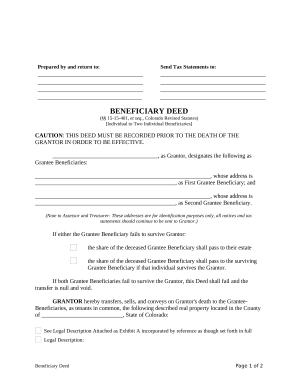
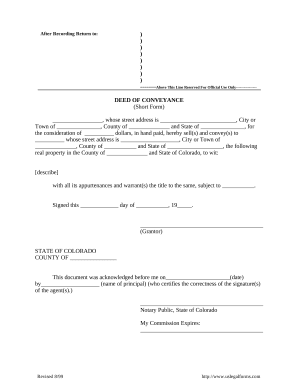
A Warranty Deed is the most common document used in Colorado to prove ownership of a property. This deed guarantees that the property title is free from any liens or encumbrances, except those specifically stated in the deed itself.
(38-35-106 C.R.S.) 12. Recording A deed is valid even if not recorded. The wording of the Colorado recording statute is permissive (may be) rather than mandatory (must be).