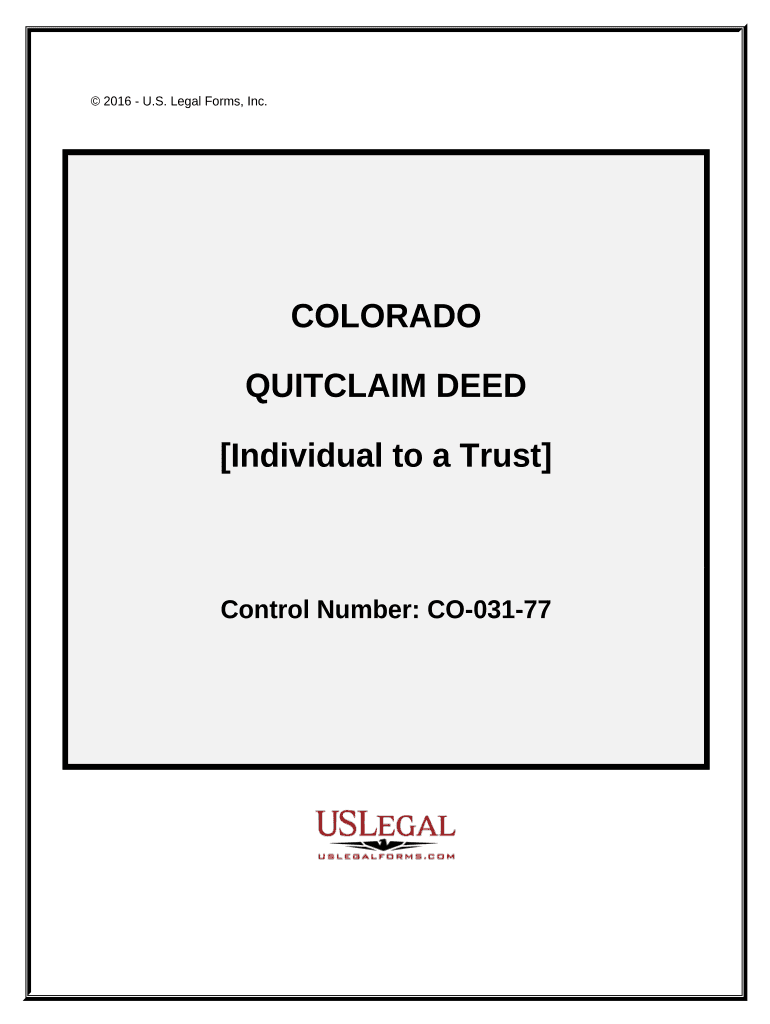
Quit claim Deed from an Individual to a Trust - Colorado 2025

Get Form
quit claim deed loopholes Preview on Page 1

Here's how it works

01. Edit your quit claim deed loopholes online
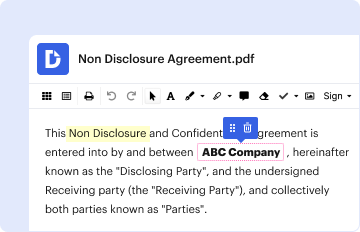
Type text, add images, blackout confidential details, add comments, highlights and more.
02. Sign it in a few clicks
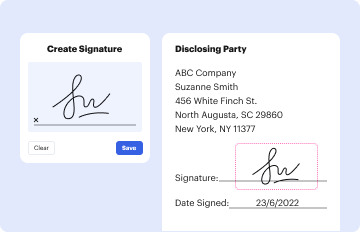
Draw your signature, type it, upload its image, or use your mobile device as a signature pad.
03. Share your form with others
Send quitclaim deed from trust to individual via email, link, or fax. You can also download it, export it or print it out.

How to use or fill out Quit claim Deed from an Individual to a Trust - Colorado

Form edit decoration
9.5
Ease of Setup
DocHub User Ratings on G2
9.0
Ease of Use
DocHub User Ratings on G2
  1. Click ‘Get Form’ to open it in the editor.
  2. Begin by entering the date of the deed at the top of the form. This is crucial for legal documentation.
  3. Fill in the Grantor's name and legal address. Ensure accuracy as this identifies who is transferring property rights.
  4. Next, input the Grantee's name and address, specifying that they are acting as Trustee under a trust agreement.
  5. Indicate the consideration amount (the value exchanged) in dollars, which is necessary for validating the transaction.
  6. Provide a detailed legal description of the property being transferred, including its location and any identifying features.
  7. Have the Grantor sign and print their name at the bottom of the form. This signature must be notarized for authenticity.
  8. Finally, ensure that a Notary Public completes their section, including their signature and seal, confirming that all parties signed in their presence.

Start using our platform today to easily complete your Quit claim Deed from an Individual to a Trust - Colorado for free!

be ready to get more

Complete this form in 5 minutes or less

Get form

Got questions?

We have answers to the most popular questions from our customers. If you can't find an answer to your question, please contact us.
Contact us
Trusts Offer Better Protection: Using a trust instead of a quitclaim deed can help avoid probate, protect your property from creditors and minimize tax liabilities. Consult an Estate Planning Attorney: Professional guidance ensures that your property is transferred securely, avoiding the many pitfalls of DIY deeds.
Potential for Fraud or Duress: If a grantor is coerced or tricked into signing, the deed can later be voided. Difficulty Proving Ownership: Without warranties or title insurance, the grantee may struggle to prove valid ownership in future disputes.
A quit claim deed is a type of deed that transfers an interest in real property, like a house, vacant land to another. Quit claim deeds are often used instead of warranty deeds when transferring property out of the trust.
Trusts may be revocable or irrevocable. A revocable trust (sometimes known as a living trust) allows trustees to easily transfer assets and property into and out of the trust, but an irrevocable trust is less flexible. In general, assets placed into an irrevocable trust must remain there until a court dissolves it.
To transfer your house into a Living Trust, you want to prepare a deed to transfer ownership of the house from you into the trust. In Colorado, you can use a Quitclaim Deed, Warranty Deed, General Warranty Deed, or a Special Warranty Deed to transfer ownership into the trust.
be ready to get more

Complete this form in 5 minutes or less

Get form

People also ask

Most clients use revocable trusts, so assuming it is a revocable trust, the trustor (person who set up the trust) has the right to remove the house from the trust. The trustee (probably the same person) can execute a deed conveying the property from the trust to the trustor.

Related links