Manage Alabama Construction Forms effortlessly online

Document management can overwhelm you when you can’t find all of the forms you require. Fortunately, with DocHub's substantial form collection, you can get all you need and quickly deal with it without changing between apps. Get our Alabama Construction Forms and start utilizing them.

Using our Alabama Construction Forms using these basic steps:

  1. Examine Alabama Construction Forms and select the form you require.
  2. Review the template and click on Get Form.
  3. Wait for it to open in our online editor.
  4. Edit your template: include new information and pictures, and fillable fields or blackout certain parts if necessary.
  5. Complete your template, preserve alterations, and prepare it for delivering.
  6. When all set, download your form or share it with other contributors.

Try out DocHub and browse our Alabama Construction Forms category with ease. Get your free profile right now!


Video Guide on Alabama Construction Forms management

video background

Commonly Asked Questions about Alabama Construction Forms

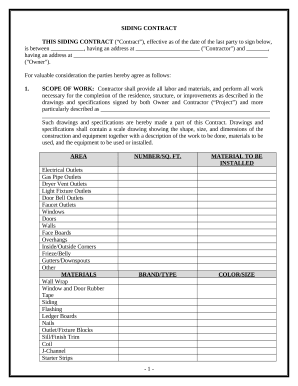
Here are four main construction contracts to choose from, plus their pros and cons: Lump-Sum Contracts. Cost-Plus-Fee Contracts. Guaranteed Maximum Price Contracts. Unit-Price Contracts.
Some of the most commonly used construction forms include: Bid Forms. Bid forms are integral to the bidding process in construction. Change Order Forms. Daily Construction Reports. Subcontractor Agreement Forms. Inspection Request Forms. Material Delivery Forms. Safety Inspection Forms. Progress Payment Forms.
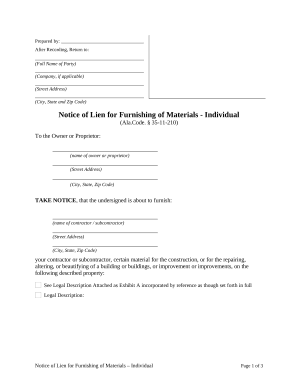
EACH SUBCONTRACTOR PERFORMING COMMERCIAL/INDUSTRIAL WORK OF $50,000 OR MORE MUST BE LICENSED BY THE ALABAMA LICENSING BOARD FOR GENERAL CONTRACTORS. of the Alabama Licensing Board for General Contractors. This information can be obtained by contacting our office or from the agencys website: .genconbd.alabama.gov.
Basic types of construction The four main types of construction are: residential construction, commercial construction, industrial construction, and infrastructure construction.
5 types of building construction Fire-resistive (Type I) High-rise residential and industrial structures are some of the buildings that compose the Type I construction variety. Non-combustible (Type II) Ordinary (Type III) Heavy timber (Type IV) Wood-framed (Type V)
Lump sum contracts This is the most basic and common type of construction contract. Lump sum contracts work especially well for projects with a well-defined scope of work, which enables contractors to make an accurate estimate of the projects cost.
Formwork is the structure, usually temporary, used to contain poured concrete and to mould it to the required dimensions and support until it is able to support itself. It consists primarily of the face contact material and the bearers that directly support the face contact material.
Form refers to the shape or configuration of a building. Form and its opposite, space, constitute primary elements of architecture. The reciprocal relationship is essential, given the intention of architecture to provide internal sheltered space for human occupation.