

Create your Solvency ii Balance Sheet Template from scratch

Start Building Now
Title decoration

Here's how it works

01. Start with a blank Solvency ii Balance Sheet Template
Open the blank document in the editor, set the document view, and add extra pages if applicable.
02. Add and configure fillable fields
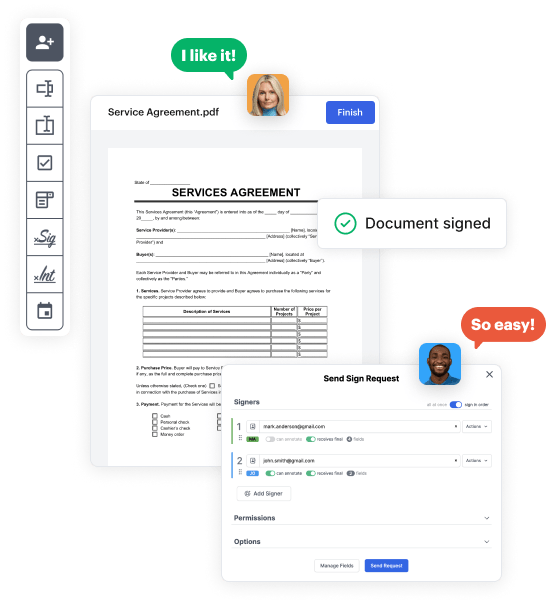
Use the top toolbar to insert fields like text and signature boxes, radio buttons, checkboxes, and more. Assign users to fields.
03. Distribute your form
Share your Solvency ii Balance Sheet Template in seconds via email or a link. You can also download it, export it, or print it out.

A detailed walkthrough of how to build your Solvency ii Balance Sheet Template online

Form edit decoration

Step 1: Start with DocHub's free trial.

Navigate to the DocHub website and sign up for the free trial. This gives you access to every feature you’ll require to create your Solvency ii Balance Sheet Template with no upfront cost.

Step 2: Navigate to your dashboard.

Sign in to your DocHub account and navigate to the dashboard.

Step 3: Initiate a new document.

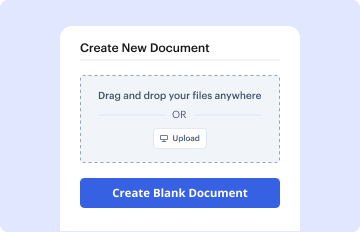
Click New Document in your dashboard, and select Create Blank Document to design your Solvency ii Balance Sheet Template from the ground up.

Step 4: Utilize editing tools.

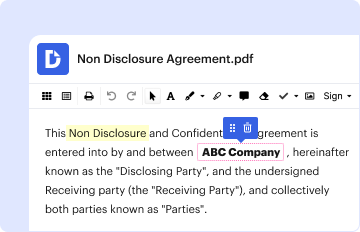
Insert various fields such as text boxes, radio buttons, icons, signatures, etc. Organize these elements to suit the layout of your form and designate them to recipients if needed.

Step 5: Organize the form layout.

Rearrange your form effortlessly by adding, repositioning, deleting, or combining pages with just a few clicks.

Step 6: Craft the Solvency ii Balance Sheet Template template.

Transform your freshly designed form into a template if you need to send many copies of the same document multiple times.

Step 7: Save, export, or share the form.

Send the form via email, share a public link, or even publish it online if you aim to collect responses from more recipients.


be ready to get more

Build your Solvency ii Balance Sheet Template in minutes

Start creating now

Got questions?

We have answers to the most popular questions from our customers. If you can't find an answer to your question, please contact us.
Contact us
IFRS 17 vs Solveny II balance sheets The risk adjustment under IFRS 17 does not allow for operational risk nor reinsurance counterpart risk. These risk categories are included in the risk margin defined under Solvency II.
Solvency II is the prudential regime for insurance and reinsurance undertakings in the EU. It has entered into force in January 2016. Solvency II sets out requirements applicable to insurance and reinsurance companies in the EU with the aim to ensure the adequate protection of policyholders and beneficiaries.
The balance-sheet test assesses the solvency of a company by assessing its total external liabilities against the total value of its assets. Where a companys liabilities are greater than the total sum of its assets, the company is insolvent.
The Solvency II balance sheet is used to determine the net surplus / (deficit) at syndicate level on a Solvency II basis by reporting year of account.
For Solvency II, it is a fixed rate of 6% per annum. The product of the cost of capital rate and the capital requirement at each future projection point is then discounted, using risk-free discount rates, to give the overall risk margin.
be ready to get more

Build your Solvency ii Balance Sheet Template in minutes

Start creating now

Related Q&A to Solvency ii Balance Sheet Template

Solvency II sets out requirements applicable to insurance and reinsurance companies in the EU with the aim to ensure the adequate protection of policyholders and beneficiaries.
Solvency portrays the ability of a business (or individual) to pay off its financial obligations. For this reason, the quickest assessment of a companys solvency is its assets minus liabilities, which equal its shareholders equity.

Additional resources on building your forms