

Create your Mechanic shop Balance Sheet Template from scratch

Start Building Now
Title decoration

Here's how it works

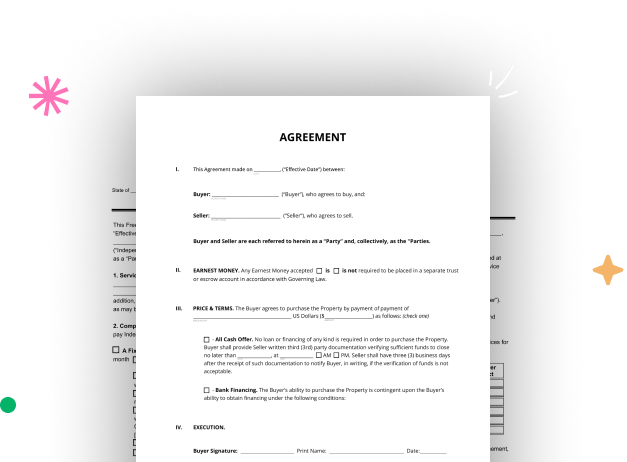
01. Start with a blank Mechanic shop Balance Sheet Template
Open the blank document in the editor, set the document view, and add extra pages if applicable.
02. Add and configure fillable fields
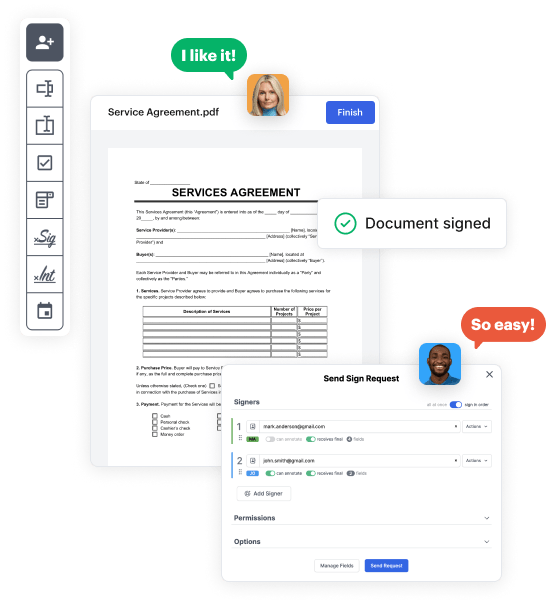
Use the top toolbar to insert fields like text and signature boxes, radio buttons, checkboxes, and more. Assign users to fields.
03. Distribute your form
Share your Mechanic shop Balance Sheet Template in seconds via email or a link. You can also download it, export it, or print it out.

A brief guide on how to build a polished Mechanic shop Balance Sheet Template

Form edit decoration

Step 1: Sign in to DocHub to create your Mechanic shop Balance Sheet Template.

First, sign in to your DocHub account. If you don't have one, you can simply register for free.

Step 2: Navigate to the dashboard.

Once logged in, go to your dashboard. This is your primary hub for all document-focused operations.

Step 3: Initiate new document creation.

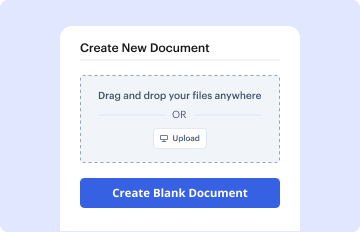
In your dashboard, click on New Document in the upper left corner. Opt for Create Blank Document to create the Mechanic shop Balance Sheet Template from scratch.

Step 4: Add form elements.

Place various elements like text boxes, images, signature fields, and other interactive areas to your form and designate these fields to specific users as needed.

Step 5: Personalize your template.

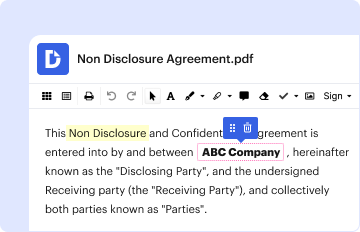
Customize your document by including guidelines or any other required details using the text tool.

Step 6: Double-check and refine the content of the form.

Carefully review your created Mechanic shop Balance Sheet Template for any discrepancies or necessary adjustments. Take advantage of DocHub's editing capabilities to fine-tune your template.

Step 7: Send out or download the template.

After completing, save your work. You may choose to keep it within DocHub, export it to various storage services, or forward it via a link or email.


be ready to get more

Build your Mechanic shop Balance Sheet Template in minutes

Start creating now

Got questions?

We have answers to the most popular questions from our customers. If you can't find an answer to your question, please contact us.
Contact us
The balance sheet displays the companys total assets and how the assets are financed, either through either debt or equity. It can also be referred to as a statement of net worth or a statement of financial position. The balance sheet is based on the fundamental equation: Assets = Liabilities + Equity.
A balance sheet is comprised of two columns. The column on the left lists the assets of the company. The column on the right lists the liabilities and the owners equity. The total of liabilities and the owners equity equals the assets.
9 Mechanic Shop Organization Ideas Workspace Optimization. Smart Inventory Management. Tool Hardware Organization. Streamline Vehicle Data Management. Efficient Waste Management Strategies. Fluid Organization Labeling. Optimize Vehicle Scheduling. Implement Digital Documentation.
Steps to Preparing a Personal Balance Sheet: Make a list of all assets and the value of each asset. Create categories and categorize your assets. Total all assets by adding all the individual values together.
How to make a balance sheet Invest in accounting software. Create a heading. Use the basic accounting equation to separate each section. Include all of your assets. Create a section for liabilities. Create a section for owners equity. Add total liabilities to total owners equity.
be ready to get more

Build your Mechanic shop Balance Sheet Template in minutes

Start creating now

Related Q&A to Mechanic shop Balance Sheet Template

8 Essential Steps to Prepare Your Business Balance Sheet List Your Assets. Categorize Your Assets as Current or Non-current. List Your Liabilities. Categorize Your Liabilities as Current or Non-current. Calculate the Owners Equity. Prepare a Balance Sheet by Following the Formula: Assets = Liabilities + Owners Equity.
There are generally five parts to a basic balance sheet: individual assets, total assets, liabilities, owners equity, total of liabilities and owners liability. As long as you have all five of these in your balance sheet, you can order them in the way that makes the most sense to you.
Follow these steps: Step 1: Pick the balance sheet date. Step 2: List all of your assets. Step 3: Add up all of your assets. Step 4: Determine current liabilities. Step 5: Calculate long-term liabilities. Step 6: Add up liabilities. Step 7: Calculate owners equity. Step 8: Add up liabilities and owners equity.

Additional resources on building your forms