
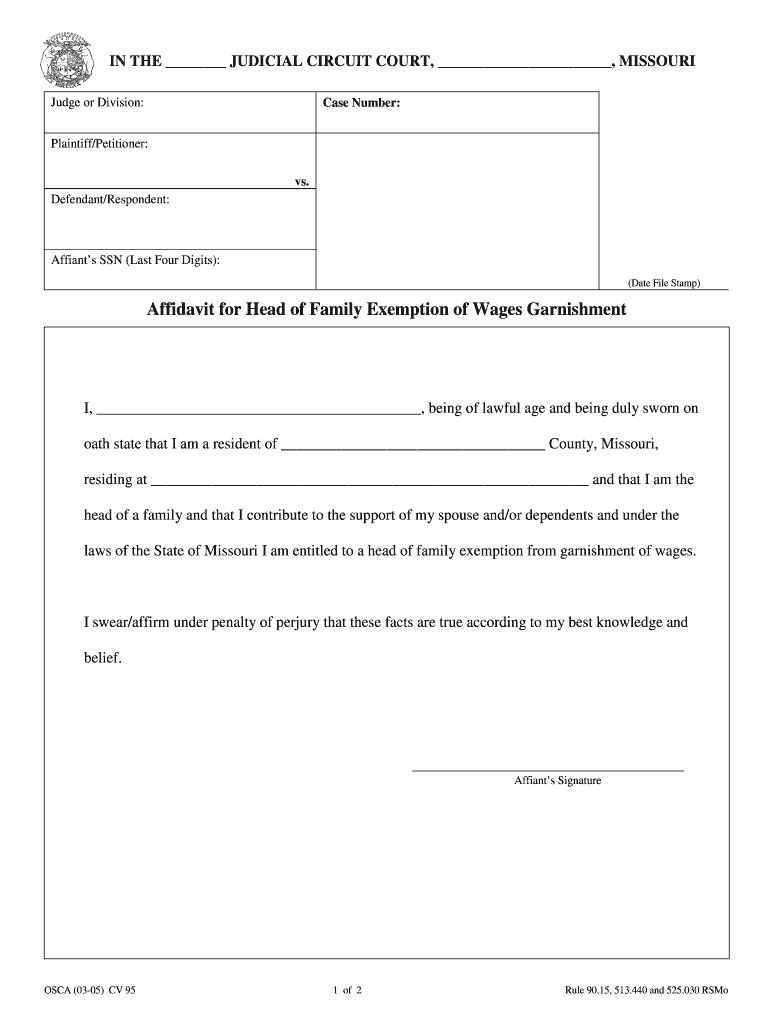







Definition and Meaning of the Missouri Garnishment Form
The Missouri garnishment form is a legal document used by creditors to collect debts through the legal process of garnishment. In this context, garnishment refers to the court-ordered process by which a third party, such as an employer, is required to withhold a portion of a debtor's earnings to pay a creditor. The garnishment form outlines the specifics of the debt and serves as a formal request to the employer to deduct a certain amount from the debtor's wages.
Understanding the garnishment process in Missouri is crucial for both debtors and creditors. The form must comply with state laws regarding garnish limits and proper notification procedures. For example, Missouri law limits the amount that can be garnished from wages based on disposable earnings, and certain exemptions may apply based on unique circumstances such as head of household status.
How to Obtain the Missouri Garnishment Form
Obtaining the Missouri garnishment form can be done through several channels. The preferred method is to access official state resources or legal aid organizations that provide the most current form versions.
- Online Sources: The Missouri state government websites often offer downloadable and printable versions of required forms, including garnishment forms. Creditors may also find resources through local court websites that explain the process.
- Legal Offices: Attorneys who specialize in debt collection and bankruptcy often have copies of the required forms and can provide guidance on their use.
- Courts: Local county courthouses usually have forms available upon request. It may be beneficial to check if forms are available in multiple languages if needed.
Potential users of the garnishment form should ensure that they have the most recent version available, as laws and forms can change.
Steps to Complete the Missouri Garnishment Form
Completing the Missouri garnishment form requires attention to detail to ensure compliance with both legal and procedural requirements. Below are the steps to successfully fill out the document:
- Identify the Creditor and Debtor: Clearly fill in the names, addresses, and contact details of both parties involved in the garnishment.
- Provide Case Information: Include the relevant case number and court jurisdiction to identify the legal framework associated with the garnishment.
- Specify the Debt: Detail the nature of the debt, including the amount owed and the original creditor. This helps establish the legitimacy of the garnishment claim.
- Calculate the Garnishment Amount: Based on Missouri law, calculate the exact amount that can be garnished from the debtor’s wages. Be mindful of exempt earnings and any applicable exemptions.
- Sign and Date: The form must be signed and dated by the creditor or their representative to validate the request for garnishment.
Following these steps ensures that the garnishment form is completed accurately and can facilitate a smoother process once submitted to the appropriate parties.
Important Terms Related to Missouri Garnishment
Understanding the terminology associated with Missouri garnishment can help both creditors and debtors navigate the process more effectively:
- Disposable Earnings: The amount of income left after mandatory deductions, such as taxes and social security, are taken out.
- Head of Household Exemption: A legal provision that may limit garnishment amounts for individuals who provide primary financial support for dependents or a spouse.
- Judgment Creditor: A creditor who has obtained a court judgment against a debtor and is thus entitled to seek garnishment.
- Garnish: The legal act of withholding money from a debtor’s wages.
Knowledge of these terms is essential for understanding one's rights and responsibilities in the garnishment process.
Legal Use of the Missouri Garnishment Form
The legal use of the Missouri garnishment form is bound by specific state laws and procedures designed to protect both creditors and debtors.
- Filing with the Court: The completed garnishment form must be filed with the court that issued the judgment in favor of the creditor. This gives the court record of the request and ensures oversight.
- Notifying the Debtor: Before wages can be garnished, it's required to notify the debtor of the pending garnishment. Failure to do so can result in legal complications.
- Adherence to Limits: Creditors must adhere to limits on the amounts that can be garnished as per Missouri law, which protects debtors from undue hardship.
- Review by the Court: In certain circumstances, the court may review the garnishment request to ensure compliance with legal standards and fairness.
Understanding these legal stipulations ensures both parties can navigate the garnishment process correctly and avoid potential missteps.




