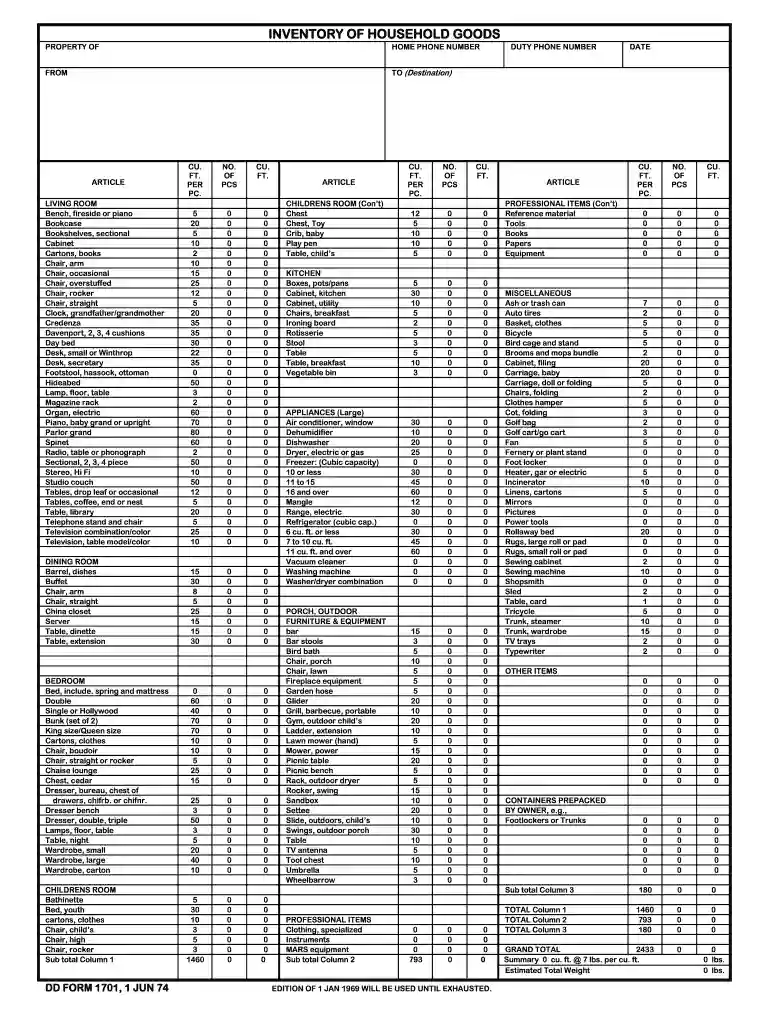
Army inventory sheet 2026

Get Form
army inventory form Preview on Page 1

Here's how it works

01. Edit your army inventory form online
Type text, add images, blackout confidential details, add comments, highlights and more.

02. Sign it in a few clicks
Draw your signature, type it, upload its image, or use your mobile device as a signature pad.

03. Share your form with others
Send army inventory sheet via email, link, or fax. You can also download it, export it or print it out.

Understanding the Army Inventory Sheet

The army inventory sheet is a form used by military personnel to catalog and manage equipment and supplies. This inventory list is crucial for maintaining accountability and proper inventory management within the army. It ensures that all items are accounted for, helps track the movement of assets, and assists in mission readiness. Generally, the form includes detailed descriptions of items, quantities, and their locations. Key elements comprise both sensitive and non-sensitive items, which must be accurately recorded to ensure compliance with military regulations.

How to Use the Army Inventory Sheet Effectively

Using the army inventory sheet involves several key steps that facilitate effective inventory management. The first consideration is understanding the type of inventory being documented. Sensitive items, such as weapons and electronics, require additional attention due to their importance and security implications.

  • Preparation of the Sheet: Begin by preparing the form with relevant sections that categorize items based on their type and purpose.
  • Inputting Data: For each item listed, include crucial details including:
    • Item description
    • Serial number
    • Quantity
    • Storage location
  • Verification Process: After entering the data, a physical verification should be conducted to ensure accuracy. This involves comparing the actual items to what is recorded on the sheet.

Steps to Complete the Army Inventory Sheet

Completing the army inventory sheet can be systematic. Here’s a detailed breakdown of the process:

  1. Gather Necessary Items:

    • Collect all equipment and supplies to be inventoried.
    • Ensure you have a clear understanding of the inventory categories.
  2. Categorization:

    • Organize items into segments, such as personal issue items, organizational property, and sensitive items.
    • Designate columns for specific information that will be recorded.
  3. Recording Information:

    • For each item, accurately record the necessary details on the sheet.
    • Double-check to keep track of quantities and specific identifiers (like serial numbers).
  4. Review and Finalize:

    • Ensure every item has been accounted for and all fields on the sheet are filled appropriately.
    • Submit the completed inventory sheet to the appropriate authority for approval or review.

Legal Use of the Army Inventory Sheet

Legal compliance in the use of the army inventory sheet is essential. The sheet must adhere to military regulations regarding asset management and accountability. Each army unit is responsible for:

  • Documenting Processes: Following prescribed processes for inventory management to ensure legal compliance.
  • Retaining Records: Keeping the inventory sheet in accordance with retention policies to ensure that legal audits can be accommodated.
  • Reporting Discrepancies: Any missing or damaged items must be reported immediately to avoid legal repercussions.

Key Elements of the Army Inventory Sheet

The army inventory sheet is composed of several critical components that ensure comprehensive documentation. Key elements include:

  • Item Identification: Essential information such as item name, model, and serial number.
  • Quantity: The exact count of each item.
  • Condition: An assessment of the item’s status, whether it is operational, under maintenance, or damaged.
  • Storage Location: Details about where each item can be found, crucial for quick retrieval.
  • User Information: Identifying the personnel responsible for each item for accountability.

Examples of Using the Army Inventory Sheet

Practical examples illustrate the importance of using the army inventory sheet.

  • Deployment Scenario: Prior to a deployment, an army unit can use the inventory sheet to ensure all gear is accounted for, including everything from personal items to units' assets such as field equipment.
  • In-Unit Transfers: When equipment is transferred within units, the inventory sheet serves to document the transfer, helping to track the item’s chain of custody and maintain accountability.
  • Audit Preparations: During audits, the inventory sheet acts as a vital reference document, providing detailed accounts of all specified items, thus facilitating smooth execution of the audit process.

Important Terms Related to the Army Inventory Sheet

Understanding the terminology associated with the army inventory sheet enhances clarity and communication. Key terms include:

  • Sensitive Items: Assets that require special attention due to their value or critical nature, such as weaponry and communication equipment.
  • OCIE (Organizational Clothing and Individual Equipment): Items issued to soldiers that are essential for their duties.
  • Accountability: The obligation to keep accurate records and to track military property effectively.

State-Specific Rules for the Army Inventory Sheet

While the army inventory sheet is primarily governed by federal military regulations, there may be state-specific provisions that apply, especially concerning dual jurisdiction in the National Guard. Understanding these nuances is key to ensuring compliance. This can vary in aspects like:

  • State Laws: Some states may have additional rules concerning documentation and inventory management for state missions.
  • Federal Guidelines: Adhering to both federal and state guidelines ensures comprehensive coverage of obligations during operations.

By comprehensively accounting for these various aspects, military personnel can effectively utilize the army inventory sheet to maintain operational efficiency and preparedness.

be ready to get more

Complete this form in 5 minutes or less

Get form

Security and compliance

At DocHub, your data security is our priority. We follow HIPAA, SOC2, GDPR, and other standards, so you can work on your documents with confidence.

Learn more
ccpa2
pci-dss
gdpr-compliance
hipaa
soc-compliance
be ready to get more

Complete this form in 5 minutes or less

Get form