




01. Edit your irs 8868 online
Type text, add images, blackout confidential details, add comments, highlights and more.

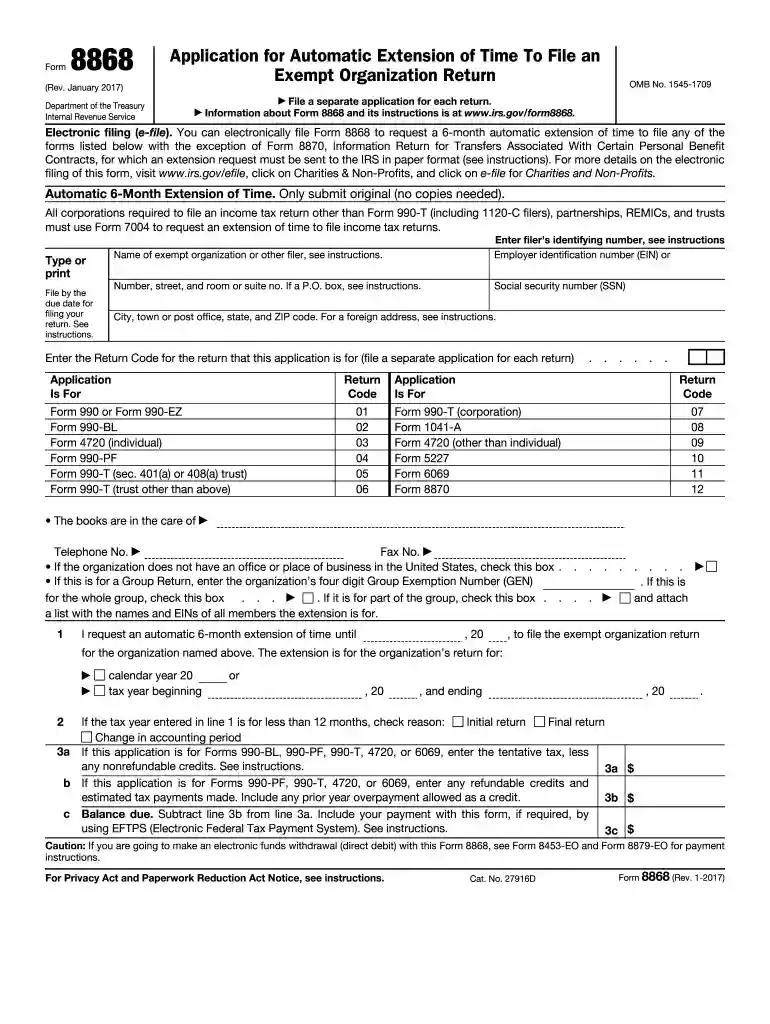
Type text, add images, blackout confidential details, add comments, highlights and more.

Draw your signature, type it, upload its image, or use your mobile device as a signature pad.

Send linking 8868 via email, link, or fax. You can also download it, export it or print it out.
Form 8868 is used by exempt organizations to request an automatic six-month extension for filing their tax returns. This extension applies specifically to the 2 tax years, allowing organizations more time to prepare accurate submissions. However, it is crucial to note that this extension does not defer tax payments due — organizations must still make timely payments to avoid incurring interest or penalties. During these years, the form remained critical for nonprofit entities needing additional time to gather necessary documentation and financial details before submitting their returns.
Form 8868 is accessible online, typically downloadable from the IRS website, facilitating easy access for organizations nationwide. For those who prefer hard copies, the form could traditionally be requested by mail from IRS offices. During the 2 period, tax software programs often included Form 8868 in their packages, streamlining the process for organizations that use digital solutions for tax preparation. Additionally, some nonprofit networks and associations might offer guidance and access to the form for their members.
Organization Information:
Return Code and Tax Year:
Extension Request Section:
Payment Submission (if applicable):
Review and Submit:
The deadline for filing Form 8868 coincides with the original due date of the tax return for which the extension is requested. Typically, this is the 15th day of the fifth month after the close of the organization's tax year. For the calendar year 2, organizations needed to ensure their submissions were timely to secure the extensions effectively. Late submissions of Form 8868 might result in denied extensions, leading to penalties for late filings of the return itself.
Nonprofit organizations, such as charitable, religious, and educational institutions exempt from income taxes, typically use Form 8868. They may require additional time to prepare financial statements and gather documents necessary to complete various IRS forms, such as the Form 990 series. This extension form is also utilized by organizations facing unforeseen delays in compiling their financial data, ensuring compliance without the risk of late filing penalties.
The IRS provides specific instructions regarding the eligibility and filing processes for Form 8868. Key guidelines include ensuring the application form is accurately completed, with applicable sections signed correctly. Only one automatic extension is allowed per return, and the form does not permit organizations to file for additional time beyond the six-month period. Understanding IRS instructions can aid organizations in avoiding common pitfalls associated with the extension process.
If an organization fails to timely file Form 8868 or submit their extended return within the approved timeframe, penalties may apply. Late filing penalties are usually based on the amount of tax due and can accumulate daily until the final return is received by the IRS. Additionally, interest is charged on unpaid taxes from the original due date until the full payment is received, underscoring the importance of adhering to both the form's deadlines and payment obligations.
Form 8868 offers flexibility in submission methods. Online filing through the IRS e-File system provides a fast, efficient option with confirmation of receipt. Traditional mail submission requires sending the completed form to the IRS processing center corresponding to the organization’s jurisdiction. During 2, e-Filing became increasingly favored due to its speed and reliability, although some organizations still elected mail-based submission depending on their preference or access to digital tools.
We've got more versions of the irs 8868 form. Select the right irs 8868 version from the list and start editing it straight away!
| Versions | Form popularity | Fillable & printable |
|---|---|---|
| 2025 | 4.1 Satisfied (54 Votes) | |
| 2024 | 4.5 Satisfied (32 Votes) | |
| 2022 | 4.8 Satisfied (146 Votes) | |
| 2020 | 4.4 Satisfied (79 Votes) | |
| 2019 | 4.4 Satisfied (67 Votes) | |
| 2017 | 4.2 Satisfied (35 Votes) | |
| 2014 | 4.4 Satisfied (442 Votes) | |
| 2013 | 4.4 Satisfied (138 Votes) | |
| 2012 | 4.4 Satisfied (45 Votes) | |
| 2011 | 4 Satisfied (56 Votes) |
At DocHub, your data security is our priority. We follow HIPAA, SOC2, GDPR, and other standards, so you can work on your documents with confidence.
If Form 8868, Part III for Form 5330 is completed, use Program Code 15560. If Form 8868, Part II is completed, use Program Code 15540. 3.10.73.3.6 (01-01-2022)Read more
It is my great pleasure to welcome our guests, our alumni, our industry representa- tives, our faculty and our students to Boston Universitys 36th AnnualRead more


