







Definition and Meaning
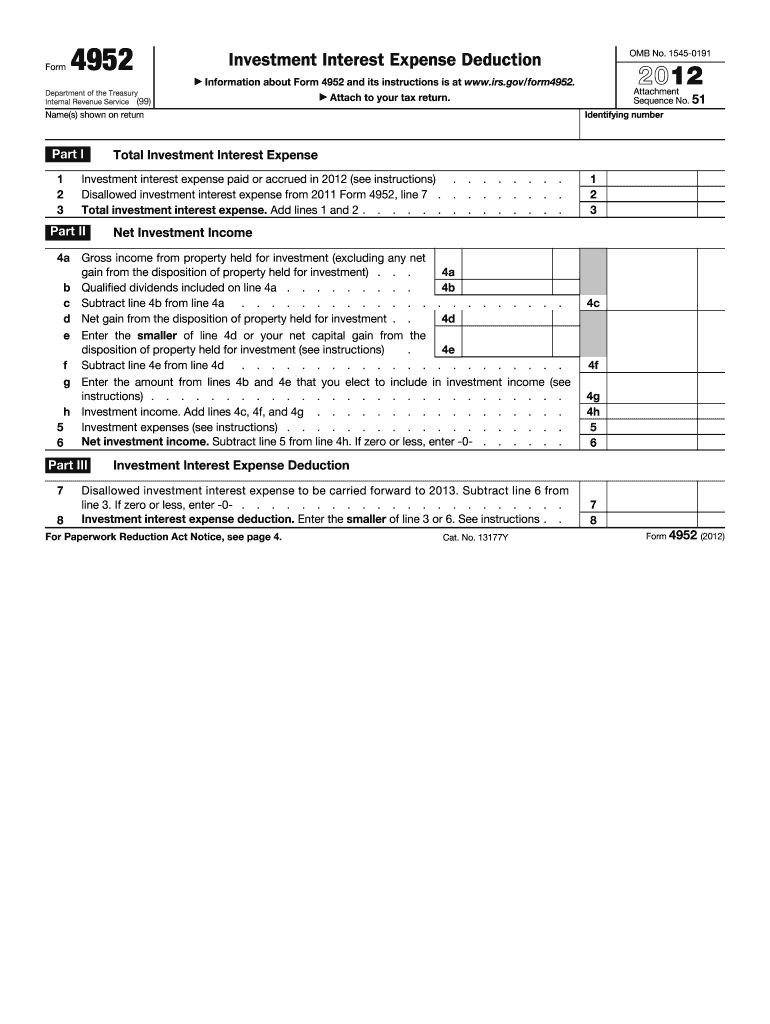
Form 4952, known as the Investment Interest Expense Deduction, is utilized by individuals, estates, and trusts to determine the deductible amount of investment interest expense for a given tax year. This form is essential for taxpayers seeking to reduce their taxable income by deducting the interest paid on loans used for investment purposes, such as purchasing stocks or bonds. Calculations on this form address both the current year's expenses and any that could be carried over to future years, ensuring thorough management of investment-related tax deductions.
How to Use Form 4952
Using Form 4952 involves a process of calculating and reporting investment interest expenses. The form must be filled out to include totals for investment interest expenses, as well as net investment income. This data is then used to determine the allowable deduction. It's critical for taxpayers to ensure accuracy, as miscalculations can affect the overall deduction. Guidance within the form provides instructions on calculating related income sources and the proper method for completing each section.
Steps to Complete Form 4952
- Identify Investment Interest Expenses: Begin by listing all investment-related interest expenses incurred during the tax year.
- Calculate Net Investment Income: This involves determining the total income generated from investments, such as dividends and interest.
- Determine Allowable Deduction: Use the calculations from the previous steps to figure out the allowable deduction, ensuring adherence to IRS instructions for deductions.
- Complete the Form: Fill out all sections of Form 4952 based on the derived figures and ensure no sections are left incomplete.
- Review for Accuracy: Carefully review all data for accuracy before submission to avoid errors that could lead to penalties.
Who Typically Uses Form 4952
Form 4952 is primarily used by individual taxpayers, estates, and trusts with significant investment interest expenses. Taxpayers who have taken loans specifically for investment purposes, such as margin accounts for purchasing stocks, will find this form essential. Additionally, those managing large portfolios or engaging in frequent investment activities must often report these expenses for tax relief purposes.
Eligibility Criteria
To be eligible to file Form 4952, taxpayers must have incurred interest expenses attributable to investments made during the tax year. The deduction is available only to those whose investment expenses surpass their net investment income, meaning only the excess can be carried forward. Understanding these criteria is crucial for taxpayers to maximize their deduction and efficiently plan their tax obligations.


Key Elements of Form 4952
- Total Investment Interest Expense: Captures the full amount of interest paid on investment loans during the tax period.
- Net Investment Income: Total gross income from investments, including dividends and interests, minus any deductible investment expenses.
- Allowable Deduction: The calculated deduction based on IRS guidelines, taking into account all reported figures on Form 4952.
Precise understanding and completion of these elements ensure the accuracy of the deductions and compliance with legal requirements.
Penalties for Non-Compliance
Failing to file Form 4952 or providing inaccurate information can lead to several penalties. The IRS may impose fines for underreporting income, and the taxpayer might also lose out on potential tax savings. Ensuring each section is accurately completed and timely submitted is essential to avoid these repercussions.
Filing Deadlines and Important Dates
The deadline for filing Form 4952 coincides with the annual tax filing deadline, typically April 15th. However, if taxpayers file for an extension, the form's deadline extends accordingly. Staying aware of these dates is vital for ensuring compliance and avoiding late filing penalties.
Examples of Using Form 4952
Consider an investor who has earned $3,000 from dividends and interest but incurred $4,000 in investment interest expenses. The investor completes Form 4952 to report the entire $3,000 as net investment income while carrying forward the remaining $1,000 expense to future tax years. Another example could involve an estate managing substantial investment loans, which utilizes Form 4952 to adjust its taxable income accordingly.
IRS Guidelines
IRS provides specific instructions and rules regarding the completion and filing of Form 4952. These guidelines cover aspects such as allowable expenses, exclusions, and detailed step-by-step instructions for accurate reporting. Familiarity with these guidelines is essential for accurate form completion and compliance with federal tax laws.
Required Documents
To accurately complete Form 4952, taxpayers should have access to all relevant financial documents, including statements that verify interest expenses and documentation of investment income. Having these documents on hand ensures that calculations are precise and reduces the chance of errors on the form.


