




01. Edit your pay increase form pdf online
Type text, add images, blackout confidential details, add comments, highlights and more.

Type text, add images, blackout confidential details, add comments, highlights and more.

Draw your signature, type it, upload its image, or use your mobile device as a signature pad.

Send employee raise form via email, link, or fax. You can also download it, export it or print it out.
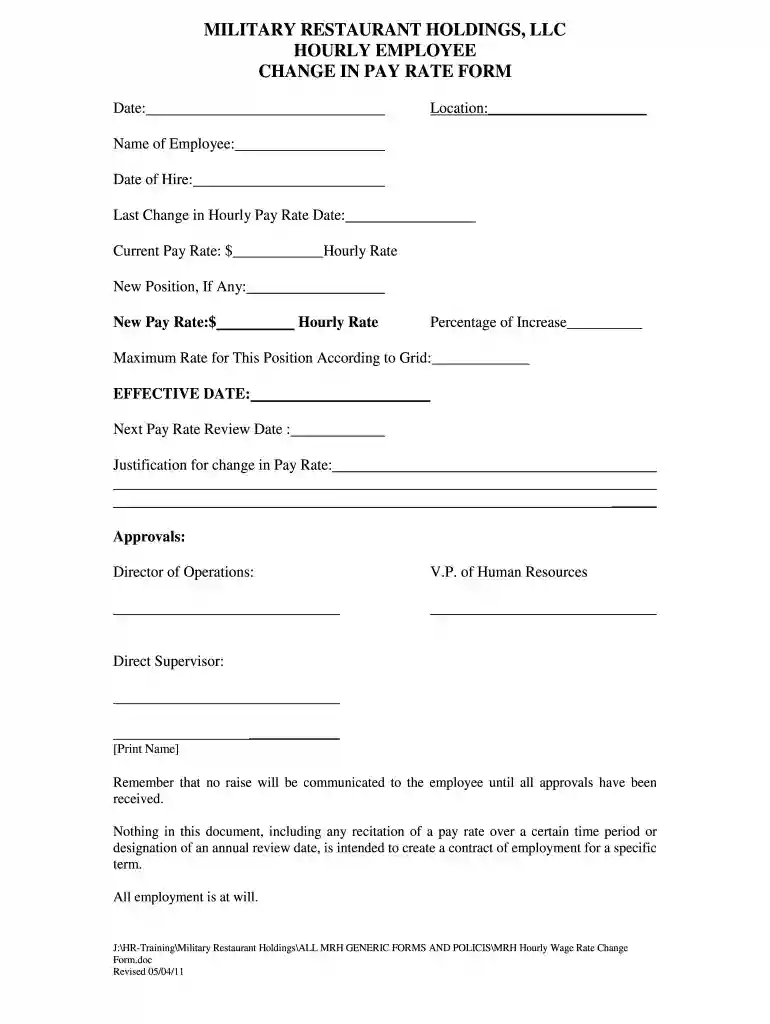
The pay rate increase form is a document utilized by employers to formally recognize and document changes in an employee’s hourly wage or salary. This form serves multiple purposes within the payroll and human resources structure of an organization. It aids in ensuring transparency, compliance with legal standards, and accurate record-keeping regarding employee compensation.
Filling out the pay rate increase form should be approached methodically to ensure completeness and accuracy. Follow these steps to complete the form correctly.
Understanding terminology surrounding the pay rate increase form is crucial for both employers and employees. Here are some key terms:
The pay rate increase form is predominantly used by a range of personnel in the workplace, including:


Utilizing the pay rate increase form necessitates adherence to several legal frameworks aimed at preventing discrimination and ensuring fair labor standards. Familiarize yourself with these aspects:
Consider these scenarios to understand the practical application of the pay rate increase form:
Performance-Based Increase: An employee consistently exceeds performance targets and is awarded a five percent increase in salary. Their manager fills out the pay increase form to document this change.
Promotion: An employee is promoted to a senior position, leading to a salary adjustment. The pay rate increase form is used to record the new compensation rate for their elevated responsibilities.
Market Adjustment: Due to industry pay benchmarks rising in a specific field, the HR department proactively reviews and adjusts salaries. The pay rate increase form is filled out to adjust multiple employees’ salaries accordingly.
Using these examples, organizations can implement an effective strategy for managing employee compensation while ensuring compliance and transparency.
We've got more versions of the pay increase form pdf form. Select the right pay increase form pdf version from the list and start editing it straight away!
At DocHub, your data security is our priority. We follow HIPAA, SOC2, GDPR, and other standards, so you can work on your documents with confidence.
Salary Increase Request Form. Approval must be obtained prior to submitting Annual increase amount: (100% FTE). Percent increase. (percent of current.Read more
Effective Date: (changes must be effective the 1st day of a pay period). Old Salary: (if applicable). New Salary: (if applicable). Change Type: name change.Read more
Oct 6, 2017 Use Form 943-A to report your tax liability. (federal income tax withheld plus both employee and employer social security and Medicare taxes).Read more


