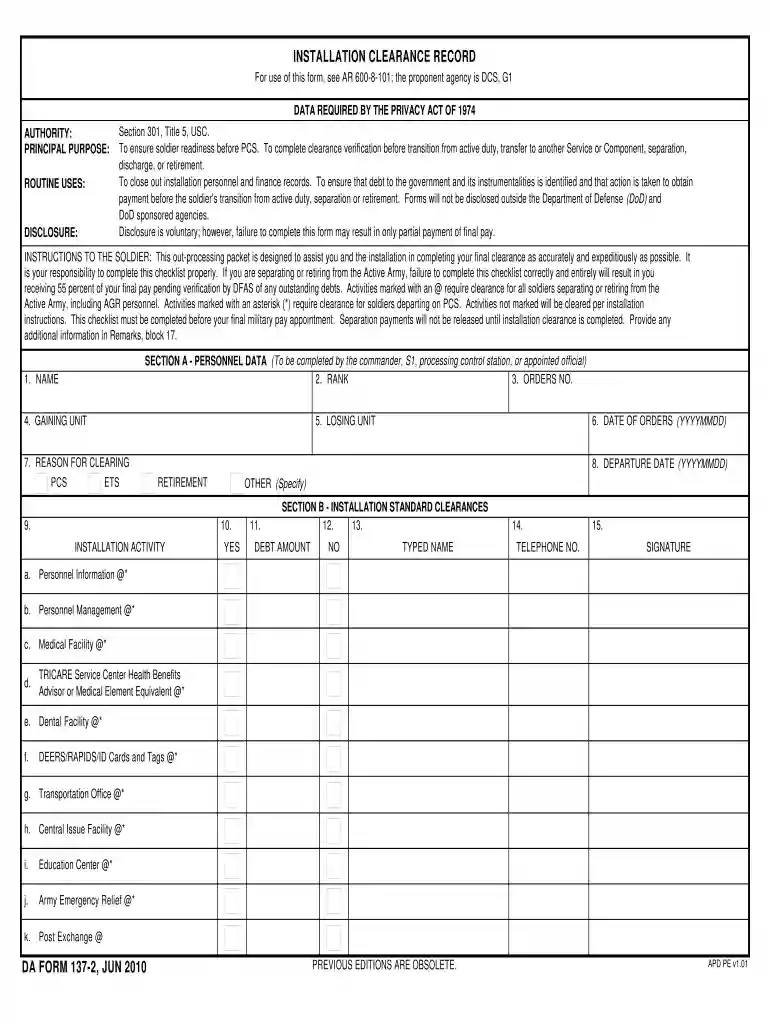
Definition and Meaning of Form 137 Content 2010
Form 137 serves as a crucial document in the educational system, particularly in the Philippines. It is often referred to as the “Permanent Record” of a student, encapsulating their entire academic history from elementary through senior high school. This record is essential for various academic processes such as transferring schools, enrolling in higher education institutions, or applying for scholarships.
The primary purpose of Form 137 is to provide a comprehensive overview of a student's academic performance. The document typically includes details such as:
- Personal Information: Name, date of birth, and other identifiers.
- Academic Grades: Records of grades in various subjects over the years.
- Attendance Records: Documentation of attendance throughout the student’s school years.
- Promotions: Notations of grade promotions or transitions.
Understanding the significance of Form 137 is vital for students and parents, especially when navigating administrative procedures related to education.
How to Use Form 137 Content 2010
Using Form 137 effectively requires knowledge of its components and the intended application. Here are the common steps to utilize this form:
- Identify the Purpose: Determine why you need Form 137. Whether for school transfers, further education applications, or other educational purposes, clarity on the intended use will guide the completion process.
- Gather Academic Records: Ensure that the document includes all relevant academic information, such as grades for each subject, attendance, and any remarks from teachers or administrative personnel.
- Verify Information: Check the accuracy of the details recorded on Form 137. Any discrepancies can lead to issues in processing applications.
- Submit the Form: Depending on the requirement, submit the completed Form 137 to the appropriate school or institution. This can be a physical submission or an electronic one if accepted.
By understanding these steps, students can make the most effective use of Form 137 in their educational journey.
How to Obtain the Form 137 Content 2010
Obtaining Form 137 is generally an accessible process. Here are the methods by which students can acquire this form:
- Request from Current School: The most straightforward way to obtain Form 137 is to request it directly from the school where the student is currently enrolled. School registrars are usually responsible for providing this document.
- Department of Education (DepEd) Offices: If the student has transferred to different schools, they can also reach out to local DepEd offices for assistance in procuring the form.
- Online Requests: Some educational institutions and DepEd may offer the option to request Form 137 online. Check the official school or DepEd website for any available forms or online procedures for making requests.
- Email or Phone Requests: Students can also contact their school's administration via email or phone to inquire about the process for obtaining this form, especially during school closures.
These methods ensure that students can obtain the necessary documentation seamlessly for their academic needs.
Steps to Complete the Form 137 Content 2010
Completing Form 137 requires careful attention to detail to ensure accuracy and compliance with school regulations. Here are the steps to follow:
- Fill Out Personal Details: Start by providing the student’s complete name, birth date, and other identifying information at the top of the form.
- Input Academic Records: Enter the subjects taken during each school year along with corresponding grades. This section typically requires students to reflect their performance accurately.
- Record Attendance: Include information about the student’s attendance, noting any major absences or tardies.
- Include Remarks and Promotions: Add any remarks from instructors regarding the student’s performance and document promotions from one academic level to another.
- Review for Accuracy: Before submission, carefully review all sections of the form for any errors or omissions. Ensuring precision here is crucial, as inaccuracies could lead to future complications.
- Obtain Signatures: Depending on the school’s requirements, the form may need to be signed by a parent or guardian, as well as by school officials to authenticate the information provided.
By following these steps, students can effectively complete Form 137 with the necessary diligence and accuracy.
Important Terms Related to Form 137 Content 2010
Understanding key terminology associated with Form 137 is beneficial for navigating its use effectively. Here are some important terms:
- Permanent Record: Another name for Form 137, highlighting its role as the official academic record.
- Academic Transcript: A document that may also contain a student's academic performance but is more formal and typically issued by a higher education institution.
- DepEd: The Department of Education in the Philippines, which oversees educational standards and practices.
- Grade Point Average (GPA): Refers to the average of a student’s performance, which may be featured prominently in more formal academic documents.
- Transfer Students: Students who move from one educational institution to another, who often require Form 137 for enrollment.
Familiarity with these terms can help parents and students navigate educational processes concerning Form 137 more effectively.
Legal Use of the Form 137 Content 2010
Form 137 is not just an academic document; it also has legal significance. Here are the legal aspects to consider:
- Verification of Academic History: Schools and institutions rely on Form 137 to verify a student’s past academic achievements. It serves as an official testament to a student’s educational background.
- Transfer Documentation: For students transferring to new schools, Form 137 acts as a legally recognized document ensuring that grades are properly attributed to the student and facilitating their admission into new academic programs.
- Compliance with Educational Regulations: Educational institutions may require Form 137 in adherence to regulations set forth by the Department of Education, reinforcing the document’s legal status.
- Scholarship Applications: Many scholarship programs require a copy of Form 137 as part of their application process, asserting the student’s eligibility based on previous academic performance.
Recognizing these legal uses will help ensure that students and their families understand the importance of maintaining an accurate and accessible Form 137.