
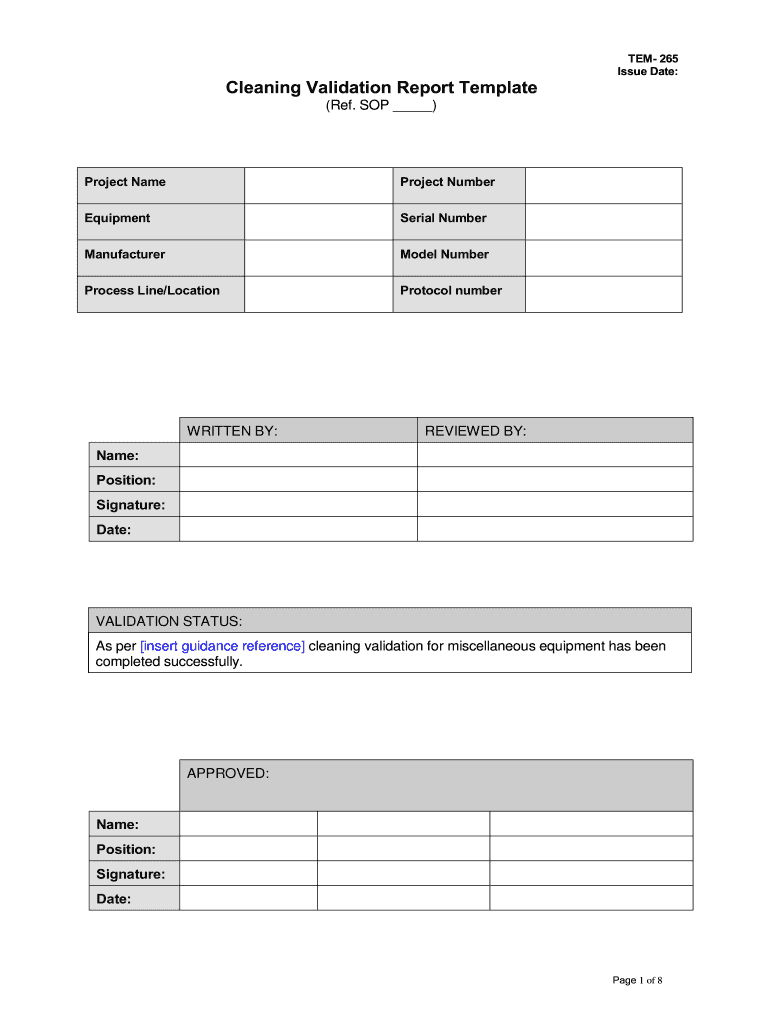







Definition and Importance of a Cleaning Validation Report Template
A cleaning validation report template is a structured document that provides guidelines for validating cleaning processes used in manufacturing and laboratory settings. It outlines the specific procedures and criteria to ensure that cleaning methods effectively remove residues, contaminants, and microbial agents from equipment and surfaces. Validation is critical in industries such as pharmaceuticals, biotechnology, and food production, where product safety and efficacy are paramount.
Key Components of a Cleaning Validation Report
-
Microbial Removal Testing: This section specifies the tests conducted to assess the effectiveness of the cleaning process in eliminating microbial contaminants. It may include methods for sampling and culturing to quantify levels of bacteria or other pathogens present after cleaning.
-
Acceptance Criteria for Cleanliness: Establishes quantitative limits for allowable residues on cleaned equipment. These criteria help ensure compliance with safety standards and can differ based on product type and regulatory requirements.
-
Documentation of Deviations: A comprehensive account of any deviations from the standard cleaning procedure, including justifications and implications, is included to maintain transparency and traceability.
-
Discussion of Results: Analyzes the data obtained from testing against the acceptance criteria. This analysis is crucial for confirming that the cleaning processes are effective.
-
Conclusions on Validation Status: Summarizes the findings and provides a final verdict about the cleaning procedures' validation status, ensuring that they meet industry standards.
How to Use the Cleaning Validation Report Template
The cleaning validation report template serves as a blueprint for developing customized reports tailored to specific equipment, cleaning agents, and operational requirements. Users can leverage the template to ensure all essential components are included, effectively communicating the validation process's outcomes.
Steps to Effectively Utilize the Template
-
Customize the Template: Begin by adapting the template to fit the specific details of the cleaning process, including equipment used, substances handled, and cleaning agents employed.
-
Conduct Cleaning and Sampling: Perform the cleaning protocols as specified and collect samples for microbial analysis and residue testing.
-
Record Results: Fill out the relevant sections of the template with test results, ensuring that all data is accurate and reflective of the cleaning performance.
-
Review and Analyze: Examine the recorded data against set acceptance criteria to draw conclusions about cleaning efficacy.
-
Finalize the Report: Thoroughly review the completed template for completeness and accuracy before finalizing and submitting it to relevant stakeholders.
Who Typically Uses the Cleaning Validation Report Template
Various professionals across multiple sectors utilize the cleaning validation report template, emphasizing its relevance in maintaining product safety and compliance.


Common Users Include:
-
Quality Assurance Professionals: Responsible for ensuring that processes meet industry standards and regulations.
-
Regulatory Affairs Specialists: Focus on compliance with federal and state regulations concerning product safety.
-
Manufacturing Teams: Employees involved in the actual cleaning processes benefit from guidance on best practices.
-
Validation Specialists: Experts who analyze and validate cleaning protocols meticulously.
-
Laboratory Personnel: Those working in research and development settings often utilize the template to validate cleaning practices associated with experimental equipment.

Important Terms Related to Cleaning Validation
Understanding key terminology is essential in effectively using a cleaning validation report template. Here are several critical terms:
-
Validation Protocol: A planned document that outlines the approach for conducting validation studies, including objectives, methodology, and acceptance criteria.
-
Residue: Any leftover material, including active pharmaceutical ingredients, cleaning agents, or contaminants, that may remain on equipment after cleaning.
-
Microbial Contamination: The presence of microorganisms, such as bacteria or fungi, which can jeopardize product safety and integrity.
-
Sampling Plan: A defined strategy for sampling specific areas or equipment, which determines how many and which samples will be taken for testing.
Key Elements of a Cleaning Validation Report Template
A cleaning validation report template must include several critical elements to be thorough and effective.
Essential Elements Include:
-
Title Page: Clearly indicates that the document is a cleaning validation report.
-
Scope and Objectives: Defines the extent of the cleaning validation and the goals intended to be achieved through validation.
-
Methodology: Outlines the process by which cleaning is validated, including any specific techniques or equipment used.
-
Results Section: Presents all test results alongside relevant data interpretations.
-
Signatures: Required signatures from team members responsible for the validation process, indicating their review and acceptance of the results.
Examples of Using the Cleaning Validation Report Template
The cleaning validation report template can be applied in various scenarios where equipment cleaning is crucial for compliance and safety.
Practical Scenarios Include:
-
Pharmaceutical Manufacturing: Companies may use the template after validating cleaning protocols for production equipment, ensuring no drug residues remain between batch productions.
-
Food Processing: Establishments utilize this template to confirm that cleaning procedures are effective in eliminating contaminants that could affect food safety.
-
Laboratory Settings: Research facilities may apply the report for cleaning validation of analytical instruments, ensuring no carryover of substances interferes with experiments.
Regulatory Considerations and Compliance with Cleaning Validation Reports
Adhering to relevant regulations when developing a cleaning validation report is vital for ensuring compliance and maintaining operational integrity.
Key Regulatory Considerations:
-
Industry Standards: Familiarity with guidelines published by organizations such as the FDA, WHO, and other pertinent agencies is necessary to tailor the cleaning validation report template according to regulatory requirements.
-
Documentation Practices: Maintain thorough and accurate documentation throughout the validation process, providing appropriate records for audits and inspections.
-
Training Requirements: Staff involved in cleaning and validation processes should have appropriate training to understand regulatory expectations regarding cleaning protocols.
By adhering to these standards and utilizing the cleaning validation report template effectively, organizations can enhance their compliance efforts and operational efficiency while safeguarding product integrity.


