






Definition and Significance of the Duty Roster Form
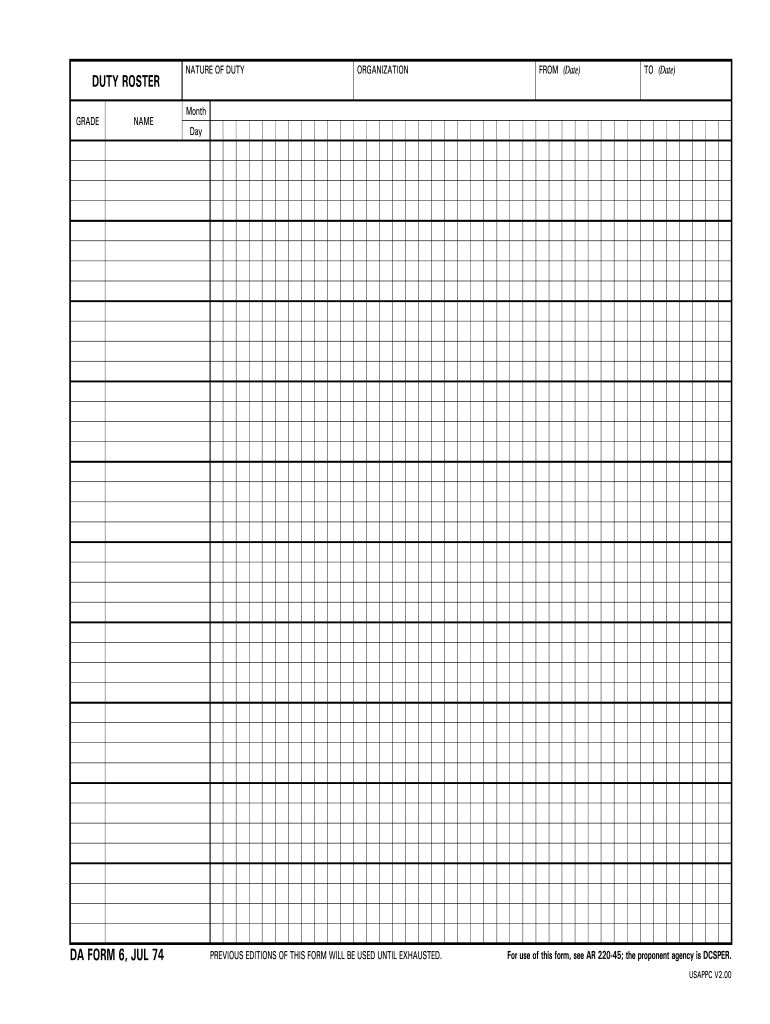
The duty roster form, often referred to within military contexts as DA Form 6, is an official document used to record and manage personnel assignments. This form captures critical information, including duty details, names, ranks, and organizational units, facilitating effective tracking and accountability within military or organizational structures. The importance of this form lies in its ability to maintain organized deployment of personnel, ensuring all members understand their responsibilities during specific periods.
Key Components of the Duty Roster Form
- Personnel Information: Each duty roster entry typically includes fields for the service member's name, rank, and position. This ensures clarity on who is assigned to which task.
- Duty Description: The form outlines the nature of the task assigned, providing a clear context for what is expected from each individual.
- Dates and Times: Accurate recording of duty dates and times helps to monitor compliance with schedules and supports operational planning.
- Supervision and Approval: Required signatures or approvals are often necessary for verification, ensuring that duty assignments are officially acknowledged.
How to Use the Duty Roster Form Effectively
Utilizing the duty roster form requires an understanding of its structure and purpose. To use the form effectively, personnel should follow these guidelines:
- Identify Required Information: Before filling out the form, gather all necessary details, including the names and ranks of all involved personnel and their respective duties.
- Fill in Each Section: Complete all specified fields entirely. Incomplete entries can lead to confusion and operational inefficiencies.
- Consult Supervisors: After filling out the form, seek approval from commanders or supervisors to ensure that assignments are appropriate and valid.
- Distribute Copies: Once the form is approved, distribute it to the relevant team members. This communication fosters accountability and transparency.
Steps to Complete the Duty Roster Form
Filling out a duty roster form involves several critical steps that enhance accuracy and comprehensiveness:
- Access the Form: Obtain the DA Form 6, which may be accessible digitally or in paper format, depending on your organization's practices.
- Enter Personnel Details: Start by inputting each individual's name and rank. Ensure proper spelling and formatting.
- Specify Duties: Clearly articulate the duties assigned to each person, aiming for concise and specific descriptions.
- Record Dates: Input the start and end dates for each duty assignment, including specific times if necessary. This precision aids in duty tracking.
- Review for Accuracy: Double-check all entries for spelling errors, misassignments, or any discrepancies.
- Sign and Submit: Once verified, provide the necessary supervisory signatures and submit the form according to your unit's protocol.
Who Typically Uses the Duty Roster Form?
The duty roster form is commonly utilized by various groups, including:
- Military Organizations: Essential for managing troop assignments and rotations, ensuring effective deployment and responsiveness.
- Corporate Entities: Used within organizations to schedule shifts, projects, or task assignments for employees, contributing to efficient human resource management.
- Non-Profit Organizations: May employ this type of form to arrange volunteer duties, ensuring clarity and effectiveness among volunteers.
- Educational Institutions: Schools and universities might adapt duty roster forms to schedule staff duties or responsibilities during events and activities.


Legal Use of the Duty Roster Form
When using the duty roster form, it is crucial to comply with legal standards and organizational regulations. This includes:
- Confidentiality: Respecting the privacy of personnel listed on the form is paramount to ensure sensitive information is not improperly disclosed.
- Retention Policies: Adhering to established protocols regarding how long the duty roster should be retained. Military regulations often prescribe record-keeping timelines.
- Proper Authentication: Ensuring that all entries are verified and signed by authorized personnel to maintain accountability and legal integrity.
Examples of Using the Duty Roster Form
Several scenarios illustrate the application of the duty roster form in both military and civilian contexts:
- Military Operations: In a military setting, the DA Form 6 is utilized to assign soldiers to specific operational duties during a training exercise, documenting who is responsible for various key tasks and ensuring all necessary personnel are engaged.
- Shift Scheduling in Corporates: A company may use a duty roster form to assign shifts for a retail team, ensuring every role is filled adequately while managing employee requests for time off.
- Event Coordination: Non-profit organizations might leverage the form to organize volunteers for a community event, allowing them to track who is responsible for logistical tasks, registration, and outreach.
Importance of Accurate Roster Management
Regardless of the context in which the duty roster form is utilized, maintaining accuracy and ensuring that all personnel are aware of their assigned roles is essential for seamless operations. This not only enhances efficiency but also fosters a sense of responsibility among team members to fulfill their designated roles effectively.