







Understanding the Lockout/Tagout (LOTO) Template Form
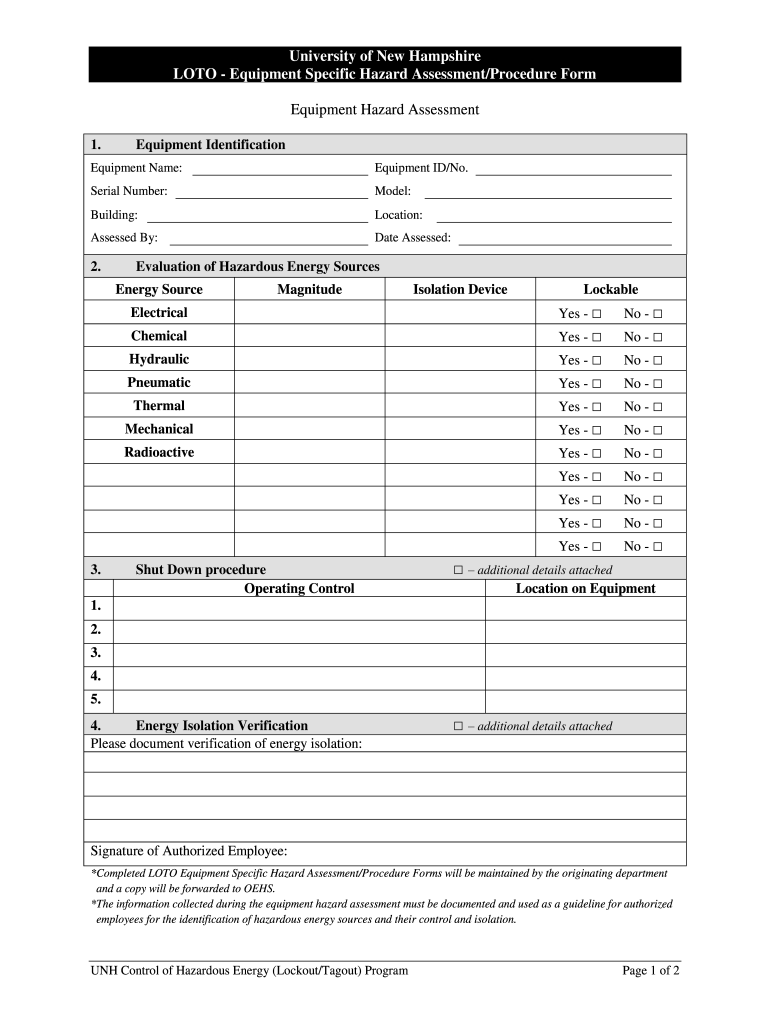
The Lockout/Tagout template form is an essential document used in various industries to ensure the safety of workers during maintenance or servicing activities. It provides a structured approach to managing hazardous energy sources associated with machinery and equipment. This form is integral in preventing accidental machine start-ups, thus safeguarding employees. It includes guidelines for identifying energy sources, procedures for isolating and controlling hazardous energies, and steps for returning the equipment to service after maintenance.
Importance of the Lockout/Tagout Form
Implementing the lockout/tagout procedure is crucial for workplace safety. The form assists in documenting energy control measures, ensuring compliance with safety regulations, and providing a clear record of safety protocols. This is particularly relevant in environments with complex machinery or where multiple employees may be involved in maintenance tasks.
- Regulatory Compliance: The Occupational Safety and Health Administration (OSHA) standards mandate the use of lockout/tagout procedures to prevent workplace accidents.
- Employee Training: The form serves as a training tool, providing clear procedures that new employees can refer to while familiarizing themselves with safety practices.
- Risk Mitigation: By systematically addressing hazardous energy, the form plays a pivotal role in mitigating the risks of electrical, mechanical, hydraulic, pneumatic, and thermal energies.
Components of a Lockout/Tagout Template Form
A comprehensive lockout/tagout template form includes several critical sections that ensure clarity and thoroughness in safety procedures. Each component plays a specific role in the documentation and execution of safety measures.
-
Identification of Equipment and Energy Sources:
- Clearly list the equipment involved in the maintenance procedure.
- Document the types of hazardous energy associated, whether electrical, mechanical, or otherwise.
-
Lockout/Tagout Procedures:
- Provide step-by-step instructions to lock out equipment using locks and tags.
- Specify the responsibility of employees involved in the process.
-
Verification of Lockout:
- Include a section for verifying that all energy sources have been isolated before commencing work.
- Encourage use of test tools to confirm the absence of energy.
-
Restoration of Service:
- Outline the steps for safely removing locks and tags after maintenance.
- Ensure that all personnel are notified before re-energizing any equipment.
Best Practices for Completing the Lockout/Tagout Form
Proper completion of the lockout/tagout form involves several best practices that enhance its effectiveness. These practices ensure that employees understand their responsibilities and that the form serves its purpose in maintaining a secure work environment.
- Be Detailed: All sections of the form should be filled out completely, with detailed descriptions and clear instructions.
- Involve All Relevant Personnel: Include all team members in the completion of the form to ensure a comprehensive understanding of the procedures.
- Regular Review and Update: The form should be reviewed regularly, especially when equipment changes occur or after any incidents.
Real-World Application of Lockout/Tagout Procedures
In various industries, the lockout/tagout template form is applied to prevent accidents during maintenance activities. Examples include:
- Manufacturing Facilities: Workers performing maintenance on conveyor systems must use lockout/tagout procedures to ensure that machines are not unintentionally powered on.
- Construction Sites: Electricians and plumbers utilize the form to safely work on equipment, ensuring that all energy sources are properly locked out before beginning repairs.
- Healthcare Institutions: Staff responsible for maintaining medical equipment apply the lockout/tagout procedures to ensure the safety of patients and workers alike.
Conclusion: Benefits of Using the Lockout/Tagout Template Form
Utilizing a lockout/tagout template form provides numerous benefits crucial for workplace safety. From enhancing compliance with safety regulations to improving employee training and reducing incidents, the advantages of proper lockout/tagout procedures are substantial. In a comprehensive safety management system, this form acts as a fundamental tool, fulfilling its role in protecting employees from hazardous energy sources.




