




Definition and Purpose of Form 5A for Digital Signature
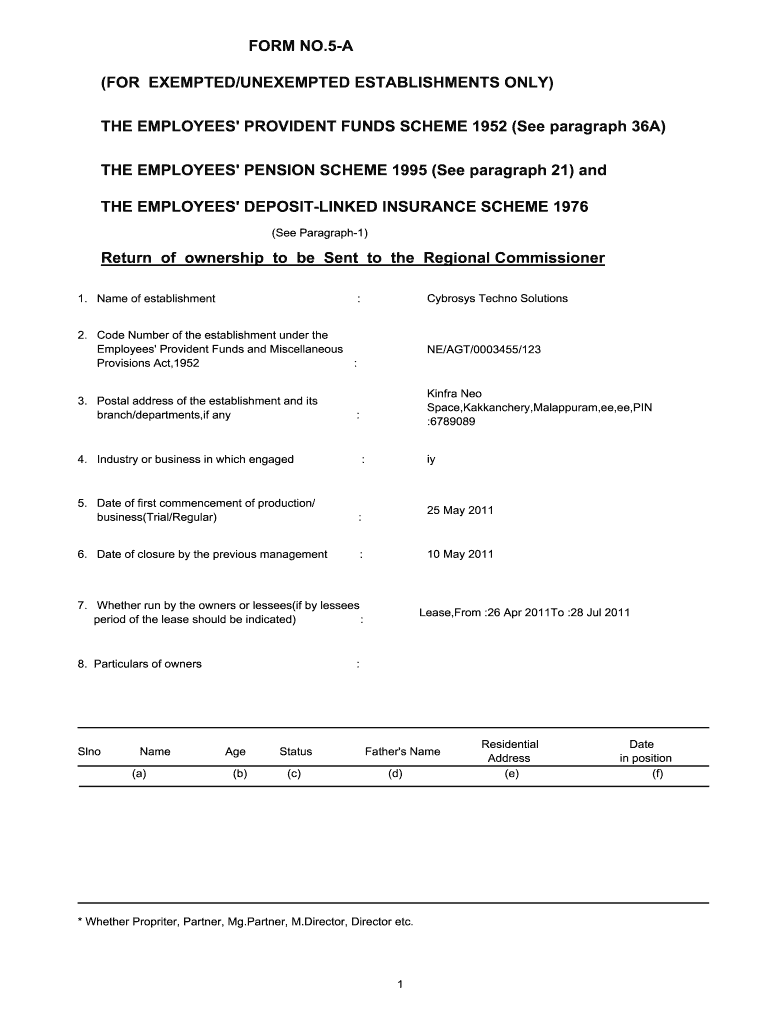
Form 5A is primarily associated with the Employees' Provident Fund (EPF) in India, relevant for submitting essential details regarding the fund coverage of employees. It serves as a declaration for the EPF scheme, allowing businesses to communicate information necessary for managing employee contributions to social security. The form includes details such as establishment codes, address, management information, and specifics about ownership and lease particulars. Using this form for digital signatures simplifies the process by providing a legally compliant method to sign and submit the documentation online.
Key Elements of Form 5A for Digital Signature
- Establishment Information: The form requires the establishment's name, code number, and address, which ensure accurate association with a given EPF account.
- Ownership Details: Owners or partners of the establishment must provide personal information, including names and designations, to validate the legitimacy of the submission.
- Management Data: Accurate designation of the management, including their official roles, is critical for maintaining responsibility.
- Lease Information: If the establishment operates in a leased property, pertinent lease details must be recorded to ensure compliance with regulations.
How to Obtain Form 5A for Digital Signature
Obtaining Form 5A can be done through various means, ensuring that users access the correct and most recent version.
- Official Website: Download the form directly from the EPF's official website or affiliated government portal, where the latest formats are available.
- Business Platforms: Subscription-based platforms such as DocHub also offer access to digital versions of the form that are compatible with electronic signatures.
- Local Offices: Physical copies can be sourced from local EPF offices if preferences lean towards paper submissions.
Steps to Complete Form 5A for Digital Signature
Filling out Form 5A for digital signature encompasses several essential steps to ensure compliance and accuracy.
- Gather Information: Collect relevant data, including establishment details and ownership particulars, ensuring all participants understand their respective contributions.
- Fill Out the Form: Carefully input all required information into the form fields, often aided by fillable PDFs available on platforms like DocHub.
- Validate Details: Review entries to confirm accuracy before proceeding to digital signature.
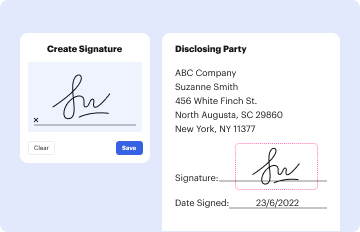
- Create Digital Signature: Utilize the electronic signature functionality provided by the platform to apply the signature securely.
- Submission: Once signed, submit the form electronically through the relevant EPF portal or integrated services for secure processing.
Why Use Digital Signatures for Form 5A
Employing digital signatures for Form 5A offers several advantages that simplify the procedural aspects of EPF compliance:
- Legality: Digital signatures possess the same legal standing as handwritten signatures under the ESIGN Act, streamlining the verification process.
- Efficiency: The ability to sign documents online eliminates the delays often associated with physical signatures, fostering faster processing times.
- Security: Digital signatures benefit from encryption and authentication features that safeguard submissions against tampering or unauthorized access.
Legal Use of Form 5A for Digital Signature
The legal framework governing the use of Form 5A for digital signatures is grounded in the ESIGN Act, which stipulates that electronically signed documents are legally binding. Understanding the following legal aspects is vital:
- Compliance: Ensure that all submissions comply with EPF regulations, as any discrepancies may lead to penalties.
- Identity Verification: Platforms need to have established measures for verifying identity before allowing users to apply their signatures.
- Record Keeping: A digital audit trail provides transparency, capturing timestamps for when a document is viewed, signed, and submitted, safeguarding both parties’ interests.
Common Use Cases for Form 5A for Digital Signature
Here are popular scenarios in which businesses might utilize Form 5A:
- Startups: Newly established businesses often require employees to register for providence plans and subsequently utilize Form 5A for authentication.
- Partnerships: Partnerships may frequently update their ownership structure, necessitating timely submission of new ownership details through the form.
- Mergers: In cases of business mergers or acquisitions, accurate and quick form processing is essential for the transition, hence the importance of digital signatures.
Examples of Using Form 5A for Digital Signature
Consider these detailed examples illustrating practical application scenarios for Form 5A:
- A company undergoing a merger might need to submit updated ownership information rapidly to comply with newly mandated EPF contributions. Using an electronic submission enhances processing time and aligns with legal requirements.
- Startups hiring their first group of employees could utilize Form 5A as part of their onboarding process, ensuring that both employer and employee have legally recognized roles in the EPF scheme.
- An established business expanding into new locations may require multiple submissions of Form 5A for its new sites, making the digital signature function crucial for quick iterations without physical document delays.
This comprehensive coverage outlines crucial details related to the use, filling, and legal standing of Form 5A for digital signatures, providing clarity for organizations navigating the EPF submission process.