Understanding the Tenancy Agreement QLD
A tenancy agreement, specifically the tenancy agreement QLD, is a legal document that establishes the terms and conditions between a lessor ( landlord) and a tenant in Queensland. This agreement is critical as it outlines the rights and obligations of both parties, ensuring that both the landlord and tenant understand their roles in the rental relationship. The key elements typically include rent payment terms, property maintenance responsibilities, conditions surrounding the termination of the agreement, and additional clauses pertinent to the specific rental situation, such as pet policies.
Key Elements of the Tenancy Agreement QLD
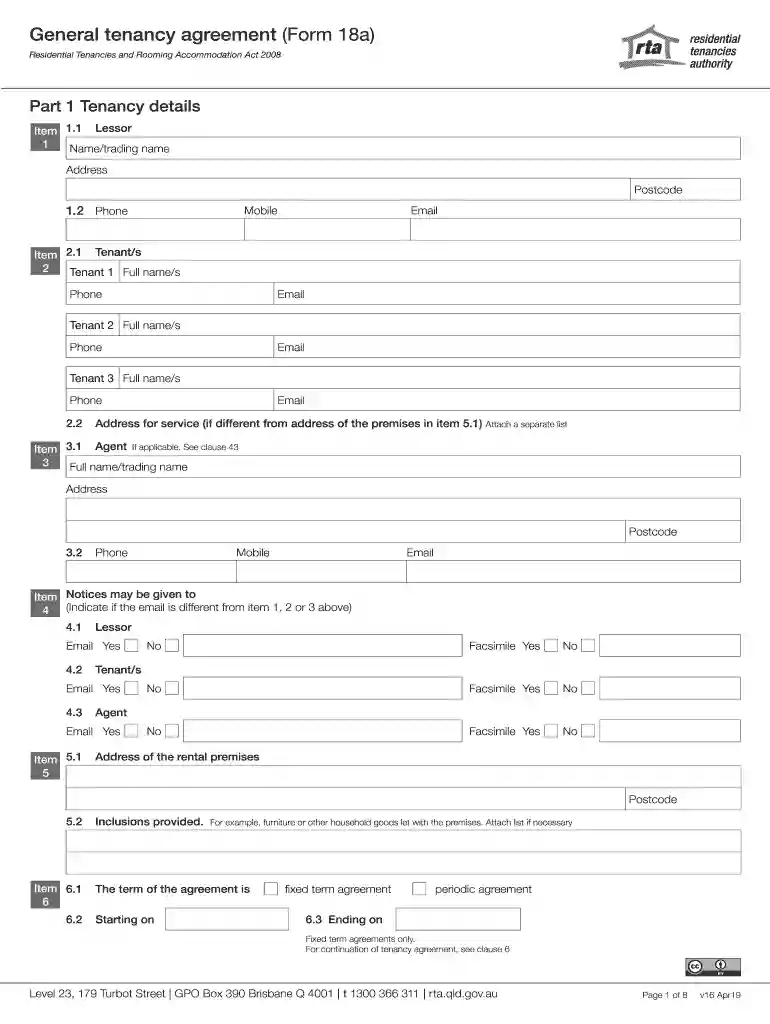
The tenancy agreement QLD, often referred to by its official title, the General Tenancy Agreement (Form 18a), contains several essential components:
- Parties Involved: The names and contact information of both the tenant and landlord.
- Property Details: A description of the rental property, including the address and any specifics about included amenities.
- Lease Duration: The start and end dates of the tenancy, along with any provisions for renewal or extension.
- Rent Details: Amount of rent, payment frequency (weekly, monthly), and methods of payment (bank transfer, checks).
- Maintenance Responsibilities: Obligations of the landlord to maintain the property and those of the tenant regarding cleanliness and upkeep.
- Termination Clauses: Procedures for ending the tenancy, including notice periods and conditions under which the agreement may be terminated early.
Steps to Complete the Tenancy Agreement QLD
Completing the tenancy agreement QLD involves several straightforward steps that both the tenant and landlord should follow:
- Acquire the Document: Obtain the General Tenancy Agreement (Form 18a) from a reliable source, such as the Queensland Government's website or other official forms repository.
- Fill in Details: Provide all required information, ensuring accuracy in names, property details, and terms of the agreement.
- Discuss Terms: Both parties should have discussions regarding any specific terms not covered in the standard agreement. This may include unique responsibilities or conditions agreed upon verbally.
- Review and Amend: Each party should thoroughly review the document and suggest any necessary amendments or clarifications.
- Sign the Agreement: Once both parties are in agreement, sign the document. It is advisable to have a witness present.
- Provide Copies: Both the landlord and tenant should keep a signed copy of the agreement for their records.
Legal Use of the Tenancy Agreement QLD
To ensure the tenancy agreement QLD is legally binding, it must comply with the Residential Tenancies and Rooming Accommodation Act 2008. This includes:
- Proper execution: Both parties must sign the agreement.
- Clarity: The terms must be clear and unambiguous to avoid misunderstandings.
- Compliance with laws: The agreement must adhere to local laws regarding rental properties, including safety regulations and tenant rights.
State-Specific Rules for the Tenancy Agreement QLD
Queensland has particular regulations that govern tenancy agreements, which distinguish the state's processes and policies from other regions. Key rules include:
- Bond Tenancy: A security deposit, known as a bond, typically equal to four weeks’ rent, is held by the Residential Tenancies Authority (RTA).
- Notice Requirements: Specific notice periods are mandated for both landlords and tenants regarding rent increases, lease renewals, and terminations.
- Termination Rights: Tenants have the right to terminate the agreement under certain circumstances, such as breach of lease by the landlord or unsafe living conditions.
Examples of Using the Tenancy Agreement QLD
Understanding practical scenarios can clarify how this tenancy agreement operates in real life. For instance:
- A family renting a home may utilize the agreement to stipulate that pets are allowed, provided an extra bond is paid to cover potential damages caused by pets.
- A student moving into shared accommodation may use the agreement to define the shared expenses, such as internet and utilities, which helps clarify financial obligations upfront.
- A landlord may specify in the agreement that the property is to be returned in a clean state, outlining what “clean” means to prevent disputes at the end of the lease.
Important Terms Related to Tenancy Agreement QLD
A comprehension of the terminology connected to the tenancy agreement QLD is crucial for both parties:
- Tenant: The individual or group renting the property.
- Lessor: The owner of the property who leases it to the tenant.
- Bond: A form of security deposit held in trust, refundable upon the conclusion of the agreement if property conditions are met.
- Break Lease: The act of terminating the lease before the agreed period, often leading to financial penalties.
Who Typically Uses the Tenancy Agreement QLD
The intended audience for the tenancy agreement QLD includes:
- Residential Tenants: Individuals or families renting homes or apartments.
- Landlords: Property owners or agencies renting properties to tenants.
- Property Managers: Professionals ensuring compliance with regulations and managing landlord-tenant relations.
By understanding and utilizing the tenancy agreement QLD, both landlords and tenants can navigate their rental relationships with clarity and mutual respect, reducing the likelihood of disputes and fostering a positive renting experience.