
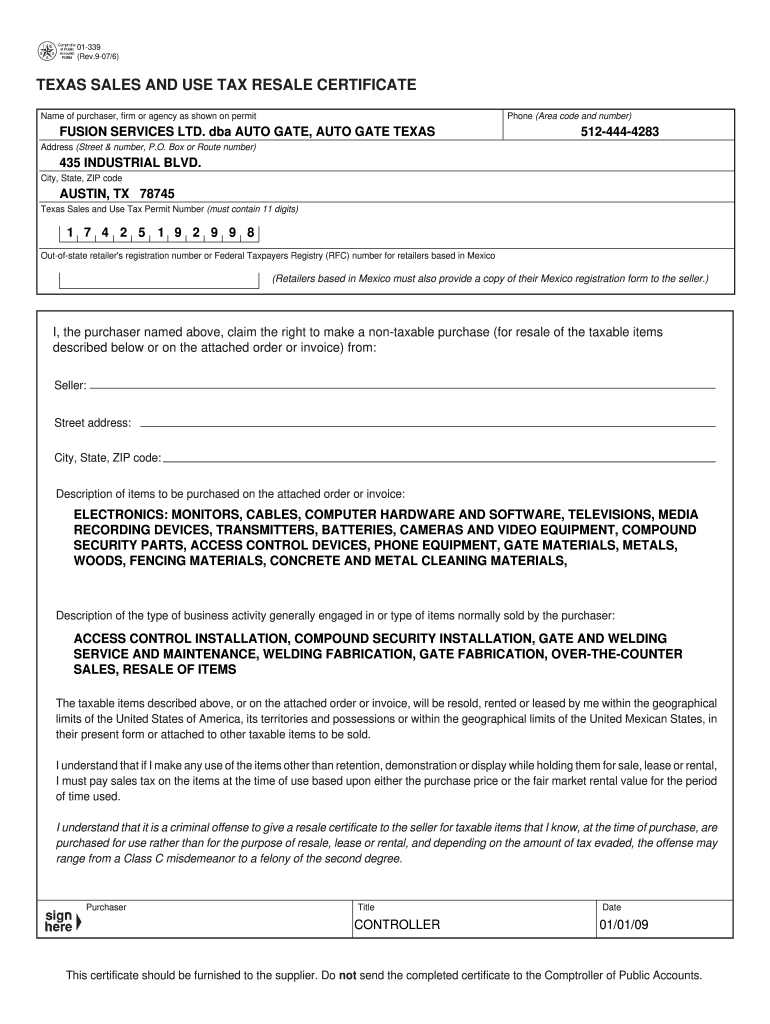







Definition and Meaning of Texas Sales and Use Tax Resale Certificate
The Texas sales and use tax resale certificate is a legal document that allows a purchaser to buy goods without paying sales tax when the goods are intended for resale. In the context of Compound Security and many other industries, this certificate is crucial for maintaining compliance with state tax laws and protecting the profit margins of businesses. It confirms that the purchaser is registered for sales tax in Texas and has the intent to sell the purchased items rather than use them for personal consumption.
A resale certificate essentially serves as proof that the invoice is being issued with a non-taxable designation. This is particularly relevant in industries where bulk purchasing or wholesale transactions occur. The key to utilizing this certificate effectively lies in understanding the legal implications and ensuring that it is used appropriately.
Who Typically Uses the Texas Sales and Use Tax Resale Certificate
The Texas sales and use tax resale certificate is predominantly used by various types of businesses and entities, including:
- Retailers: These businesses frequently purchase inventory for resale and rely on the resale certificate to avoid upfront taxes on these purchases.
- Wholesalers: Similar to retailers, wholesalers use this certificate to buy products in bulk without incurring additional sales tax costs.
- Manufacturers: Companies in manufacturing may utilize the certificate to acquire raw materials or components that will ultimately be transformed into sellable products.
- Service Providers: Businesses offering services that involve the sale of tangible personal property, such as contractors or decorators, may also benefit from using this form.
Understanding who can use this certificate is crucial for compliance and proper tax management.

Key Elements of the Texas Sales and Use Tax Resale Certificate
When filling out the Texas sales and use tax resale certificate, several key components must be included:
- Purchaser Information: This section typically requires the name, address, and the Sales Tax Permit number of the buyer. It is essential for verifying that the buyer is registered to collect sales tax.
- Seller Information: The name and address of the seller are also required to establish a clear transaction record.
- Description of Purchased Items: It's critical to specify which items are being purchased for resale. This helps to prevent misuse of the certificate for non-eligible purchases.
- Signature: The certificate must be signed by an authorized person, confirming the accuracy of the information provided.
- Date: Documentation should always include the date the certificate is filled out to maintain proper records.
Each element serves to ensure that the transaction complies with Texas tax regulations, thus safeguarding both the seller and the buyer.
Steps to Complete the Texas Sales and Use Tax Resale Certificate
Completing a Texas sales and use tax resale certificate requires careful attention to detail to ensure compliance with the law:
- Gather Necessary Information: Collect the buyer's and seller's basic information, including names, addresses, and sales tax permit numbers.
- Describe Purchased Items: Clearly outline the items being purchased and indicate they are for resale. This section should be detailed to avoid ambiguity.
- Provide Signature: Ensure that an authorized representative of the purchasing company signs the certificate. This step is vital for its legal validity.
- Enter the Date: Finally, record the date of completion, ensuring that all pertinent data is accurate prior to submission.
These steps, if followed diligently, will help avoid future issues related to compliance and taxation.
Important Terms Related to Texas Sales and Use Tax Resale Certificate
Being familiar with terms associated with the Texas sales and use tax resale certificate is essential for any business involved in resale transactions:
- Sales Tax Permit: A permit issued by the Texas Comptroller that authorizes a seller to collect sales tax.
- Non-Taxable Sale: A sale that is exempt from sales tax, often involving purchases for resale or tax-exempt organizations.
- Purchaser: The entity or individual seeking to buy goods with the intent of resale.
- Seller: The entity providing the goods or services for sale.
- Misuse of Certificate: Using the resale certificate for items not intended for resale, which can lead to penalties and compliance issues.
Understanding these terms helps clarify the roles and responsibilities involved in resale transactions, enhancing compliance tracking.
Examples of Using the Texas Sales and Use Tax Resale Certificate
Utilizing the Texas sales and use tax resale certificate in typical scenarios can highlight its practicality and legal importance:
- A retail store buying merchandise: A clothing store purchases inventory from a distributor. By providing a resale certificate, they avoid paying sales tax, allowing for better cash flow.
- A contractor acquiring materials: A construction contractor buys lumber and supplies for a project. Using the resale certificate enables them to forgo sales tax, as they will charge their customers for the final service that includes these materials.
- An online seller sourcing products: An e-commerce business purchases products from wholesalers to sell on its website. By using a resale certificate, the business can maintain competitive pricing, as the cost without sales tax is lower than a taxed item.
These examples illustrate how various businesses leverage the Texas sales and use tax resale certificate to facilitate smoother operations while remaining compliant with state regulations.




