






Definition & Purpose of the Maryland Individual Income Tax Form 2016
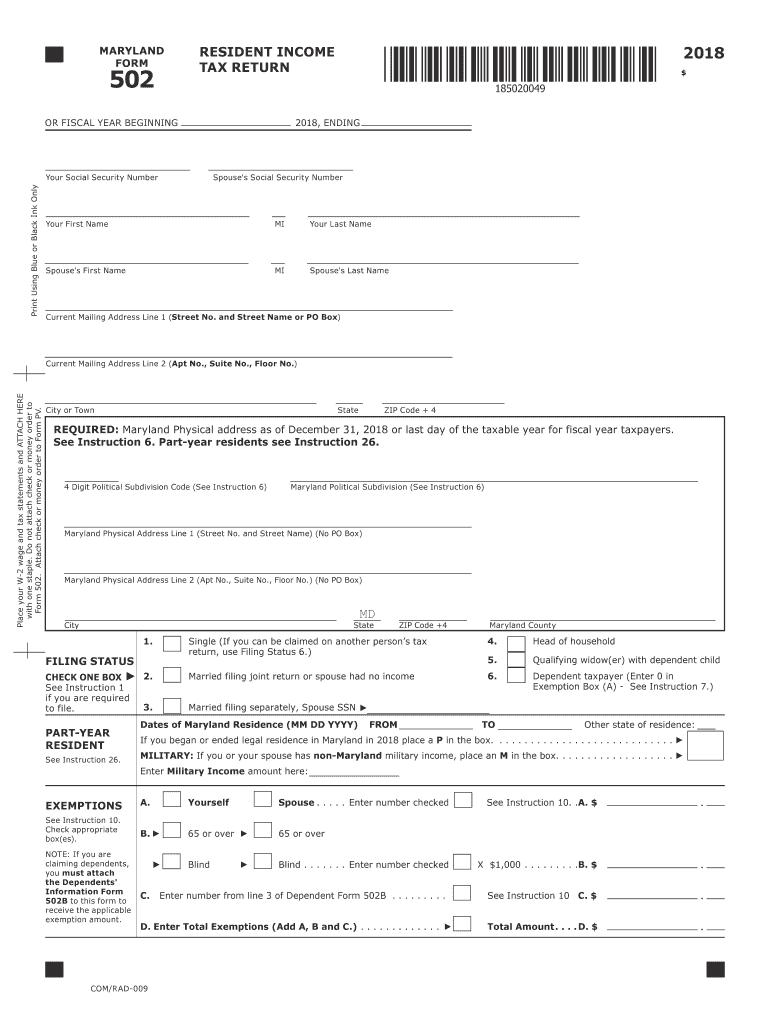
The Maryland Individual Income Tax Form 2016, commonly referred to as Maryland Form 502, is essential for residents to report their income, calculate taxable income, and determine the amount of state income tax owed to Maryland. This form plays a critical role in ensuring compliance with state tax laws and is a requirement for individuals who lived in or earned income from Maryland during the tax year 2016.
The form includes various sections designed to capture personal information, filing status, income details, and applicable tax credits. Individual residents and part-time residents use this form to file their tax returns, ensuring that they contribute their fair share to state funding. The form's comprehensive nature allows taxpayers to detail their income and claim deductions and exemptions accurately.
How to Obtain the Maryland Individual Income Tax Form 2016
Obtaining the Maryland Individual Income Tax Form 502 for 2016 is a straightforward process. There are multiple methods:
-
Online Access: The form can be downloaded from the official Maryland Comptroller’s website. This is the most accessible method for those with internet access, allowing for quick downloading and printing.
-
Local Tax Offices: Maryland tax forms are available at local tax offices, including libraries and post offices, where physical copies can be obtained.
-
Request by Mail: Taxpayers can contact the Maryland Comptroller’s office to request a form to be mailed to their address.
Ensuring access to the form is vital for timely filing and avoiding penalties due to late submissions.
Steps to Complete the Maryland Individual Income Tax Form 2016
Completing the Maryland Individual Income Tax Form 502 involves several key steps:
-
Personal Information: Begin with entering your name, address, Social Security number, and filing status. Accurately reporting this information is crucial for processing the return.
-
Income Details: Record all sources of income, including wages, salaries, and any other taxable income. Attach any relevant documents, such as W-2 or 1099 forms.
-
Deductions and Exemptions: Determine applicable deductions and exemptions, which can reduce your taxable income. List dependents if applicable.
-
Tax Calculation: Complete the calculations for your state tax liability, including any credits or subtractions permitted by Maryland law.
-
Final Review: Carefully review the completed form to ensure accuracy. Verify that all calculations are correct and all required fields are filled.
-
Submission: Once completed, submit the form along with any tax payment due by the stated deadline.
Filing Deadlines and Important Dates for 2016
The filing deadline for the Maryland Individual Income Tax Form 502 for the year 2016 was typically April 15, 2017. It's important for taxpayers to recognize that submitting the form on time is crucial to avoid late fees and potential penalties.
Extensions for filing were available upon request, providing additional time; however, it is important to note that this extension applied only to the filing of the form, not to the payment of taxes owed. Tax liabilities were still due by the original deadline to avoid interest charges.
Important Terms Related to the Maryland Individual Income Tax Form 2016
- Taxable Income: The portion of your income subject to state income tax after deductions and exemptions.
- Exemptions: Specific amounts deducted from your income for yourself, your spouse, and dependents, which reduce your taxable income.
- Filing Status: This classification, such as single, married filing jointly, or head of household, affects the tax rate and eligibility for certain credits.
- Tax Credit: Deductions from the total tax owed, potentially reducing the tax liability to the state.
Understanding these key terms helps ensure that the form is accurately and successfully completed.
Legal Use and Compliance for the Maryland Individual Income Tax Form 2016
The legal use of the Maryland Individual Income Tax Form 502 is mandated by the Comptroller of Maryland for compliance with the state's taxation statutes. Taxpayers are required to file this form honestly and accurately, as part of their legal obligation to report income and pay the appropriate amount of state taxes.
Proper documentation must accompany the form when applicable. Failure to comply with the requirements may result in audits, fines, or legal consequences.
Key Elements of the Maryland Individual Income Tax Form 2016
- Filing Status and Personal Information: Critical in determining tax rates and exemptions.
- Income Additions and Subtractions: Adjustments to federal gross income for state tax purposes.
- Exemptions and Deductions: To reduce the amount of taxable income.
- Tax Calculations: Determine state taxes owed with detailed calculations.
These elements ensure a comprehensive capture of a taxpayer's financial situation for accurate tax computation.
Required Documents for the Maryland Individual Income Tax Form 2016
To accurately complete the Maryland Individual Income Tax Form 502, the following documents are required:
- W-2 Forms: Issued by employers to report wages and taxes withheld.
- 1099 Statements: For additional income not reported on W-2 forms, such as freelance income or bank interest.
- Supporting Documentation: Proof for any claimed deductions, exemptions, or credits, including receipts and previous tax returns if necessary.
Ensuring all necessary documents are in order will facilitate a smoother filing process and help avoid delays or errors in the tax calculation.
Who Typically Uses the Maryland Individual Income Tax Form 2016
Residents of Maryland, including full-year and part-year residents who lived or earned income in Maryland during 2016, typically use this tax form. The form is essential for individual taxpayers, but does not apply to non-residents or corporations, who use different forms suited to their specific tax situation.
This slate of users points to the form's wide reach across different income brackets and residential circumstances, ensuring compliance with state tax obligations.