C105 2 2026

Get Form
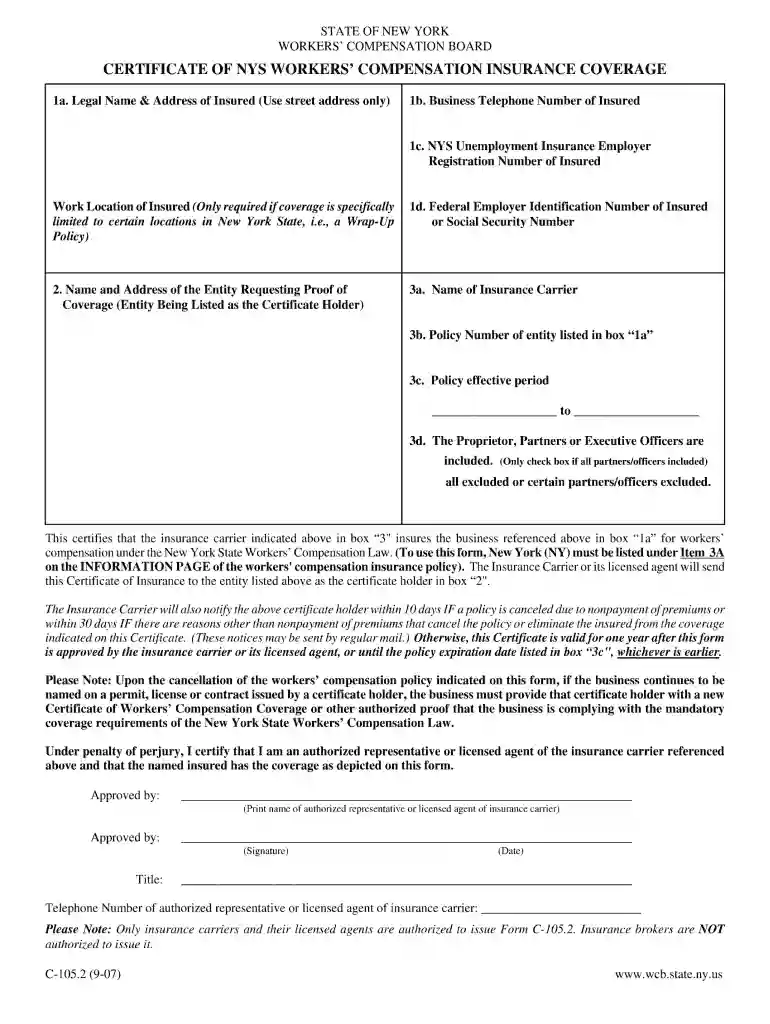
compensation insurance Preview on Page 1

Here's how it works

01. Edit your compensation insurance online
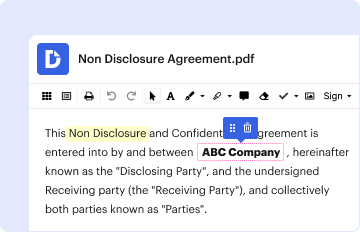
Type text, add images, blackout confidential details, add comments, highlights and more.

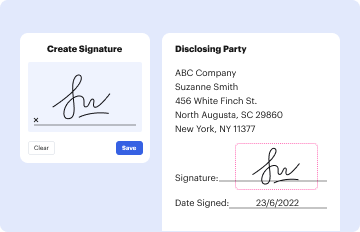
02. Sign it in a few clicks
Draw your signature, type it, upload its image, or use your mobile device as a signature pad.

03. Share your form with others
Send c 105 via email, link, or fax. You can also download it, export it or print it out.

Definition and Meaning of the c105 2 Form

The c105 2 form, officially known as the “Workers' Compensation Insurance Coverage Certification,” serves a crucial purpose for businesses operating in New York state. It is a mandatory form that verifies that an employer has obtained appropriate workers' compensation insurance coverage as required by New York state law. This form essentially provides evidence that an employer is compliant with legal requirements to protect employees injured on the job. Without this coverage, employers may face fines and legal actions.

The c105 2 form includes key information such as the legal name and address of the insured business, the insurance carrier information, and the policy number. These details are crucial for ensuring that businesses can fulfill their obligations to employees and meet state regulations. The form is pertinent not just for compliance but also for the overall safety and well-being of workers, demonstrating the employer’s commitment to a secure workplace environment.

How to Use the c105 2 Form

To effectively utilize the c105 2 form, it is essential to understand its key functions in the business context. Businesses typically need to present this form when applying for permits, licenses, or other regulatory requirements, as it confirms their compliance with state insurance laws.

  • Completion Process: When filling out the c105 2 form, ensure that all required fields are completed. This includes information about the employer, the insurance provider, and policy details. Missing information could result in delays or rejections.

  • Submission Locations: The completed c105 2 form should be submitted to the relevant agencies, such as state departments or local municipalities, depending on where the business operates. It's crucial to keep copies for your records.

Employing this form correctly contributes to operational legitimacy and protects the business from potential liabilities associated with employee injuries.

Steps to Complete the c105 2

Completing the c105 2 form requires a systematic approach to ensure accuracy and compliance. Here are the fundamental steps to consider:

  1. Gather Required Information: Collect necessary details, including your business's legal name, address, and contact number. You will also need information from your workers' compensation insurance provider: the insurer's name, policy number, and coverage dates.

  2. Complete the Form: Fill out the form neatly. Each field must be addressed to avoid processing issues. Pay special attention to the accuracy of the policy number and insurance company details.

  3. Review for Completeness: Ensure there are no missing fields and that all information provided is accurate. This can significantly reduce the likelihood of receiving a notice for correction.

  4. Submit: Once the form is complete, submit it to the relevant agency, such as your local government or department of labor. Ensure submission is done before any deadlines to keep your business compliant.

  5. Maintain Records: Keep a copy of the submitted form and any confirmation received after submission for your records. This is important for future reference or potential audits.

Following these steps helps businesses avoid non-compliance penalties and demonstrates fiscal responsibility regarding workers' safety.

Important Terms Related to the c105 2 Form

Understanding the key terms associated with the c105 2 form can provide clarity on its structure and importance. Below are critical terms:

  • Workers' Compensation: A form of insurance providing wage replacement and medical benefits to employees injured in the course of employment, protecting them from financial hardship.

  • Insurance Carrier: The company providing insurance coverage for the employer, responsible for processing claims and ensuring compliance with state regulations.

  • Coverage Certificate: A document that confirms the existence of a workers' compensation insurance policy, typically required for legal and operational purposes.

  • Employer Liability: The legal responsibility of employers to safeguard their workers’ well-being, which includes providing necessary insurance coverage.

Understanding these terms helps individuals and businesses navigate the regulatory landscape effectively when dealing with workers' compensation matters.

Who Typically Uses the c105 2 Form

The c105 2 form is crucial for various entities, particularly those engaged in business activities within New York state. Key users include:

  • Employers: Any business with employees is required to complete and file this form to demonstrate compliance with state workers' compensation insurance laws.

  • Contracting Businesses: Companies seeking contracts or permits often need to submit proof of insurance coverage. The c105 2 form serves as verification.

  • Government Agencies: Local and state agencies may request this form during audits, inspections, or as part of the application for certain licenses, aiming to ensure compliance.

  • Insurance Professionals: Agents and brokers may assist clients in completing the c105 2 to ensure that all regulatory requirements are satisfied for proper insurance coverage.

Understanding the primary users of the c105 2 form can enhance compliance and streamline interactions with regulatory entities, fostering a safer working environment.


decoration image ratings of Dochub

See more c105 2 versions

We've got more versions of the c105 2 form. Select the right c105 2 version from the list and start editing it straight away!
Versions Form popularity Fillable & printable
2007 4.9 Satisfied (293 Votes)
be ready to get more

Complete this form in 5 minutes or less

Get form

Got questions?

We have answers to the most popular questions from our customers. If you can't find an answer to your question, please contact us.
Contact us
When speaking with a workers comp doctor, you should avoid lying, exaggerating, downplaying symptoms, discussing fault or legal aspects, and speaking negatively about your employer, as these actions can harm your claim; instead, be honest, specific about your pain and limitations, and focus on the facts of the injury and its impact on your work ability, as the doctors report is crucial for your claims validity. What NOT to Say or Do: Lie or Exaggerate: Dont make up injuries or inflate your pain level, as this destroys credibility; but also dont downplay symptoms, as that hinders proper treatment. Discuss Fault or Legalities: Steer clear of blaming the employer or talking about lawsuits, settlements, or case specifics. Badmouth Your Employer/Insurer: Negative comments can be noted and used against you. Speculate or Self-Diagnose: Stick to your symptoms; let the doctor determine the diagnosis and treatment plan. Omit Key Details: Dont hide pre-existing conditions or relevant medical history, as inconsistencies can jeopardize your claim. Refuse Treatment: Dont refuse recommended tests or treatment, as it can hurt your recovery and claim. Say Im Fine: Unless you truly are, avoid saying youre fine, as it contradicts medical records and can damage your case. What TO Say/Do: Be Honest Specific: Clearly describe all your symptoms, where you feel pain, and its severity. Detail Functional Limitations: Explain exactly how the injury affects your ability to do job duties. Provide Full Medical History: Disclose relevant past injuries or conditions and how the current injury differs. Stick to Facts: Give a clear, factual account of how the accident happened, avoiding assumptions or accusations. Be Consistent: Ensure your account matches what you told the employer and adjuster. Tell Every Provider: Always mention the injury is work-related. Why This Matters: The workers comp doctors primary role is to evaluate your injury, determine work restrictions, and verify the claim, so your credibility and accurate reporting are vital for getting appropriate care and benefits. AI can make mistakes, so double-check responses5 Things You Should Never Say to a Workers Comp DoctorWhat You Shouldnt Tell Your Workers Comp Doctor. Here is a quick list of things that you should never say to your workers comp Krasno Krasno OnwudinjoWhat to Say and What Not to Say to a Workers Comp DoctorT. Andrew Miller
The most common workers comp claims are for overexertion and repetitive motion injuries, leading to sprains, strains, and soft tissue damage, often in the back, shoulders, and knees, typically from lifting, pushing, or pulling. Slips, trips, and falls are the second most frequent cause, followed by contact with objects, workplace violence, and transportation incidents. Top Causes of Workers Comp Claims Overexertion Repetitive Strain: Involves muscle/tendon injuries from forceful movements, lifting, or repetitive tasks, accounting for a large portion of claims and lost workdays. Slips, Trips, Falls: Often occur on wet surfaces or uneven ground, causing various injuries, especially to the back and knees. Contact with Objects Equipment: Being struck by, caught in, or compressed by machinery or other objects. Violence: Incidents involving other people or animals, particularly common in security and law enforcement. Transportation Incidents: Accidents involving company vehicles or while driving for work. Exposure: Contact with harmful substances or environments leading to skin conditions, respiratory issues, or hearing loss. Common Injury Types Sprains, Strains, Soft Tissue Injuries: Most frequent, often from overexertion. Fractures: Broken bones, common in falls or impacts. Contusions Cuts: Bruises and lacerations from impacts or punctures. AI can make mistakes, so double-check responses7 Common Workers Compensation Claim Injuries | EMPLOYERSBreaks in the bone of any degree due to forced trauma or overuse. These types of injuries are most common in jobs involving manualEmployers6 Common Workplace Injuries and How to File a Workers Comp ClaimAug 1, 2024 Puncture Injuries Staplers nail guns power tools, oh my! These are just a small selection of items that can cause apottengerlaw.com
When dealing with workers comp, avoid saying youre fine, downplaying pain, admitting fault, guessing about recovery, or discussing legalities, as these can hurt your claim; instead, stick to factual, detailed descriptions of the injury and let your doctor and lawyer handle medical and legal specifics to protect your benefits. What NOT to Say to an Adjuster or Doctor: Im fine, Its not that bad, or Ill be back to work soon: These minimize your injury and can reduce your benefits, even if youre not fully recovered. Admitting Fault or Blame: Dont say you were partly at fault, engaged in horseplay, or were impaired (drugs/alcohol) at work, as this can deny your claim. Speculating on Cause or Recovery: Avoid guessing about how it happened, how long youll be out, or your future medical needs; stick to facts. Using Absolute Words: Words like always or never can create inconsistencies in your medical records. Discussing Legal Matters: Dont talk about your lawyer, settlement, or legal strategy; let your attorney handle that. Lying or Exaggerating: Be honest but dont lie about prior injuries or symptoms, as inconsistencies damage credibility. Negative Comments About Your Employer: Dont badmouth your boss or company; it can undermine your credibility. What to Do Instead: Be Factual Detailed: Clearly describe the injury, when/where it happened, and your symptoms. Be Honest About Pre-Existing Conditions: Disclose them but explain how the work injury differs or worsened them. Let Professionals Lead: Allow doctors to diagnose and lawyers to manage the legal aspects. Control Your Emotions: Stay calm and polite, even if frustrated. Ask for Clarification: If you dont understand a question, ask for it to be repeated or rephrased. Key Takeaway: Be truthful, focus on the facts of your injury, and understand that adjusters work for the insurer, so limit what you say to protect your rights. Consulting a workers comp lawyer is always a good step. AI can make mistakes, so double-check responses5 Things You Should Never Say to a Workers Comp DoctorWhat You Shouldnt Tell Your Workers Comp Doctor. Here is a quick list of things that you should never say to your workers comp Krasno Krasno OnwudinjoTop 10 Things NOT to Say To Your Workers Comp Adjuster Ty Wilson Law - Straightforward, No Nonsense Help for Georgia Work Comp InjuryThe adjuster will want details on: * How the injury happened * When and where it took place * Anything that may be relevant to theTy Wilson Law
Form 105 is an Agreement to Extend the 180 Day Payment Without Prejudice Period (PWOP). Workers Compensation insurers may send this form to you if you are injured and have not gotten an attorney.
Rates by State StateAverage Issued Premium** AL$1,448 GA $1,041 IA $505 ID $1,211 Feb 20, 2026

Security and compliance

At DocHub, your data security is our priority. We follow HIPAA, SOC2, GDPR, and other standards, so you can work on your documents with confidence.

Learn more
ccpa2
pci-dss
gdpr-compliance
hipaa
soc-compliance
be ready to get more

Complete this form in 5 minutes or less

Get form

People also ask

There are five basic types of workers compensation benefits that include medical care, temporary disability benefits, permanent disability benefits, supplemental job displacement benefits, and death benefits. Injured workers may be entitled to one or more of these benefits.
To get a Certificate of Insurance (COI), contact your insurance agent or log in to your insurers online portal, provide your clients details (name, address, Tax ID) and any specific coverage requirements (like being listed as an additional insured), and they will issue the free document, usually within minutes to a few days, via email or download. Step-by-step guide: Gather Client Information: Get the name, address, Tax ID (EIN) of the party requesting the COI (your client, landlord, etc.). Check Requirements: Find out exactly what coverage they need and if they need to be added as an Additional Insured (AI) or Certificate Holder. Contact Your Insurer: Online: Log into your insurance companys website or app (e.g., Nationwide, The Hartford, Hiscox) and look for a Request a COI or similar option. Agent/Broker: Call your insurance agent or broker directly; they can generate it for you. Provide Details: Give them the clients info, your policy number, and the specific requirements, especially if they need to be listed as an Additional Insured. Receive Your COI: The insurer or agent will issue the COI, often instantly or within 24 hours, as a PDF emailed or available for download. Key Points: Its a free document that proves you have insurance. It acts as proof for third parties like clients, landlords, or contractors. For financial advice, consult a professional. Certificate of Insurance (COI) - Progressive CommercialA certificate of auto liability insurance proves that you have commercial auto coverage for accidents involving your work vehiclesProgressive Commercial InsuranceCertificate of Insurance (COI) | The HartfordAt The Hartford, we make it quick and simple to request a COI, no matter the day or time. You can easily request a certificate thrThe Hartford
Obtain the NY C-105.2 form from the New York State Workers Compensation Board website or your employer. Fill out the employees information section, including your name, address, and Social Security number.

c 105 2 form