
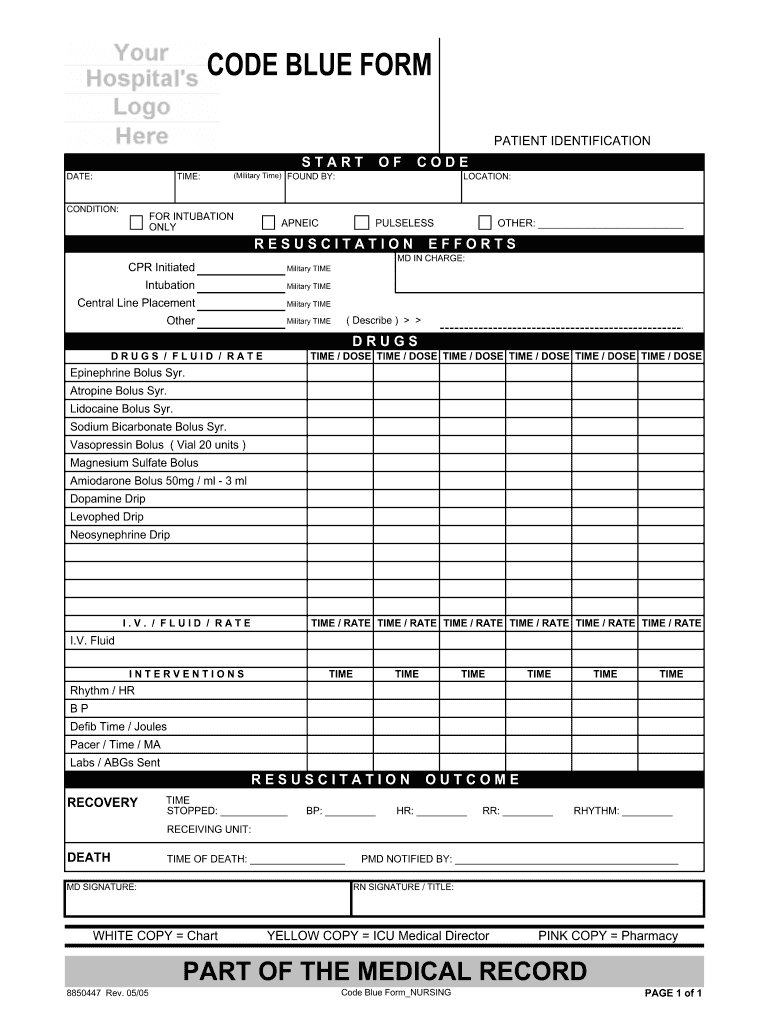







Definition and Purpose of the Code Blue Record Sheet PDF
The Code Blue record sheet, often referred to in various contexts such as the code blue documentation sheet or code blue recorder sheet, is critical in medical environments during emergencies. It serves as a formal document to capture all essential details related to cardiac arrest and other life-threatening situations requiring immediate resuscitation efforts. This includes vital patient information such as:
- Patient Identification: Name, age, medical history, and emergency contact details.
- Time of Events: Timestamping critical interventions to create a timeline of events.
- Medications Administered: A log of all medications given during the resuscitation attempts.
- Interventions Performed: Detailed documentation of medical procedures undertaken, including CPR techniques and defibrillation data.
This structured documentation is crucial for ensuring accountability, legal protection, and quality improvement in healthcare settings. It forms the basis for debriefing and analyzing the response to such emergencies, helping healthcare teams to improve their protocols and training for future incidents.
How to Use the Code Blue Record Sheet PDF
Utilizing the Code Blue record sheet PDF involves several key steps to ensure precise and effective documentation during a medical emergency. Here's how to use it effectively:
-
Preparation Before Its Use:
- Familiarize yourself with the layout of the code blue sheet.
- Ensure that the document is readily accessible in areas such as crash carts and emergency response bags.
-
Capturing Patient Information:
- Immediately fill out the patient identification section upon assessment.
- Note any pre-existing medical conditions known prior to the emergency.
-
Documenting Intervention Steps:
- As interventions occur, chronologically document each action taken, including the time and type of medication administered.
- Record the times at which vital signs are checked, ensuring that each entry is accurate and precise.
-
Post-Event Processing:
- Once the emergency has concluded, the form can be reviewed by the team lead for accuracy.
- It should then be signed by relevant medical personnel for legal validation before filing.
This methodical approach ensures that a complete record is maintained, aiding future evaluations and maintaining compliance with medical standards.
How to Obtain the Code Blue Record Sheet PDF
Obtaining a Code Blue record sheet PDF is straightforward. Here are the primary avenues through which it can be accessed:
- Medical Facility Resources: Most hospitals and emergency medical services (EMS) provide this form internally. Teams can typically request copies from their administration or quality assurance departments.
- Professional Healthcare Organizations: Organizations such as the American Heart Association (AHA) often provide access to standard templates for optimal use in clinical settings.
- Digital Platforms: Online resources, including document management platforms, often host downloadable versions of code blue sheets. It is vital to ensure these sources offer the most current and compliant versions.
By utilizing these resources, healthcare professionals can ensure that they have the most effective tools for accurate emergency documentation.
Steps to Complete the Code Blue Record Sheet PDF
Completing the Code Blue record sheet PDF involves a systematic approach to ensure all pertinent information is recorded accurately. Below are detailed steps to follow:
-
Initial Identification:
- Begin with entering the patient's full name, age, sex, and medical identification number, if available.
- Document the date and time when the code blue was called.
-
Timeline of Events:
- Maintain a chronological log of events from the start of the emergency.
- Include timestamps for significant interventions such as the initiation of CPR and defibrillation.
-
Recording Administration of Medications:
- For each medication administered, include:
- The name of the drug
- Dosage and method of administration
- Timestamp of administration
- This ensures a comprehensive record for post-event analysis.
- For each medication administered, include:
-
Detailing Interventions:
- Note all interventions performed:
- CPR methods used
- Any advanced cardiac life support (ACLS) measures taken
- Use specific terms to identify the types of maneuvers or medical equipment utilized.
- Note all interventions performed:
-
Outcome Documentation:
- Finally, document the outcome of the resuscitation efforts, whether successful or unsuccessful, to ensure a complete picture is provided for further review.
By adhering to these structured steps, healthcare practitioners can enhance the quality and reliability of their emergency documentation efforts.
Important Terms Related to the Code Blue Record Sheet PDF
Understanding specific terminology surrounding the Code Blue record sheet PDF is crucial for effective communication in a medical setting. Here are key terms and their meanings:
- ACLS (Advanced Cardiac Life Support): A set of clinical algorithms used in medical emergencies to manage life-threatening situations involving cardiac arrest.
- CPR (Cardiopulmonary Resuscitation): A lifesaving technique used in emergencies when someone's heartbeat or breathing has stopped.
- Defibrillation: A medical procedure that uses electrical shocks to restore normal heart rhythm in cases of severe arrhythmias.
- Documentation: The act of recording information about patient care, including all interventions performed in a Code Blue situation.
Familiarity with these terms enhances communication among healthcare professionals and supports effective teamwork during emergencies.
Legal Use of the Code Blue Record Sheet PDF
The Code Blue record sheet is not only a clinical tool but also serves legal purposes within healthcare settings. Understanding its legal implications is essential:
- Documenting Compliance: Accurate and timely documentation using the code blue sheet helps ensure that healthcare providers comply with regulatory standards.
- Legal Protection: In the event of litigation, a detailed and properly filled code blue record sheet provides evidence that interventions were performed according to established medical protocols.
- Patient Rights: It is also an important tool for safeguarding patient rights, as it creates a reliable account of care provided during emergencies.
Healthcare facilities must ensure that all staff are trained in the proper use and completion of this document, thereby reinforcing legal and ethical standards in patient care.




