






Definition and Meaning of a Civil Summons in North Carolina
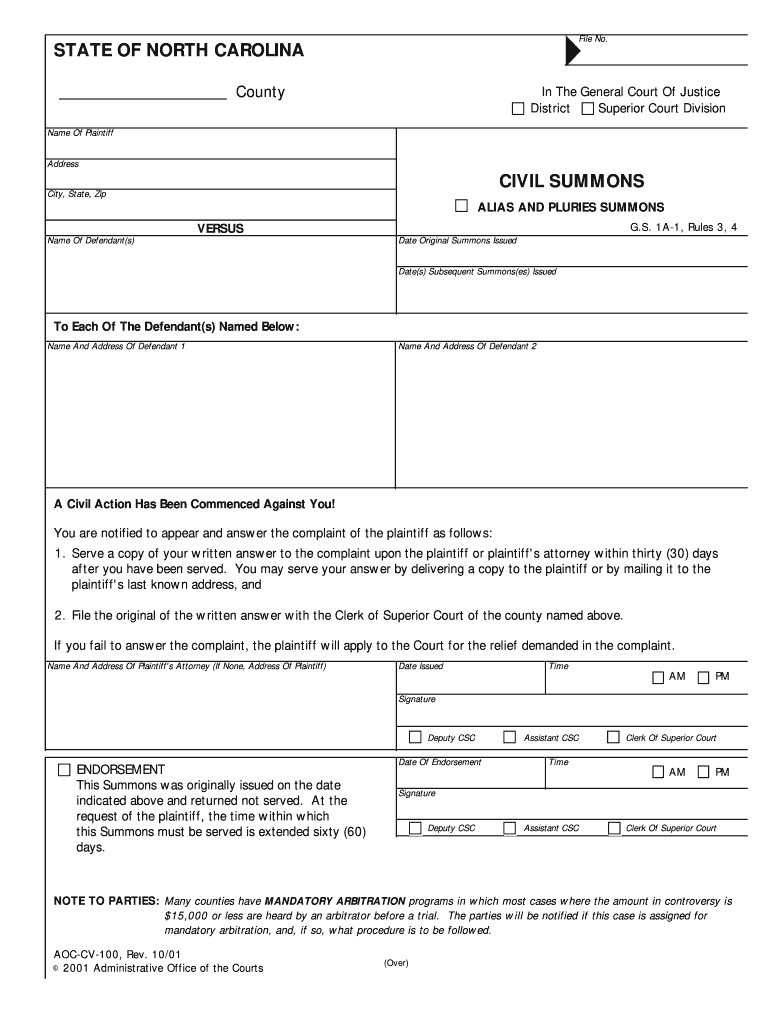
A civil summons in North Carolina is a legal document issued to inform a defendant that a civil action has been initiated against them. This document outlines the plaintiff's claims and necessitates a response from the defendant within a specified timeframe, typically 30 days. The civil summons serves multiple purposes, including notifying the defendant about the need to appear before the court and providing essential details about the case, such as the court where the action has been filed. Understanding the civil summons is critical as failing to respond appropriately can result in a default judgment, where the court may rule in favor of the plaintiff without the defendant’s input.
Key Elements of a Civil Summons
- Parties Involved: Clearly identifies the plaintiff (the party initiating the lawsuit) and the defendant (the party being sued).
- Court Information: Specifies the court that has jurisdiction over the case and where the defendant should respond.
- Response Deadline: Indicates the time frame in which the defendant must serve a written answer to the complaint.
- Consequences of Non-Response: Highlights the potential outcomes if the defendant neglects to respond, such as a default judgment.
Understanding these key elements enables defendants to take appropriate action in response to the civil summons.
Steps to Respond to a Civil Summons in North Carolina
Responding to a civil summons involves a systematic approach to ensure compliance with court requirements. Follow these steps to respond effectively:
- Read the Summons Carefully: Review the summons and accompanying complaint to grasp the nature of the allegations against you.
- Prepare a Written Answer: Draft a formal response known as the "Answer," which directly addresses each allegation in the complaint. Be precise and provide factual corrections where necessary.
- Include Affirmative Defenses: If applicable, include any defenses or counterclaims that you wish to assert against the plaintiff's claims.
- File Your Answer: Submit your completed answer to the Clerk of Superior Court in the county where the summons was issued. Ensure you file it within the stated deadline to avoid a default judgment.
- Serve the Plaintiff: After filing your answer with the court, serve a copy to the plaintiff or their attorney, typically through mail or personal delivery.
- Prepare for Court: If necessary, prepare for any upcoming court appearances related to the case. Familiarize yourself with court procedures and consider consulting legal assistance if needed.
Additional Considerations
- Understand the Format: Familiarize yourself with the format of a civil summons answer form in North Carolina, which can include specific sections such as contact information and a declaration of the truth of your statements.
- Seek Legal Counsel: If uncertain, consider seeking legal advice or support to ensure your response adequately protects your rights.
Important Legal Terms Related to Responding to a Civil Summons
Understanding essential legal terminology is crucial when responding to a civil summons. Familiarize yourself with the following terms:
- Defendant: The person or entity being sued in a civil lawsuit.
- Plaintiff: The individual or group that initiates the lawsuit.
- Answer: A formal written response to the complaint, outlining the defendant's position.
- Default Judgment: A ruling in favor of the plaintiff when the defendant fails to respond to the summons.
- Affirmative Defenses: Arguments presented by the defendant which may negate the plaintiff’s claims.
Being aware of these terms provides clarity and aids in effectively navigating the legal process.
Form Submission Methods for Response to a Civil Summons
In North Carolina, you can submit your response to a civil summons through various methods, ensuring that you comply with court procedures:
- Online Filing: Many districts provide online filing options, making it convenient to submit documents without visiting the court physically. Check if your local court supports this method.
- Mail: You can send your answer by mail to the Clerk of Superior Court, ensuring it is postmarked by the response deadline.
- In-Person Submission: Visiting the courthouse to personally file your answer is another option. This allows you to receive immediate confirmation that your documents have been filed.
Ensure that you keep copies of all documents submitted, regardless of the method chosen, for your records.
Penalties for Non-Compliance with a Civil Summons
Failing to respond to a civil summons can lead to significant legal consequences, including:
- Default Judgment: The most immediate consequence is that the court may issue a default judgment against you, ruling in favor of the plaintiff without your input. This could result in financial liabilities or the loss of property.
- Court Fees: You may incur additional fees related to court costs if you fail to properly contest the claims against you.
- Impact on Credit and Reputation: Non-compliance can also affect your credit rating and professional reputation, especially if the judgment leads to wage garnishments or liens against your property.
Understanding these potential penalties underscores the importance of responding promptly and appropriately to a civil summons.