DTMB - Tips for Proofreading Your Documents - State of Michigan 2026

Get Form
dtmb bid results Preview on Page 1

Here's how it works

01. Edit your dtmb bid results online
Type text, add images, blackout confidential details, add comments, highlights and more.

02. Sign it in a few clicks
Draw your signature, type it, upload its image, or use your mobile device as a signature pad.

03. Share your form with others
Send dtmb forms via email, link, or fax. You can also download it, export it or print it out.

How to use or fill out DTMB - Tips for Proofreading Your Documents - State of Michigan with DocHub

Form edit decoration
9.5
Ease of Setup
DocHub User Ratings on G2
9.0
Ease of Use
DocHub User Ratings on G2
  1. Click ‘Get Form’ to open it in the editor.
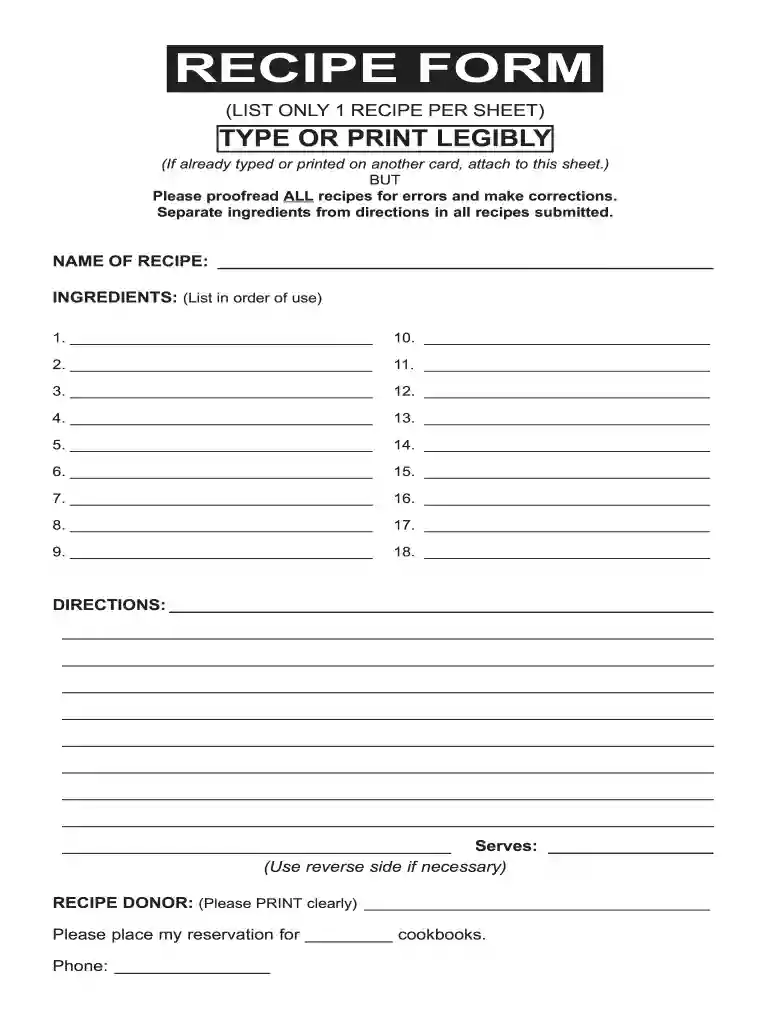
  2. Begin by entering the 'NAME OF RECIPE' at the top of the form. Ensure that this is clear and legible.
  3. In the 'INGREDIENTS' section, list each ingredient in order of use. Use separate lines for each item, ensuring accuracy and clarity.
  4. Proceed to fill in the 'DIRECTIONS' section. Provide detailed instructions on how to prepare the recipe, making sure to proofread for any errors.
  5. Indicate the number of servings at the bottom of the directions section. If more space is needed, utilize the reverse side of the sheet.
  6. Finally, complete the 'RECIPE DONOR' section by printing your name clearly and providing a contact phone number.

Start using our platform today to streamline your document editing process for free!

See more DTMB - Tips for Proofreading Your Documents - State of Michigan versions

We've got more versions of the DTMB - Tips for Proofreading Your Documents - State of Michigan form. Select the right DTMB - Tips for Proofreading Your Documents - State of Michigan version from the list and start editing it straight away!
Versions Form popularity Fillable & printable
2014 4.4 Satisfied (46 Votes)
be ready to get more

Complete this form in 5 minutes or less

Get form

Got questions?

We have answers to the most popular questions from our customers. If you can't find an answer to your question, please contact us.
Contact us
Proofread backwards. Place a ruler under each line as you read it. Know your own typical mistakes. Proofread for one type of error at a time. Try to make a break between writing and proofreading. Proofread at the time of day when you are most alert to spotting errors. Proofread once aloud.
ProWritingAid. ProWritingAid looks for grammatical and punctuation mistakes. Autocrit. Autocrit is an editing software built specifically for authors of fiction. Grammarly. With over 10 million users, Grammarly is one of the most popular online proofreading softwares on the market. Ginger. Hemingway. Quillbot.
Proofreading Techniques Read your paper aloud. Sometimes writing sounds different in your head than it sounds on paper. Make a list of errors that you commonly make and keep an eye out for them. Read the text backwards. Proofread for only one type of error at a time. Double check everything: Read slowly and carefully.
Read each word slowly One technique that the majority of professional proofreaders use is to read the writing they are proofreading out loud. This forces you to voice every single word and involves your auditory senses in the process, meaning that you can hear how the text actually sounds when it is read.
What are the Types of Proofreading? 1) Traditional Proofreading. 2) Copy editing. 3) Structural Proofreading. 4) Technical Proofreading. 5) Academic Proofreading. 6) Website Proofreading. 7) Legal Proofreading. 8) Business Proofreading.

Security and compliance

At DocHub, your data security is our priority. We follow HIPAA, SOC2, GDPR, and other standards, so you can work on your documents with confidence.

Learn more
ccpa2
pci-dss
gdpr-compliance
hipaa
soc-compliance
be ready to get more

Complete this form in 5 minutes or less

Get form

People also ask

The the 5 most common proofreading mistakes Number 1. Homophones. Homophones (from the Greek words homos, meaning same, and phone, meaning sound) are words that have the same sound but different meanings. Number 2. Inconsistency. Number 3. Apostrophe problems. Number 4. Poor syntax.
The usual suspects proofread from a printout of our work, not a computer screen read our work backwards use a blank sheet of paper to cover up the lines below the ones were reading so we dont skip ahead read our work out loud. (For the faint of voice, Im told the latest MS Word has a text-to-speech conversion tool.)

Related links