






Definition & Meaning
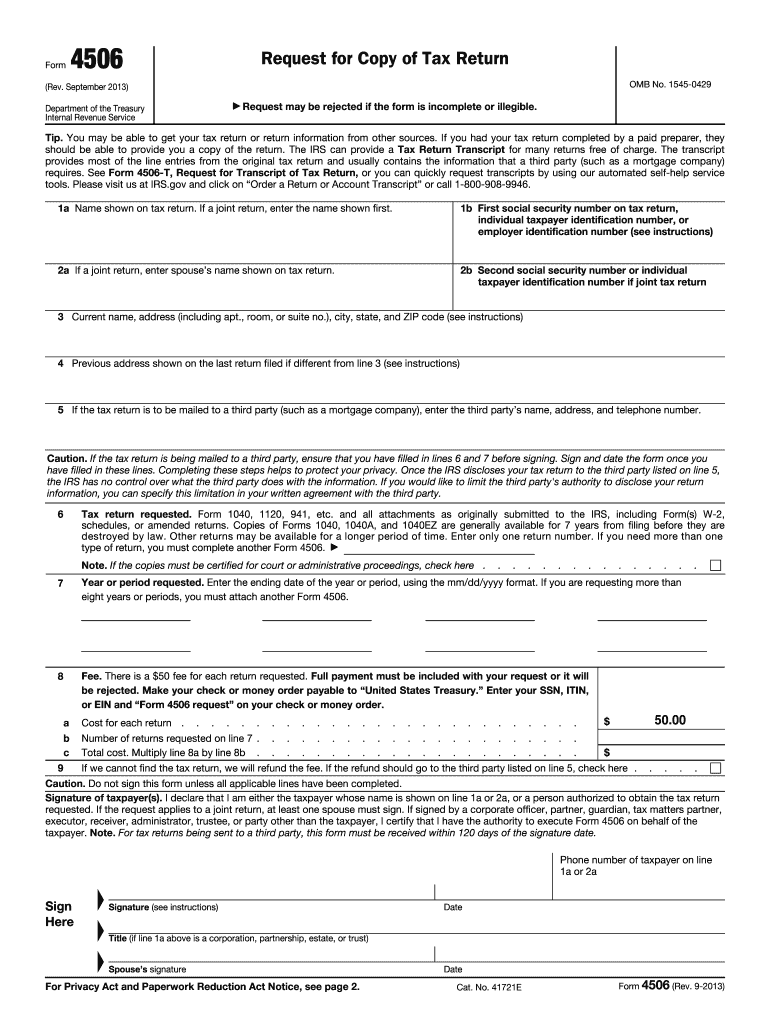
Form 4506, often referred to as "Request for Copy of Tax Return," is an official document provided by the Internal Revenue Service (IRS) that allows individuals and businesses to request a copy of previously filed tax returns. The 2013 version of this form specifically pertains to copies of tax returns filed in or prior to that year. Understanding its purpose is critical for individuals who need records for legal, financial, or personal use. This form is typically used when you need a complete record of your financial dealings with the IRS, such as when preparing for a legal case, verifying income, or reconstructing your tax returns for applications like loans or mortgages.
How to Use the 2013 Form 4506
To use the 2013 Form 4506 effectively, first determine the specific tax years you wish to request copies for. This form allows you to request a specific year or multiple years on a single form. Carefully fill in your personal details, such as your name, social security number, and mailing address. Provide the exact tax form number you're requesting, for example, Form 1040, and the year you need. It's important to specify if you require all forms filed under your social security number or just a subset. Additionally, sign and date the form before submission, as an unsigned form will be rejected by the IRS, causing unnecessary delays.
How to Obtain the 2013 Form 4506
The 2013 Form 4506 can be obtained through several convenient methods. You can download a PDF version directly from the IRS official website. Alternatively, you may request a physical copy by contacting the IRS via their official hotline. For those who prefer in-person interactions, IRS offices provide physical copies upon request. Ensure that you are using the correct version of the form by verifying the form number and the year on the top corner before proceeding with your request.
Steps to Complete the 2013 Form 4506
- Enter Your Personal Information: Fill in your full name, current address, and previous addresses if applicable. If the request is for a joint return, include both parties' details.
- Specify Return Information: Input the forms you're requesting, such as 1040, and the specific years.
- Indicate Reason for Request: While not always mandatory, providing a reason can expedite processing, especially in situations involving legal or financial institutions.
- Submit Payment: Include the necessary fee for each requested tax year. The IRS fee schedule outlines these costs.
- Sign and Date: Ensure the form is signed by the taxpayer listed. For joint returns, both parties must sign.
- Mail the Form: Send the completed form to the address provided in the instructions, which may vary based on your location.
Key Elements of the 2013 Form 4506
- Tax Year and Form Type: Specify each tax year and form you are requesting.
- Authorization Signature: Legal requirement for processing.
- Payment Information: Details ensuring the processing fee is covered.
- Mailing Address: Provide the correct IRS address based on your state.
- Processing Timeline: Typical response time is 60 days, though this may vary.
Important Terms Related to 2013 Form 4506
- Transcript: A less detailed document compared to a full return, often requested for loan applications.
- Certified Copy: A legal verification of authenticity, necessary for court proceedings.
- Joint Returns: Returns filed by married couples, requiring both signatures for release.
- Fee Waiver: In rare cases, the fee may be waived for economically disadvantaged individuals, subject to IRS approval.
IRS Guidelines
The IRS provides specific guidelines on how the Form 4506 must be filled out and submitted. It is paramount to avoid common errors, such as incorrect social security numbers or insufficient payment, which can delay processing. The IRS updates its requirements periodically, so always check the latest version of the form and guidelines from the IRS website. Maintaining accuracy and compliance with these guidelines ensures a smoother and faster processing experience.
Penalties for Non-Compliance
Failure to comply with IRS regulations when submitting Form 4506 can result in significant penalties. This includes providing false information or omitting critical details, which can lead to fines and legal implications. It's essential to ensure that all information is accurate and truthful to prevent any adverse outcomes. If unsure, consulting with a tax professional can help mitigate risks associated with the submission of this form.