






Definition & Meaning
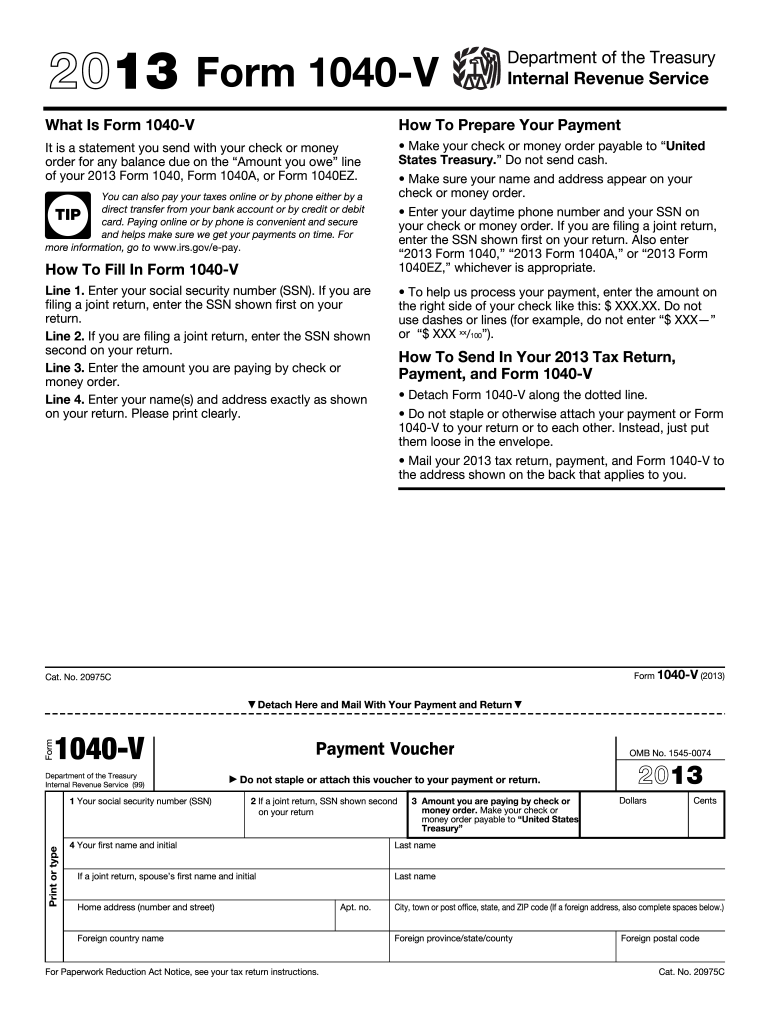
The 2013 Form 1040-V, also known as a payment voucher, is used by taxpayers in the United States to submit payments for any balance due on their individual income tax returns, specifically for Forms 1040, 1040A, or 1040EZ. This form provides essential instructions on how to prepare and send payments to the Internal Revenue Service (IRS), ensuring that the process is clear and efficient for taxpayers. It includes information on making checks payable to the United States Treasury and details on mailing addresses based on the taxpayer's specific location.
How to Use the 2-V Form
Using Form 1040-V involves several clear steps to ensure proper payment submission. First, after completing your tax return, you should confirm the amount owed, which will be indicated on your tax form. Next, fill out the 1040-V form with meticulous attention to the sections that require your name, address, Social Security number, and payment amount. Before sending the payment, make sure your check or money order is made payable to the "United States Treasury" and includes your Social Security number, daytime phone number, and "2013 Form 1040-V" on the memo line for identification purposes.
How to Obtain the 2-V Form
The 2013 Form 1040-V can easily be obtained online from the IRS official website or through authorized tax preparation software such as TurboTax or H&R Block. Additionally, physical copies might be available at your local post office, library, or an IRS Taxpayer Assistance Center. For those who used tax software or an accountant to file, the form may have been included with your return package, allowing you to print it directly from there.
Steps to Complete the 2-V Form
- Enter Personal Information: Fill in your full name, mailing address, and Social Security number on the designated lines.
- Indicate Payment Amount: Specify the exact amount you are paying. It's crucial to double-check this amount against what's noted on your tax return to avoid discrepancies.
- Prepare Payment Method: Make your check or money order payable to "United States Treasury." Avoid sending cash. Note your Social Security number and "2013 Form 1040-V" on the payment medium.
- Package and Send: Detach Form 1040-V where indicated and send it with your payment but do not staple the form to your check or money order. Ensure the mailing address matches the city and state as specified by the IRS guidelines appropriate to your residence area.
Key Elements of the 2-V Form
- Personal Identification Information: Ensure accurate completion of your name and Social Security number.
- Payment Identification: Clearly write "2013 Form 1040-V" and your contact details on the check or money order.
- Separate Mailing Instructions: Confirm the correct IRS mailing address based on your location, as indicated in IRS instructions.
Filing Deadlines / Important Dates
It is imperative to be mindful of the filing deadline for the 2013 tax year, typically falling on April 15, 2014. Missing this deadline could result in penalties or interest on unpaid taxes. If you reside in an area affected by federal disaster declarations, those affected may have different deadlines, providing additional flexibility in some cases.
Form Submission Methods
- Mail: The prevalent submission method involves mailing the completed 1040-V form along with your check or money order to the IRS's specified P.O. Box as per your area.
- Electronic Payment Options: Although directly not part of 1040-V, using online payment options through the IRS website reduces the need for this form. However, it complements that process if the taxpayer prefers assurance via mailed payment.
Examples of Using the 2013 Form 1040-V
Consider a case where a taxpayer calculates a balance due after completing their 2013 Form 1040. They decide to make a payment to avoid any late fees or penalties. By completing Form 1040-V accurately and verifying the payment amount, the taxpayer ensures that their payment is properly credited to their account. Such precision in using Form 1040-V can streamline tax payments and provides a straightforward approach to handling tax balances without error.
IRS Guidelines
IRS guidelines for Form 1040-V emphasize accuracy and timeliness. The agency demands strict adherence to filing deadlines and accurate reporting of tax liabilities to avoid penalties. The IRS also emphasizes the importance of using the correct mailing address, depending on where you reside, to ensure proper processing. Following the guidelines ensures reliable communication and efficient processing of your tax payments and associated forms.