
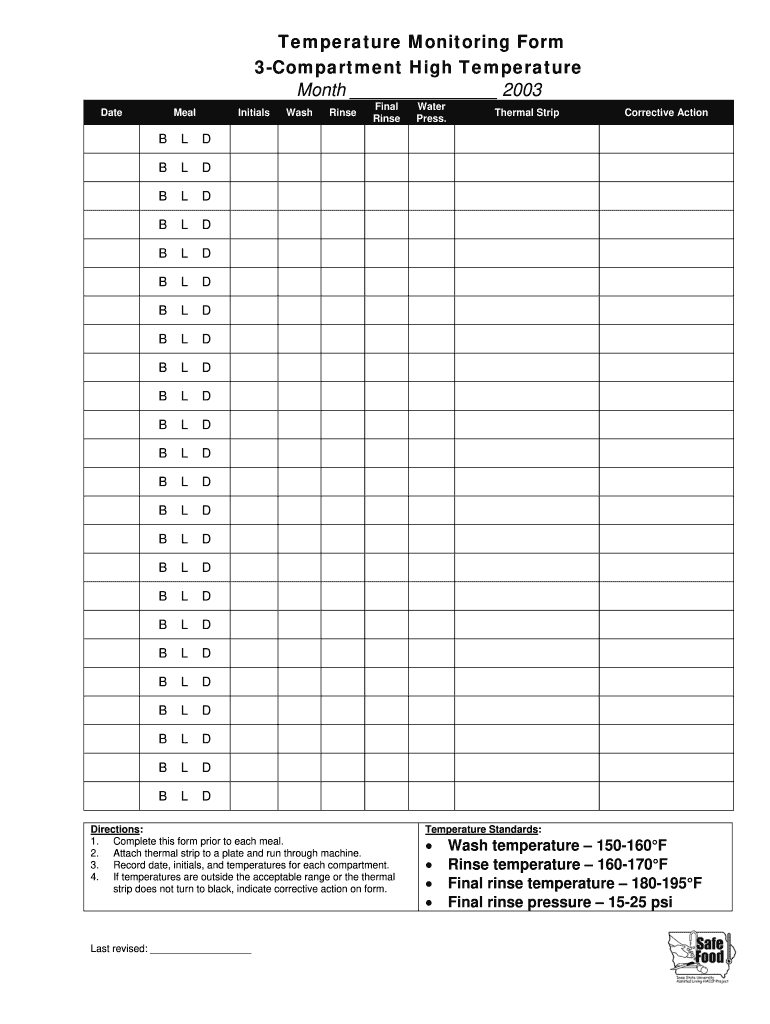







Overview of the Dish Machine Log
The dish machine log is a critical documentation tool in food service and hospitality establishments, especially kitchens that rely on effective cleaning processes. It enables monitoring and verification of dish machine operation, ensuring compliance with health codes and food safety regulations. Utilizing a log is essential for maintaining proper sanitation standards and demonstrating adherence to HACCP (Hazard Analysis Critical Control Point) principles, which are crucial in food safety protocols.
Purpose and Importance of Maintaining a Dish Machine Log
Maintaining a dish machine log serves multiple purposes, primarily focusing on sanitation and safety. It allows for the tracking of dishwashing processes, including critical temperature readings during each cycle. Key reasons for its importance include:
- Compliance with Health Regulations: Many state and local health departments require dishwashing facilities to document their operations, which is validated during inspections.
- Quality Assurance: Recording temperatures helps ensure dishes are sanitized effectively, reducing the risk of foodborne illnesses.
- Operational Efficiency: By monitoring operations, staff can quickly identify and troubleshoot issues with dish machines, minimizing downtime and service disruption.
Required Information in a Dish Machine Log
A comprehensive dish machine log should contain essential details for accurate tracking and reporting. Key elements typically include:
- Date and Time: Recording the date and time of each operation helps in identifying patterns or issues over time.
- Temperature Readings: Essential for verifying that the dish machine operates within safe temperature ranges. Document specific readings for washing, rinsing, and final sanitization.
- Initials of Staff: Including the initials of the staff member who conducted the logging helps build accountability and traceability within the team.
Frequency of Log Completion
The frequency of completing the dish machine log is critical for effective monitoring. It is recommended to log the temperatures for every wash cycle. Specific guidelines include:
- Before and After Service: Log temperatures at the start and end of service to establish a baseline.
- Regular Intervals: For busy kitchens, completing logs at regular intervals (e.g., every hour) can provide insights into machine performance and potential issues.
- Post-incident Recording: If issues arise, such as equipment failure, immediate logging of corrective measures and observations is essential for collective records and improvement plans.
Types of Dish Machine Logs Used
Different types of dish machine logs exist based on specific operational needs. Key variations include:
- Printable Dishwasher Temperature Log Template: This template can be printed and used manually for quick changes or notes, providing flexibility when digital options are unavailable.
- Digital Versions: Many kitchens opt for digital logs integrated with their kitchen management systems for real-time tracking and data analysis.
- HACCP Dishwasher Temperature Log: Complies with HACCP guidelines for food safety, specifically designed to meet rigorous health department standards.
Common Challenges in Maintaining a Dish Machine Log
Several challenges can hinder the effective use of dish machine logs. Addressing these challenges ensures the reliability of recorded data:
- Incomplete Records: Staff may sometimes forget or neglect to log necessary data, which can lead to compliance issues.
- Temperature Trekking: Staff might not understand how to correctly measure and log temperatures, leading to inaccurate records.
- Lack of Training: Insufficient staff training on the importance and methodology of logging can result in careless entries. Regular training sessions can help alleviate this.
Best Practices for Using a Dish Machine Log
Implementing best practices will maximize the effectiveness of your dish machine log. Consider the following recommendations:
- Create a Standard Operating Procedure (SOP): Develop clear guidelines on how and when to fill out the log. This ensures consistency and accuracy.
- Regularly Review Logs: Supervisors should routinely analyze logged data to identify trends, discrepancies, or areas needing improvement.
- Keep Logs Accessible: Ensure that logs are easily accessible, whether digital or paper, for all relevant staff. Accessibility increases the likelihood of compliance.
Real-World Application Scenarios
In practical scenarios, the dish machine log serves various operational and compliance needs:
- Inspection Preparation: Prior to health inspections, having a complete and accurate dish machine log provides proof of compliance, making it easier to demonstrate adherence to health standards.
- Staff Training: New staff members can be trained using existing logs to learn about daily operations and expectations regarding sanitation.
- Audit Trials: In case of foodborne illness reports, logs assist in tracing back operations to verify if any lapses occurred during the dishwashing process.
Utilizing a dish machine log effectively supports not only food safety and operational efficiency but also fosters a culture of accountability and quality assurance within food service environments.


