







Definition and Meaning of a Sole Proprietor Certificate
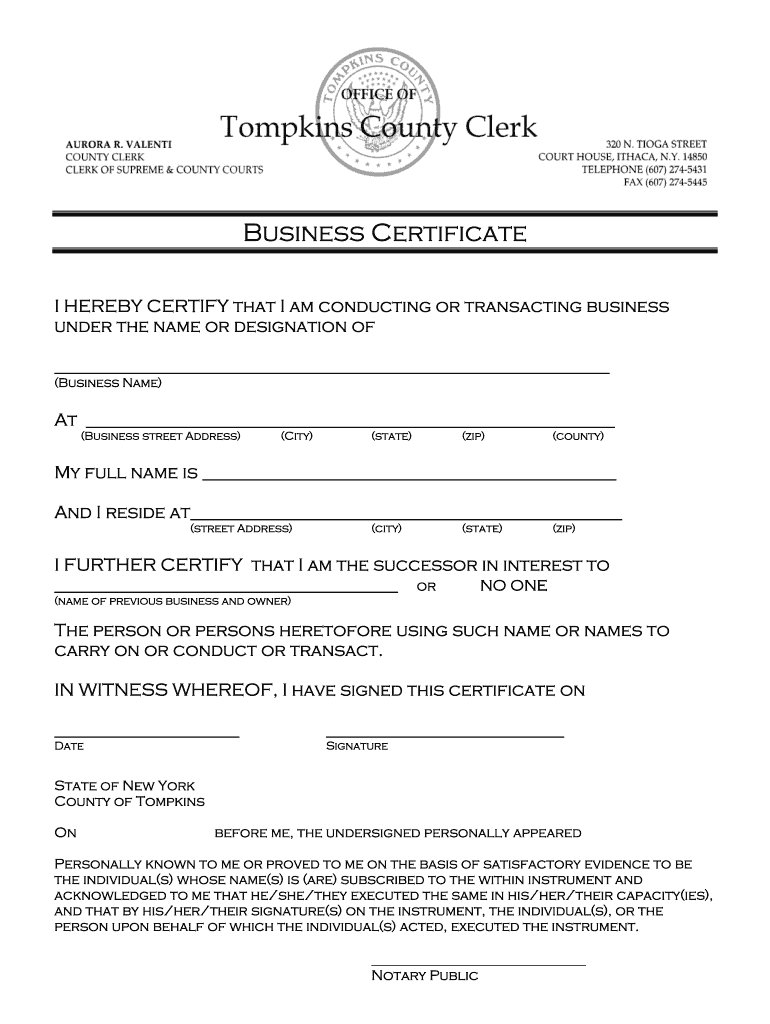
A sole proprietor certificate is an official document that verifies an individual is operating a business under a specific name and address. This certificate often serves as proof of the existence of a sole proprietorship, which is one of the simplest forms of business entity in the United States.
- Sole Proprietorship Definition: A sole proprietorship is an unincorporated business owned and operated by a single individual. The owner is personally liable for all debts and obligations incurred by the business.
- Purpose of the Certificate: The primary function of the sole proprietor certificate is to inform the public that the business is registered under the specified name. This aids in building trust with customers and suppliers.
The certificate generally includes:
- The name of the business owner
- The name under which the business operates
- Business address
- Notarization details to validate signatures
How to Obtain a Sole Proprietor Certificate
Obtaining a sole proprietor certificate typically involves several systematic steps that can vary by state. However, the process generally follows the outlined procedure.
- Choose a Business Name: Before applying, ensure that the chosen business name complies with state laws and is not already in use.
- Check Availability: Conduct a name search through the relevant state department’s database or website to confirm availability.
- Complete the Application: Fill out the state-specific application form, which may be available online or at local business offices.
- Notarization: Some states may require you to notarize the application, particularly if you are signing the document electronically.
- Submit Application: File your completed application along with any required fees. This may be done online, by mail, or in person at designated offices.
Specific requirements and forms can vary significantly by state, so it’s essential to consult local regulations to ensure compliance.
Steps to Complete the Sole Proprietor Certificate
Completing the sole proprietor certificate often requires attention to specific details and adherence to regulations. Here’s a straightforward breakdown of the necessary steps to finalize the certificate.
- Gather Required Documents: Before initiating the application, collect personal identification, proof of address, and any other required documentation such as tax identification numbers.
- Fill in Required Information: Provide accurate and complete information within the application, including:
- Full legal name of the owner
- Business name (if different from the owner's name)
- Business address
- Notarize Documents: If required, sign the application in the presence of a notary public to validate the document.
- Payment of Fees: Include payment for any filing fees as specified by the state regulations.
- Submit Your Application: Ensure correct submission to the appropriate local or state office, retaining copies of everything for your records.
Following these steps will help facilitate a smoother application process and ensure that the certificate is processed in a timely manner.
Important Terms Related to Sole Proprietor Certificate
Understanding key terminology helps clarify the implications and nuances of the sole proprietor certificate. These definitions are essential for anyone considering applying for or utilizing the certificate:
- EIN (Employer Identification Number): A unique number assigned by the IRS for tax identification purposes. It may be necessary for certain businesses to obtain an EIN, although sole proprietors without employees can often use their Social Security Number.
- DBA (Doing Business As): A term used when a business operates under a name that is different from the owner’s legal name. It is often required to register a DBA name.
- Liability: The legal responsibility for debts incurred by the business. Sole proprietors are personally liable for all business debts, making it crucial to understand this risk.
- Notarization: The process of having a document verified by a notary public to authenticate signatures, which may be a requisite for the validity of the certificate.
Familiarity with these terms can aid individuals in understanding their obligations and the scope of authority granted by the sole proprietor certificate.
Legal Use of the Sole Proprietor Certificate
The legal implications of a sole proprietor certificate are significant for business operations. Here are the main ways the certificate is legally utilized:
- Proof of Business Operation: The certificate serves as official documentation indicating that the business is recognized by local authorities, legitimizing commercial transactions.
- Access to Business Banking: Many banks require a sole proprietor certificate to open a business bank account, which helps separate personal and business finances.
- Contractual Agreements: When entering into contracts or agreements, having this certificate can increase credibility and enable smoother negotiations, as it confirms your business's legitimacy.
The legal reliability of the sole proprietor certificate helps in various business interactions, ultimately fostering trust among clients and partners. Understanding these dynamics is essential for successful business management.
State-Specific Rules for the Sole Proprietor Certificate
Regulations pertaining to sole proprietor certificates can differ from one state to another, making it essential for applicants to understand local nuances.
- Registration Requirements: Some states mandate a formal registration process, while others might only require a simple filing with local authorities.
- Fees and Renewal: States may impose different fee structures for application and renewal of the sole proprietor certificate. Renewals may be required on an annual or biennial basis.
- Disclosures: Certain states may require disclosure of additional information alongside the sole proprietor certificate regarding business operations or ownership changes.
Consulting the specific requirements of the state where you intend to operate will ensure compliance and avoid unforeseen complications during the application process.




