






Definition and Purpose of the 3008 Form
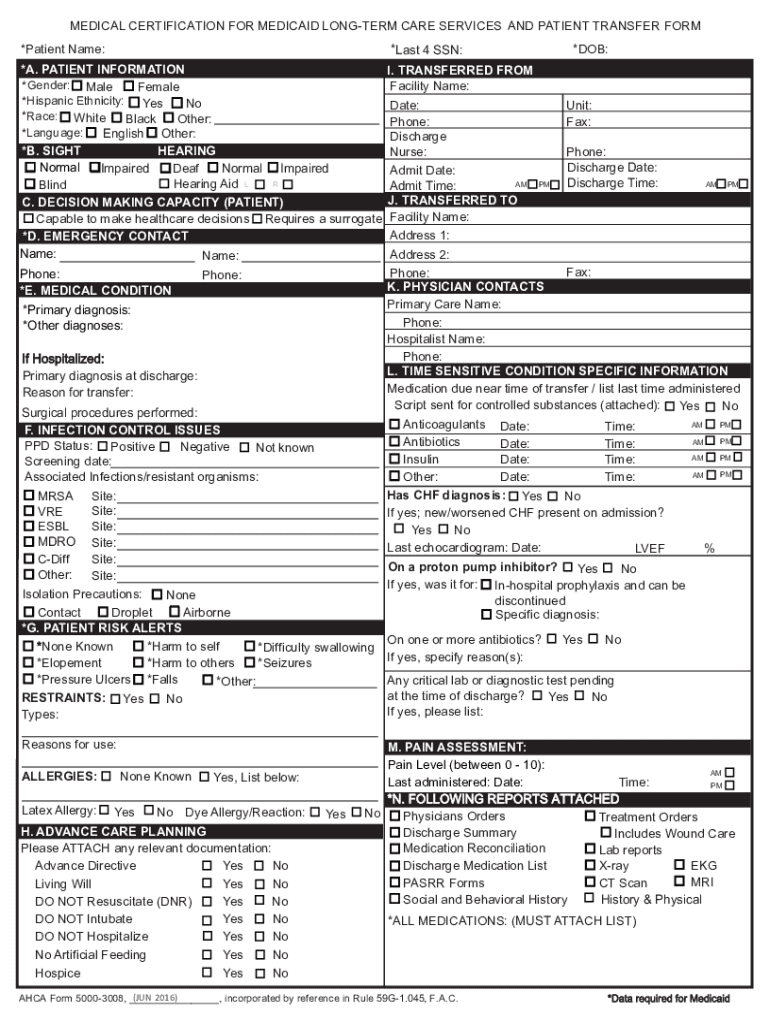
The 3008 form is an essential document used in the medical certification process for Medicaid long-term care services in Florida. It is formally known as the AHCA Form 5 and serves to verify an individual's eligibility for receiving Medicaid services related to their ongoing medical needs. This form is catered towards ensuring that patients receive proper evaluation concerning their medical conditions and care requirements.
This document captures critical patient demographics, details about medical conditions, and necessary alerts about risks involved in the patient's care. Accurate completion is vital, as it influences the determination of benefits and the types of services that the individual can receive from Medicaid.
Key Components of the 3008 Form
- Patient Information: Collects demographic details such as name, address, date of birth, and Social Security number.
- Medical Conditions: Requires detailed descriptions of the individual's medical status, including diagnoses and treatment plans.
- Risk Alerts: Records any critical medical risks that need immediate attention during care.
How to Complete the 3008 Form for 2022
Completing the 3008 form involves a structured approach to ensure that all required information is accurately provided. Follow these steps for a seamless completion process:
- Download the Form: Acquire the latest version of the 3008 form from a reliable source.
- Provide Patient Demographics: Fill in the patient’s full name, date of birth, Social Security number, and contact information.
- Detail Medical Conditions: Clearly define the medical conditions that the patient suffers from, along with prognosis and treatment plans.
- Identify Risk Alerts: Indicate any significant health risks associated with the patient's condition.
- Submit Supporting Documents: Include any necessary supporting documentation that corroborates the information provided in the 3008 form.
- Review for Accuracy: Double-check the completed form for any errors or missing information before submission.
Common Challenges
- Ensuring accurate documentation of medical conditions and treatments.
- Gathering all necessary physician signatures and additional documents required for submission.
How to Obtain the 3008 Form
The 3008 form can be acquired through various channels to facilitate ease of access for users needing to complete it for Medicaid services.
- Online Download: The most efficient way to obtain the form is through official websites like the Florida Agency for Health Care Administration (AHCA) or necessary Medicaid service providers.
- Physical Copies: Facilities such as hospitals or clinics that deal with Medicaid applications often have physical copies of the form that can be filled out on-site.
- Healthcare Providers: Medical professionals involved in Medicaid applications can provide the form and necessary assistance in filling it out.
Legal Requirements for the 3008 Form
Understanding the legal implications of the 3008 form is crucial for individuals seeking Medicaid long-term care services. The form must comply with various local and federal requirements to ensure its authenticity and validity in medical and legal contexts.
- Certification: The form must be completed and signed by a licensed physician who can attest to the medical conditions affecting eligibility.
- Confidentiality Compliance: All patient information must be handled in accordance with HIPAA regulations, ensuring that sensitive medical details remain confidential.
- Submission Timelines: Adhering to the proper submission timelines is important, as delays can affect the approval process for Medicaid services.
Important Terms Related to the 3008 Form
Several key terms are pertinent when discussing the 3008 form, which can enhance comprehension for those involved in its completion or review:
- Medicaid: A state and federal program that provides health coverage for individuals with limited resources.
- Long-Term Care: A range of services that includes medical and non-medical care for those with chronic illnesses or disabilities.
- Risk Alerts: Specific indicators noted on the form that inform providers of potential complications or special considerations in patient care.
Examples of Using the 3008 Form
Several scenarios illustrate the application of the 3008 form in real-world settings:
- Patient Scenario: An elderly individual diagnosed with dementia requires the form to qualify for in-home nursing services funded by Medicaid. The physician documents the patient's cognitive limitations and need for assistance.
- Post-Discharge Service: A patient discharged from a hospital following surgery needs ongoing rehabilitation and home health services. The 3008 form provides the necessary certification for Medicaid to approve these services.
- Institutional Care: Residents in assisted living facilities may be required to submit the 3008 form to demonstrate ongoing eligibility for Medicaid coverage, particularly if their health status changes.
These practical examples underscore the importance of accurately completing and submitting the 3008 form, as it directly impacts an individual's access to essential healthcare services.