




01. Edit your indiana protective order lookup online
Type text, add images, blackout confidential details, add comments, highlights and more.

Type text, add images, blackout confidential details, add comments, highlights and more.

Draw your signature, type it, upload its image, or use your mobile device as a signature pad.

Send protective order lookup via email, link, or fax. You can also download it, export it or print it out.
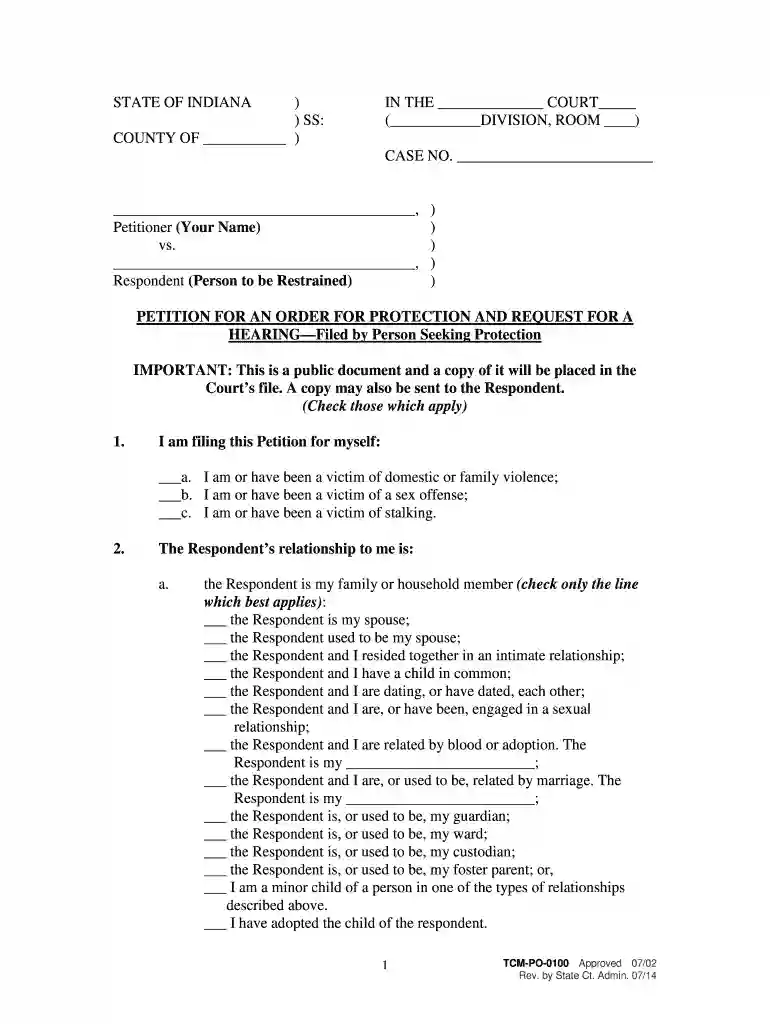
Protection order forms in Indiana are essential legal documents that individuals can use to seek protection from various abuses, including domestic violence, stalking, and harassment. These forms allow individuals, known as petitioners, to request a court hearing for protection against an alleged abuser, referred to as the respondent. Here’s a comprehensive breakdown of these forms and their usage.
A protection order in Indiana serves to legally prohibit contact between the petitioner and the respondent. This court-issued order is designed to safeguard individuals experiencing threats or violence from someone close to them or even a stranger. The specific types of protection orders include:
The purpose of these orders is to provide immediate legal relief for individuals in dangerous situations and to ensure their safety while also establishing boundaries regarding contact and proximity.
Indiana offers various forms to meet the specific needs of different situations involved in seeking protection. Common forms include:
Each of these forms serves a unique function within the legal framework, ensuring the rights and safety of petitioners are upheld throughout the process.
To obtain a protection order in Indiana, a petitioner must accurately complete and file the appropriate forms with their local court. The steps to file these forms generally include:
Properly following these steps helps ensure proper legal protection is granted and maintained.
Once a protection order is filed and a hearing is conducted, the judge will determine whether to issue the order based on evidence presented. Important considerations in these cases include:
Understanding these aspects is crucial for both petitioners and respondents, as they navigate the legal system surrounding protection orders.
Public access to protection order documents is another critical component. Individuals can perform a protective order lookup in Indiana through the state’s online database or visit local courthouses. Information typically available includes:
This transparency serves to uphold legal accountability and ensures that the public can be informed about existing protection orders.
Seeking assistance from legal professionals can significantly benefit those navigating protection orders. Resources for legal aid in Indiana include:
Accessing these resources can enhance the chances of successfully obtaining a protection order and ensure that individuals feel supported during what can be a challenging process.
Protection order forms in Indiana are vital tools for individuals seeking safety from abusive situations. By understanding the types of orders, filing processes, and available resources, victims can navigate the legal landscape more effectively. This ensures that their rights are upheld and that they can seek the protection they need.
We've got more versions of the indiana protective order lookup form. Select the right indiana protective order lookup version from the list and start editing it straight away!
At DocHub, your data security is our priority. We follow HIPAA, SOC2, GDPR, and other standards, so you can work on your documents with confidence.
This document provides technical guidance for subaqueous, in-situ capping as a remediation technique for contaminated sediments. The document was prepared as aRead more
Indianas Updated Civil Protection Order, No Contact Order, and Workplace Violence Restraining Order Forms are effective July 1, 2020.Read more
About Indiana Civil Protection Order Act and protective orders at Indiana University Maurer School of Laws Protective Order Project.


