




01. Edit your 2009 form 1120 online
Type text, add images, blackout confidential details, add comments, highlights and more.

Type text, add images, blackout confidential details, add comments, highlights and more.

Draw your signature, type it, upload its image, or use your mobile device as a signature pad.

Send it via email, link, or fax. You can also download it, export it or print it out.
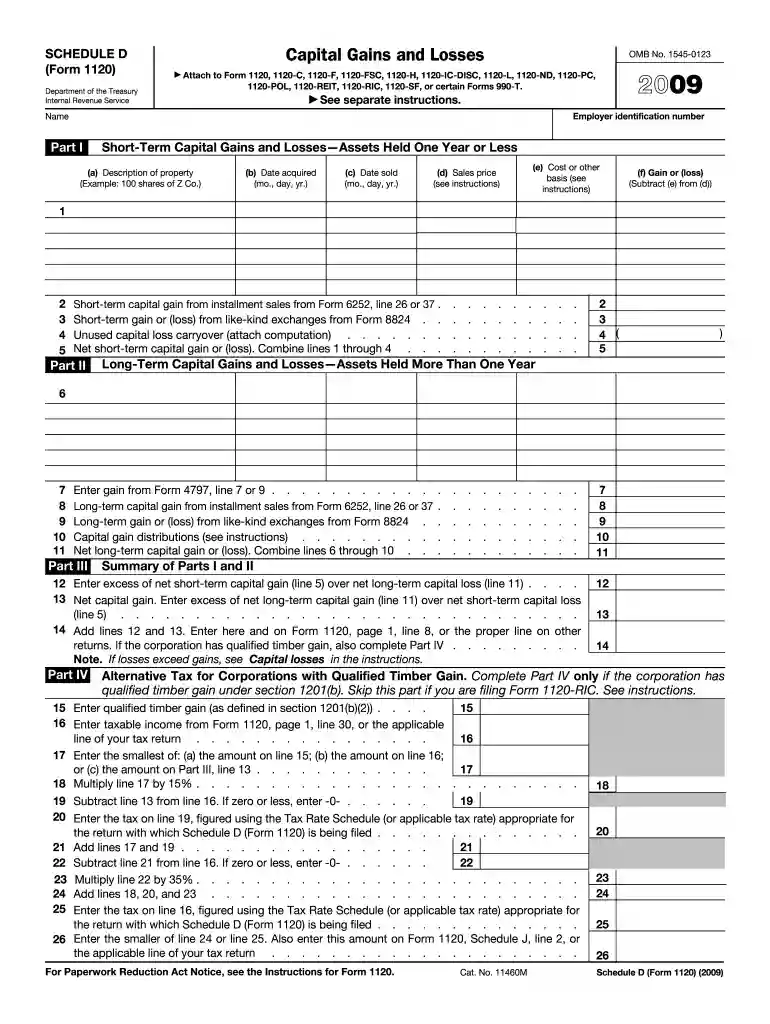
Form 1120, officially known as the U.S. Corporation Income Tax Return, is a tax form used by corporations in the United States to report their income, gains, losses, deductions, and credits to the Internal Revenue Service (IRS). For the 2009 tax year, corporations utilized this form to calculate their taxable income and determine the amount of corporate income tax owed to the federal government. This pivotal document ensures compliance with federal tax regulations and provides a comprehensive overview of a corporation's financial activities and tax obligations for the year.
Corporations must use the 2009 Form 1120 to accurately report several aspects of their financial operations. Key components include:
This structured approach ensures corporations report financial data consistently across various fiscal years and comply with federal tax requirements.
Filing the 2009 Form 1120 involves several critical steps:
Following these steps ensures accurate and timely filing, which can help avoid penalties and interest.
Corporations must adhere to strict timelines when filing the 2009 Form 1120:
Meeting these deadlines is crucial for maintaining compliance and avoiding late filing penalties.
The 2009 Form 1120 includes several crucial sections:
These elements work together to provide a detailed financial picture of the corporation to the IRS.
The IRS provides guidelines to ensure corporations file Form 1120 accurately:
These guidelines help corporations maintain compliance and address issues that may arise during the filing process.
Corporations must prepare and retain several essential documents to support their Form 1120 filing:
Proper organization of these records facilitates the accurate completion of Form 1120 and serves as a valuable resource for any future audits.
Corporations have multiple options for submitting the 2009 Form 1120:
Each submission method has its requirements and restrictions, so corporations should choose the one that best suits their needs.
Failing to submit the 2009 Form 1120 timely or accurately can result in several penalties:
Corporations should strive to comply with filing requirements to avoid these costly penalties and maintain a good standing with the IRS.
We've got more versions of the 2009 form 1120 form. Select the right 2009 form 1120 version from the list and start editing it straight away!
| Versions | Form popularity | Fillable & printable |
|---|---|---|
| 2025 | 4.6 Satisfied (46 Votes) | |
| 2024 | 4.4 Satisfied (56 Votes) | |
| 2023 | 4.7 Satisfied (48 Votes) | |
| 2022 | 4.2 Satisfied (24 Votes) | |
| 2021 | 4.8 Satisfied (151 Votes) | |
| 2020 | 4.4 Satisfied (230 Votes) | |
| 2019 | 4.2 Satisfied (143 Votes) | |
| 2018 | 4.3 Satisfied (108 Votes) | |
| 2017 | 4.4 Satisfied (145 Votes) | |
| 2016 | 4.3 Satisfied (99 Votes) | |
| 2015 | 4.4 Satisfied (33 Votes) | |
| 2014 | 4.1 Satisfied (60 Votes) | |
| 2013 | 4.2 Satisfied (67 Votes) | |
| 2012 | 4 Satisfied (40 Votes) | |
| 2011 | 4 Satisfied (60 Votes) |
At DocHub, your data security is our priority. We follow HIPAA, SOC2, GDPR, and other standards, so you can work on your documents with confidence.
A new law allows the option of treating certain charitable contributions of money made after January 11, 2010, and before March 1, 2010, for the relief ofRead more
Latest issue consulted: 2009. Note: Also issued in print. Format: Mode of access: current issue available via Internet at the IRS Web site. Address as of 8/3
The American Association of Clinical Endocrinologists and American Association of Endocrine Surgeons. Medical Guidelines for the Management of AdrenalRead more


