






Definition & Meaning
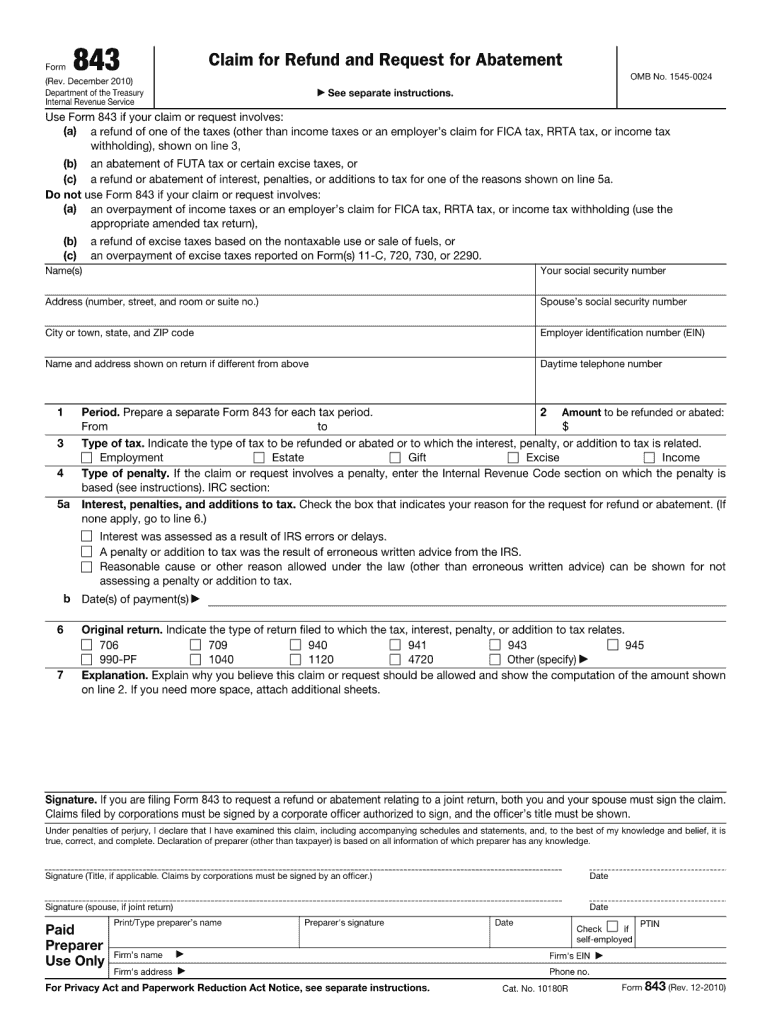
Form 843, officially known as the "Claim for Refund and Request for Abatement," is an IRS document used by taxpayers to request abatement of certain taxes, refund of excess payments, or relief from IRS penalties or fees. It is especially applicable when errors were made in tax calculation, such as duplicate payments or incorrect interest charges. The 2010 version of this form followed the guidelines from the IRS and document updates as of December 2010. Understanding the exact purpose can help taxpayers address specific financial discrepancies efficiently.
How to Use the 2010 Form 843
To properly utilize Form 843, you need to identify the specific tax issue you want to address. This can include requesting a refund due to a miscalculated tax amount, interest that was wrongly charged, or a penalty that you believe should be abated. The process involves filling out the form with detailed explanations of your claim and ensuring you provide any supporting evidence that strengthens your case. Following the instructions precisely improves the chance of a successful outcome.
Steps to Complete the 2010 Form 843
-
Download the Form: Obtain the 2010 Form 843 from the IRS website or through tax preparation software that offers form downloads.
-
Identify the Claim: Determine the reason for your request, such as abatement of penalty, incorrect tax charges, or erroneous interest calculation.
-
Provide Personal Information: Fill in your personal details, such as name, address, and taxpayer identification number, which are mandatory for processing.
-
Detail the Claim: Use the indicated sections to explicitly describe your claim, referencing specific dates, amounts, and conditions involved.
-
Attach Supporting Documents: Gather any documents that support your claim, such as receipts, prior notices from the IRS, or correspondence that corroborates your case.
-
Signature and Submission: Sign the form, attach all necessary documentation, and submit it to the designated IRS address for Form 843.
IRS Guidelines
The IRS provides explicit instructions for completing Form 843, emphasizing clarity and detailed documentation. Taxpayers must include all relevant information to avoid rejection and delays. The IRS also advises keeping copies of submitted forms and all correspondence related to the claim. Adhering to these guidelines ensures compliance with IRS procedures.
Required Documents
- Tax Notices: Copies of any IRS notices related to the taxes or penalties you're disputing.
- Backup Documentation: Financial documents that support your case, such as calculation worksheets or payment receipts.
- Written Explanations: Clear, concise explanations that detail the reasoning behind your request, ideally linking specific errors to factual documentation.
Who Typically Uses the 2010 Form 843
Form 843 is generally used by individuals or businesses seeking to rectify discrepancies in their tax records or liabilities. Common users include those who have discovered IRS errors after filing, businesses facing penalties they believe are unjust, or taxpayers who overpaid due to miscalculations by the IRS. It's also an important tool for those arguing against fines for non-compliance under extenuating circumstances.


Filing Deadlines / Important Dates
The form is generally submitted after the recognition of an error or unjust penalty. There is no fixed deadline for righting the issues claimed on Form 843, but submissions should occur promptly upon discovery of errors to expedite potential refunds. Establishing statutory limits on refunds and abatements varies, so timely filing ensures adherence to any applicable deadlines.
Eligibility Criteria
To qualify for using Form 843, taxpayers must demonstrate that they have been subjected to incorrect taxes, interests, or penalties. The form specifically addresses overpayment of taxes, undue interest charges, or specific penalties that may be subject to abatement. Taxpayers should be able to substantiate their claims with documented evidence.

Form Submission Methods (Online / Mail / In-Person)
- Online: Some tax preparation software can submit Form 843 electronically if integrated with IRS e-file systems.
- Mail: The most common submission is via postal mail to the specific IRS address associated with Form 843.
- In-Person: While less common, taxpayers can sometimes submit forms directly at IRS walk-in offices, though this may vary by location and operating hours.
Penalties for Non-Compliance
Failing to address errors in tax submissions or disregarding notices requiring Form 843 can result in sustained penalties and aggravated interest charges. Continuing non-compliance may also lead to increased IRS scrutiny and potential audits. Ensuring that Form 843 is used promptly and correctly helps mitigate the risk of further penalties.