




Understanding MoneyGram History
MoneyGram has a rich history that spans several decades. Established in 1940, the company originally focused on providing money orders. Over the years, MoneyGram expanded its services to include money transfers, payment services, and more, responding to the ever-evolving needs of its customers. As of now, MoneyGram operates in over 200 countries and territories, making it one of the leading money transfer service providers.
Key Milestones in MoneyGram's Journey
- 1940: MoneyGram was founded in Minneapolis, Minnesota, primarily offering money orders. This innovation aimed to provide a secure and accessible alternative to cash transactions.
- 1980s: MoneyGram emerged as one of the first companies to offer a money transfer service, which allowed customers to send and receive funds internationally via a network of agents and partners.
- 2004: The company went public, further expanding its reach and capability in the financial services sector. It began focusing on technological advancements to enhance customer experience.
- 2012: MoneyGram partnered with major retailers and financial institutions to provide greater convenience and accessibility for its services globally.
- 2020: MoneyGram launched a cryptocurrency exchange platform, allowing users to buy and sell digital currencies, demonstrating its adaptability to market trends.
Services Offered by MoneyGram
MoneyGram provides various services tailored to meet customer demands, including:
- Money Transfers: Send and receive money internationally with cash pickup options or bank deposits.
- Bill Payments: Pay bills online or in-person at various retail locations.
- Money Orders: A safe method to make payments without the need for a checking account.
- Mobile Wallet Services: Transfer money directly to mobile wallets in select countries.
Requesting MoneyGram Historical Transaction History
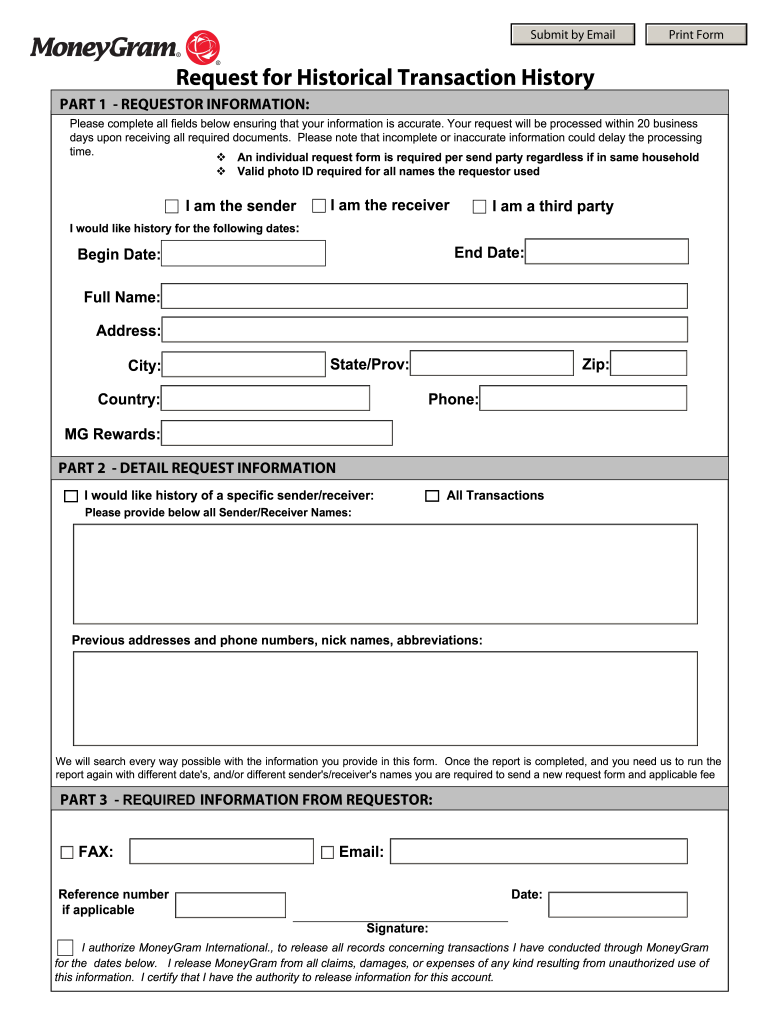
When you need to access your past transactions, MoneyGram allows for historical requests. This service is crucial for those who need to keep track of their financial dealings for personal or business purposes.
Steps to Request Historical Transaction Information
- Complete the MoneyGram History Request Form: You must fill out a specific request form to initiate the process for obtaining your transaction history.
- Provide Valid Identification: It is important to include government-issued identification to authenticate your request.
- Choose a Submission Method: Requests can often be sent via fax or email, depending on customer preference and the sensitivity of the information required.
- Processing Time: Understand the typical timeframe it will take to process your request, which may vary based on how recent the transactions are.
Importance of Accurate Documentation
When submitting requests for historical transaction records, the following points must be observed:
- Correct Information: Ensure all details provided in your submission are accurate to prevent delays in processing.
- Complete Submission: Incomplete documentation can lead to rejection of your request; thus, thoroughness is key.
- Sensitive Data Handling: Due to the nature of financial information, consider utilizing enhanced security features, such as encryption, when sharing documents online.
Conclusion on MoneyGram's Historical Services
MoneyGram's history and services have evolved significantly, emphasizing convenience, technological adaptation, and customer focus. Understanding how to navigate its offerings, especially for historical requests, can empower users to manage their finances efficiently.