
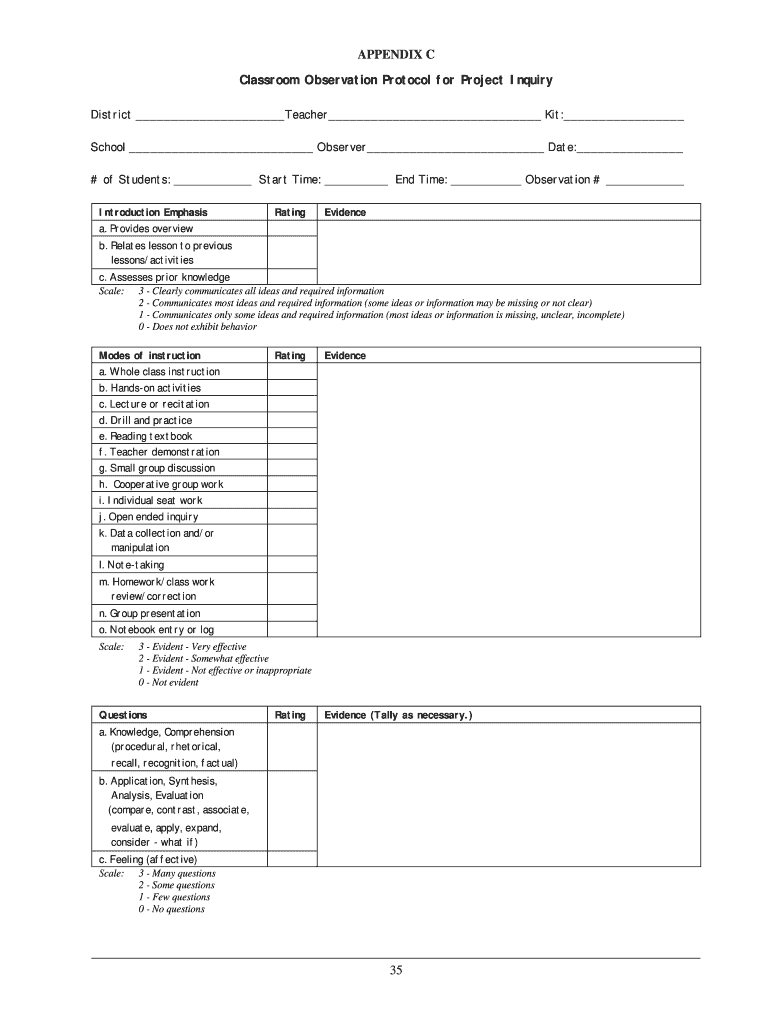







Definition & Meaning of the Classroom Observation Protocol - Colorado
The Classroom Observation Protocol in Colorado serves as a framework designed to enhance the evaluation of teaching practices. It focuses on various criteria that assess the effectiveness of educators throughout their instructional practices. The protocol allows evaluators to observe and record key components of classroom dynamics, including the ways in which teachers introduce lessons, engage students, utilize instructional materials, and employ questioning techniques.
The evaluation on which this protocol is based is typically grounded in established educational standards, which aim to enhance student learning and engagement. This comprehensive approach provides a structured method for assessing classroom performance, facilitating feedback that can ultimately lead to professional growth among teachers.
Key Features of the Classroom Observation Protocol
- Structured Evaluation: Offers a systematic approach to observe and evaluate classroom interactions.
- Rating Scales: Includes specific rating scales that assess various teaching dimensions, providing quantifiable data on teaching effectiveness.
- Focus Areas: Emphasizes critical areas such as student engagement, instructional strategies, and teacher-to-student interactions.
Key Elements of the Classroom Observation Protocol - Colorado
The Classroom Observation Protocol includes several core elements that facilitate a thorough evaluation of teaching practices. Understanding these components is essential for both evaluators and educators looking to leverage the protocol effectively.
Important Components
-
Criteria Categories: Each observation protocol is structured around key categories, such as:
- Introduction of Lessons: How effectively a teacher sets the stage for learning.
- Instructional Modes: The variety of teaching methods employed.
- Questioning Techniques: The strategies used to engage students and assess understanding.
- Teacher Behavior: The demeanor and interaction style of the teacher with students.
- Materials Utilized: The resources and instructional materials incorporated into lessons.
-
The Observation Framework: This framework not only assesses performance but also aligns with professional development goals. It helps teachers identify strengths and areas for improvement within their teaching practices.
How to Use the Classroom Observation Protocol - Colorado
Using the Classroom Observation Protocol effectively requires a structured approach to observation and evaluation. Here are the steps for implementing the protocol in a meaningful way.
Implementation Steps
-
Preparation: Prior to the observation, evaluators should familiarize themselves with the specific criteria outlined in the protocol. Understanding the key components will ensure focused observation.
-
Conducting Observations: During the classroom visit, evaluators should systematically observe the lesson, taking detailed notes based on the defined criteria.
-
Post-Observation Feedback: Following the observation, evaluators should provide constructive feedback to the teacher. This should highlight specific strengths as well as targeted areas for growth.
-
Follow-Up: Schedule a follow-up meeting to discuss the feedback in more detail and collaboratively develop an action plan for professional development.
Best Practices
- Utilize the observation protocol as a tool for ongoing professional development rather than solely for evaluative purposes.
- Encourage self-reflection among teachers post-observation to promote ownership of their teaching practices.
Examples of Using the Classroom Observation Protocol - Colorado
Real-world scenarios illustrate how the Classroom Observation Protocol can be effectively utilized in various educational settings. Here are a few examples.
Practical Applications
-
Science Classes: In an observed biology class, the protocol may reveal that the teacher effectively uses questioning techniques to stimulate critical thinking among students, enhancing their engagement and understanding of complex topics.
-
Literature Discussions: During a literature analysis session, evaluators may find that the teacher employs a variety of instructional modes, such as group discussions and individual reflections, promoting diverse viewpoints and deeper analysis of the text.
-
Mathematics Instruction: Observing a math class might showcase the use of hands-on materials and modern technology, effectively engaging students with the lesson and providing tangible learning experiences.
Important Terms Related to the Classroom Observation Protocol - Colorado
Understanding key terminology associated with the Classroom Observation Protocol is vital for effective communication and implementation.
Glossary of Terms
- Evaluator: The individual conducting the observation and assessment of teaching practices.
- Feedback: Constructive criticism or praise provided to educators based on observation findings.
- Instructional Strategies: Techniques and methods teachers use to deliver content and engage students.
- Professional Development: Continuous training and education for teachers aimed at enhancing their skills and knowledge.
By familiarizing themselves with these terms, educators and evaluators can engage in more fruitful discussions concerning observations and subsequent improvements.
State-Specific Rules for the Classroom Observation Protocol - Colorado
Colorado has specific guidelines that outline how the Classroom Observation Protocol must be implemented within the state’s educational institutions. Adhering to these state-specific rules ensures compliance and maintains the integrity of the observation process.
Compliance Guidelines
-
Adherence to State Standards: All evaluations must align with Colorado’s educational standards, ensuring that they are relevant and applicable to state-specific instructional goals.
-
Training for Evaluators: Evaluators should undergo training in using the protocol effectively. This ensures consistency and fairness in observations and ratings across different classrooms and educational levels.
-
Focus on Continuous Improvement: The protocol must be used as a catalyst for continual growth in teaching practices, encouraging an environment where educators feel supported in their professional journeys rather than solely assessed.
These rules play a crucial role in maintaining the effectiveness and credibility of observations across Colorado’s educational landscape.




