




Here's how it works
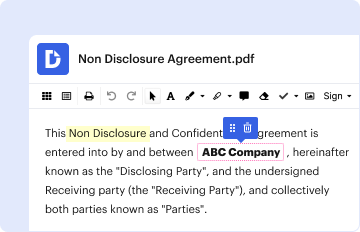
01. Edit your http sciencespot net online
Type text, add images, blackout confidential details, add comments, highlights and more.

02. Sign it in a few clicks
Draw your signature, type it, upload its image, or use your mobile device as a signature pad.

03. Share your form with others
Send bikini bottom genetics answer key via email, link, or fax. You can also download it, export it or print it out.
How to use or fill out sciencespot with our platform

- Click ‘Get Form’ to open it in the editor.
- Begin by filling in your name at the top of the form. This personalizes your document and ensures proper identification.
- In the section titled 'What is the scientific method?', provide a brief definition. Use the space provided to articulate how this process helps answer questions about the world.
- Next, address whether there is only one scientific method. Indicate that multiple versions exist and describe their variations in steps.
- For 'What is a hypothesis?', write an educated guess based on your observations related to your topic of interest.
- In the 'What is data?' section, define what data means in the context of your experiment, emphasizing its role as gathered information.
- Proceed to identify your problem by writing a question that you wish to investigate based on prior observations.
- Formulate a hypothesis predicting what you think will happen during your experiment.
- Outline a procedure for testing your hypothesis, ensuring you include safety rules for conducting experiments.
- After performing your experiment, record all data and observations accurately in the designated area.
- Evaluate if your data supports your hypothesis. If not, indicate any flaws and rewrite your procedure accordingly.
- Finally, summarize your findings in a conclusion that encapsulates key aspects of your experiment and results.
Start using our platform today for free to streamline your document editing and form completion!
Fill out sciencespot online
It's free
It's free
See more sciencespot versions
We've got more versions of the sciencespot form. Select the right sciencespot version from the list and start editing it straight away!
| Versions | Form popularity | Fillable & printable |
|---|---|---|
| 2003 | 4.8 Satisfied (291 Votes) |
Got questions?
We have answers to the most popular questions from our customers. If you can't find an answer to your question, please contact us.
Contact us
What is a science starter?
Science Starters are used as class starters or warm-ups. I set up this section of my website to share those with all of you. The starters typically take 5 minutes or less to complete and provide students with a focused activity to start class. I also like to use the starters to review material we have covered in class.
What is the forensics club in middle school?
Forensics is described as the art of communicating. The activity is a performance-based competition in which you can write and/or act out pieces of literature. Students can perform solo or with friends!
What is forensic science middle school?
Forensic Science explores the history of forensic science, crime scene investigation methods and evidence analysis. Students will analyze many types of evidence, including, but not limited to, fingerprints, hairs, fibers, fire debris, soil, pollen, drugs, blood and DNA.
What grade level is forensic science?
Forensic Science is offered as a two-year course to students in grades 10 and 11 who are currently enrolled in The Public Safety Academy. Forensics I takes place in grade 10. It is an integral component of the Criminal Justice/Public Safety Curricula at this grade level.
What is forensic science in middle school?
This course introduces students to the science field of forensics. Students will take on the role of crime scene investigators in order to solve fictional crimes using fingerprints, blood tracing, DNA typing, fibers, tracks and remains, entomology (insects!) as well as other skills.
Security and compliance
At DocHub, your data security is our priority. We follow HIPAA, SOC2, GDPR, and other standards, so you can work on your documents with confidence.
Learn more


People also ask
What is forensic science for kids?
Forensic science is a kind of science that blends biology, chemistry and physics to look at evidence, solve crimes and settle legal issues. Forensic scientists use evidence like fingerprints, blood, hair, bullets and DNA to show the truth about what happened in a situation.