




01. Edit your irs form 911 online
Type text, add images, blackout confidential details, add comments, highlights and more.

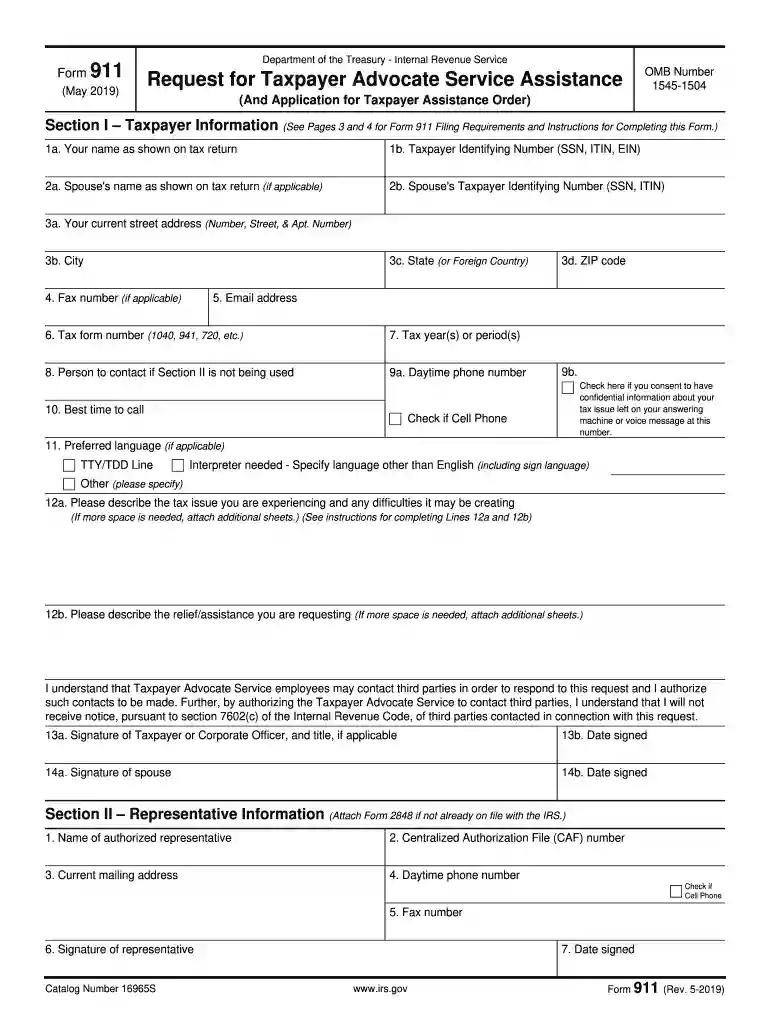
Type text, add images, blackout confidential details, add comments, highlights and more.

Draw your signature, type it, upload its image, or use your mobile device as a signature pad.

Send irs form 911 instructions via email, link, or fax. You can also download it, export it or print it out.
IRS Form 911 is a request for assistance from the Taxpayer Advocate Service (TAS) of the IRS. This form is designed for taxpayers experiencing significant difficulties related to tax issues that have not been resolved through standard IRS channels. Individuals and businesses use this form to seek intervention from the TAS to assist with complicated tax matters.
IRS Form 911 collects critical information necessary for the TAS to assess and address the taxpayer's issues. Essential parts of the form include:
IRS Form 911 is most commonly used by taxpayers facing significant hardships that cannot be resolved through regular IRS procedures. These include:
Filling out IRS Form 911 involves several key steps to ensure all necessary information is provided:
To get IRS Form 911, taxpayers can:
IRS Form 911 is a formal document used for requesting advocacy services from the TAS. Filling and submitting the form legally obligates the IRS to review and assess the taxpayer's hardship case. Properly documented and submitted cases may lead to TAS intervention to rectify extreme financial or procedural tax-related issues.
Complying with IRS guidelines when submitting Form 911 is critical for a successful resolution:
Understanding specific terminology related to Form 911 enhances comprehension and facilitates accurate completion. Key terms include:
We've got more versions of the irs form 911 form. Select the right irs form 911 version from the list and start editing it straight away!
At DocHub, your data security is our priority. We follow HIPAA, SOC2, GDPR, and other standards, so you can work on your documents with confidence.



If you dont receive a response within 30 days of submitting Form 911, call 877-777-4778 for assistance. Do not submit multiple Form. 911s for the same issueRead more
The IRS rejects Ks offer in compromise. K files a Form 911, Request for Taxpayer Advocate Service Assistance (And Application for Taxpayer Assistance Order).Read more
Jan 4, 2017 If you received, repaid, or had tax withheld from the SSEB portion of tier 1 benefits during 2016, you will receive Form RRB-1099, Payments byRead more


