





Definition and Meaning of Inventory of Materials Form
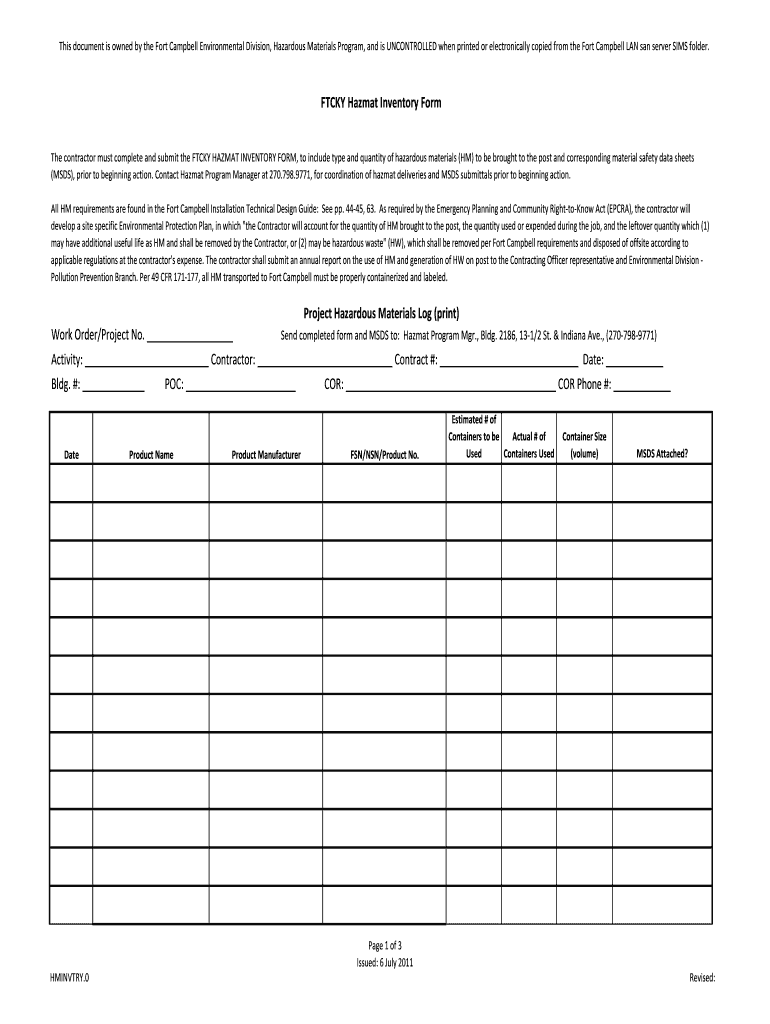
The inventory of materials form is a document utilized to record and track materials used within a project or organization. This form captures important details about each material, ensuring compliance with regulations and efficient resource management. By systematically documenting material usage, this form helps in managing assets, tracking costs, and ensuring that all utilized materials are accounted for.
Key Elements of the Inventory of Materials Form
Several critical components are typically included in the inventory of materials form:
- Material Description: A concise name or identifier for each material.
- Quantity: The amount of each material currently in stock or consumed.
- Unit of Measurement: The measurement unit that corresponds to the quantity, such as pounds, meters, or units.
- Supplier Information: Details about where the materials were sourced, essential for reference and reordering.
- Date of Entry: The date when materials were added to the inventory, facilitating tracking over time.
These elements are crucial for enabling accurate record-keeping and transparency within material management processes.
How to Use the Inventory of Materials Form
Using the inventory of materials form involves several steps to ensure that it accurately reflects current material usage.
- Collect Materials Data: Gather all relevant information about the materials, including quantity and supplier data.
- Complete the Form: Fill in the details on the form, ensuring accuracy in descriptions and numbers.
- Review for Completeness: Verify all entries for correctness and completeness before submitting the form.
- Store and Maintain Records: Keep copies of completed forms for future reference and audits, ensuring accessibility for team members.
This streamlined process aids in creating an efficient documentation system.
Steps to Complete the Inventory of Materials Form
Completing the inventory of materials form requires attention to detail. The following steps provide a structured approach:
- Start with Basic Information: Include project or organization details at the top of the form.
- List Each Material: Sequentially list each material, ensuring to include:
- Material name
- Quantity on hand
- Unit of measurement
- Supplier Details: Indicate where each material was acquired to facilitate future procurement.
- Review and Sign-off: After completing the form, it should be reviewed by a designated supervisor or team leader, if required by internal policies.
- Submit for Integration into Systems: Depending on organizational procedures, submit the completed form either digitally to a software system or physically to a designated department.
Each of these steps is critical in maintaining accuracy and reliability in inventory records.
Importance of the Inventory of Materials Form
The inventory of materials form plays a vital role in various contexts. This form is essential for:
- Ensuring Compliance: Helps in adherence to regulatory requirements, particularly in industries governed by strict material tracking standards, such as construction and manufacturing.
- Facilitating Cost Control: By tracking materials systematically, organizations can better manage expenses and budget forecasts.
- Improving Resource Allocation: Effective monitoring enables organizations to allocate resources more efficiently, preventing unnecessary overstocking or shortages.
- Enhancing Project Management: Having accurate material data is crucial for project planning and execution, aiding in timelines and deliverable assessments.
Overall, this form serves as a foundational tool for operational efficiency in organizations.
Typical Users of the Inventory of Materials Form
Various stakeholders benefit from using the inventory of materials form, including:
- Project Managers: Ensure that projects are adequately supplied with necessary materials and monitor consumption rates.
- Purchasing Departments: Utilize the form to assess inventory levels and make informed purchasing decisions.
- Accountants: Track expenses related to material usage, contributing to financial reporting and budget management.
- Regulatory Compliance Officers: Ensure that material usage aligns with applicable legal standards and guidelines.
These users integrate the form in their roles to enhance productivity and maintain compliance.