




01. Edit your appeal forms online
Type text, add images, blackout confidential details, add comments, highlights and more.

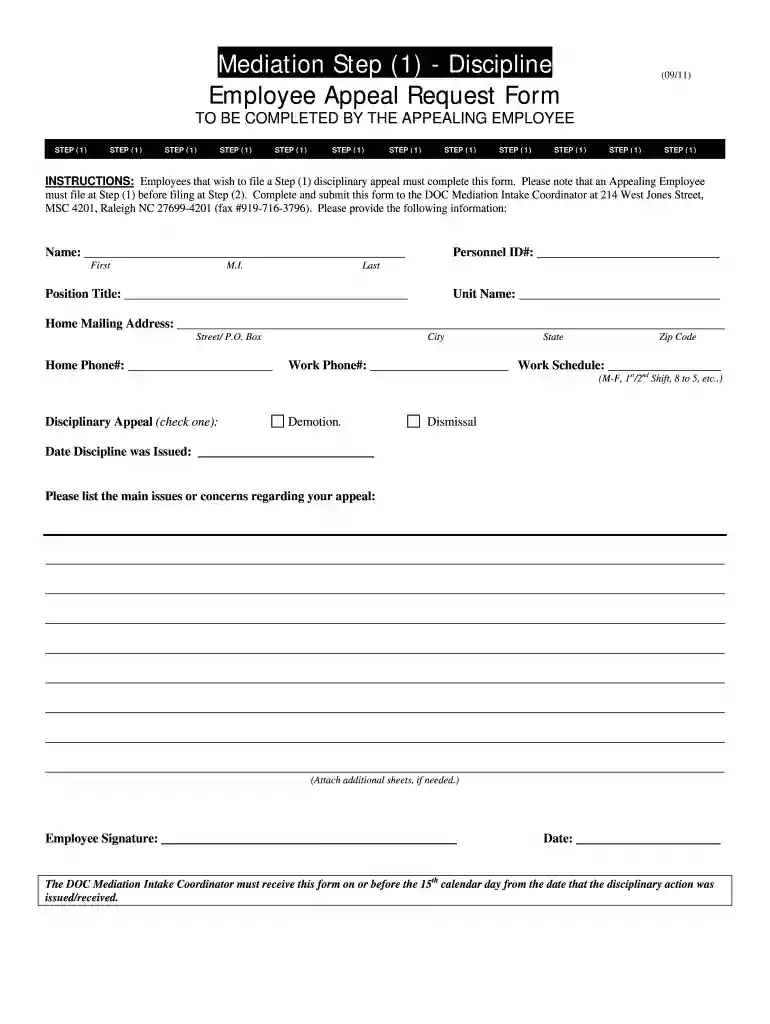
Type text, add images, blackout confidential details, add comments, highlights and more.

Draw your signature, type it, upload its image, or use your mobile device as a signature pad.

Send appeal form template via email, link, or fax. You can also download it, export it or print it out.
The employee appeal form is a structured document that allows employees to formally challenge disciplinary actions taken by their employer, such as demotions or dismissals. This form serves as a vital tool in the grievance process, ensuring a systematic approach to resolving disputes within an organization. By utilizing an appeal form, employees can clearly articulate their concerns and present evidence regarding the disputed disciplinary action. Typically, this form must be submitted within a specified time frame, often thirty days from the date of the disciplinary action, to maintain its validity.
Filling out the employee appeal form accurately is crucial for the appeal process to proceed smoothly. Below are the essential steps to ensure that the form is completed properly.
Gather Required Information: Before starting to fill out the form, ensure that you have all necessary information, including:
Complete the Form Accurately:
Review for Completeness: Verify that all sections of the form are completed, and no information is missing. Incomplete forms may delay the review process.
Submit Within Deadline: Ensure that the completed form is submitted within the specified deadline to the appropriate department, typically the human resources or mediation office.
Follow Up: After submission, it is advised to follow up with the HR department to confirm receipt of the form and inquire about any next steps in the appeal process.
Understanding specific terminology associated with the employee appeal form can help applicants navigate the process more effectively.
The employee appeal form is utilized by a variety of individuals and circumstances:


Compliance with legal requirements is critical when using the employee appeal form:
Practical scenarios can illustrate the application of the employee appeal form in the workplace.
Scenario One: An employee is dismissed for what the employer claims is persistent underperformance. The employee believes that their performance metrics were incorrectly assessed and files an appeal using the employee appeal form. This allows them to present evidence of their contributions and request a review of the decision.
Scenario Two: After receiving a demotion due to alleged misconduct, an employee feels that the actions taken were unjust and based on hearsay. By completing the employee appeal form, they outline their case, supported by witness statements, and petition for reinstatement.
These examples highlight how the appeal form serves as a crucial tool for defending employee rights and ensuring a fair review process.
We've got more versions of the appeal forms form. Select the right appeal forms version from the list and start editing it straight away!
| Versions | Form popularity | Fillable & printable |
|---|---|---|
| 2011 | 4 Satisfied (44 Votes) |
At DocHub, your data security is our priority. We follow HIPAA, SOC2, GDPR, and other standards, so you can work on your documents with confidence.
The employee must file one (1) original and two (2) copies of the petition for appeal. Approved Petition for Appeal forms [PDF] may be downloaded and are alsoRead more
Employees who have been terminated for misconduct or rendered ineligible for future employment may choose to appeal by filing this Employee DisciplineRead more
Oct 7, 2025 Find any Dovedale related form here. Apply to become a member of staff, appeal a ban and more! Qualified Signaller Applicatons Start your QS journey right here!Read more


