




01. Edit your colorado income tax table 2021 online
Type text, add images, blackout confidential details, add comments, highlights and more.

Type text, add images, blackout confidential details, add comments, highlights and more.

Draw your signature, type it, upload its image, or use your mobile device as a signature pad.

Send it via email, link, or fax. You can also download it, export it or print it out.
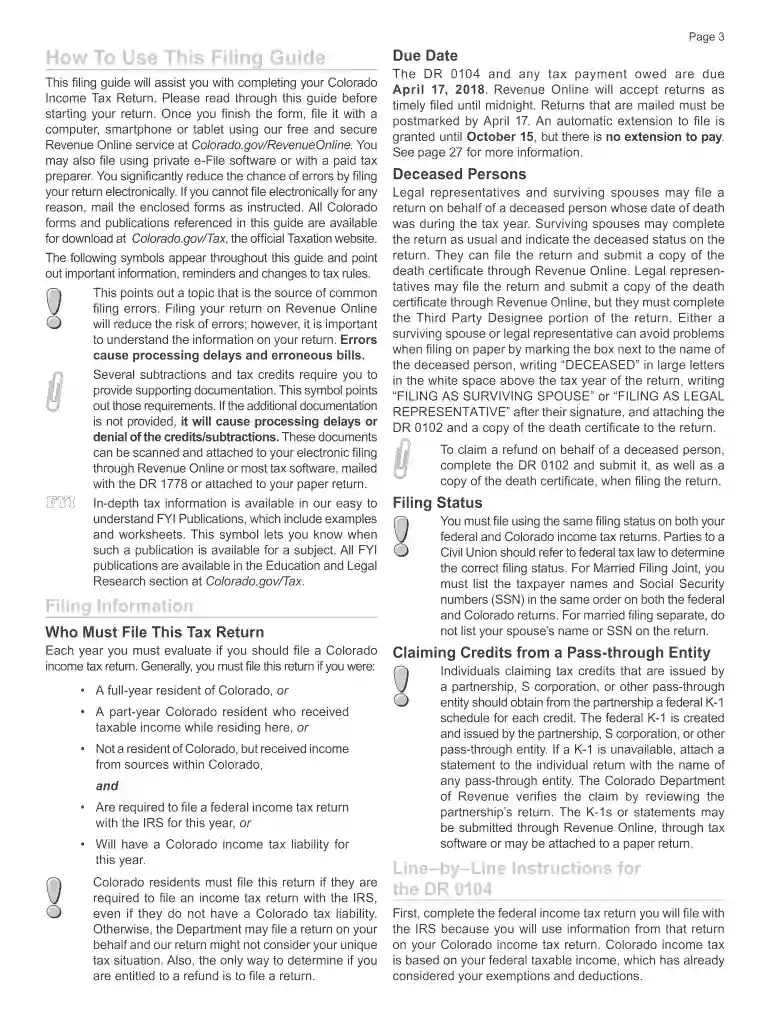
The 2015 Colorado tax form is designed to assist individuals, both residents and nonresidents, in filing their state income taxes. It serves as a comprehensive guide for completing the tax filing process in Colorado for the 2015 tax year. This form encompasses various categories of taxpayers, including part-year residents and those with special tax situations like self-employment. The document ensures the accurate calculation of state tax obligations and helps taxpayers report income, deductions, and credits to comply with Colorado tax laws.
The 2015 Colorado tax form can be accessed and downloaded from the Colorado Department of Revenue's official website. Alternatively, you may obtain a physical copy by visiting a local tax office or requesting one by mail through the department's contact services. Additionally, many tax preparation software programs, like TurboTax or QuickBooks, offer integrated access to past tax year forms as part of their service offerings.
Colorado tax laws may have unique aspects that differ from federal requirements or other states. It is essential to review state-specific rules, such as those for tax credits exclusive to Colorado residents or the handling of certain income types. For instance, Colorado may offer additional credits for energy-efficient appliances or dependents, which are unavailable at the federal level.
While the Colorado tax form follows state-specific regulations, it is often aligned with certain IRS definitions and requirements, such as recognizing federal AGI as a starting point for state tax calculations. Adhering to these guidelines ensures that discrepancies between federal and state submissions are minimized.
The official deadline for filing the 2015 Colorado tax form was typically April 15, 2016, unless extended due to specific circumstances, such as actions by the IRS or state emergency declarations. Understanding these deadlines helps avoid penalties and interest accruals on unpaid taxes. It is crucial to keep track of any announcements from the Colorado Department of Revenue regarding possible adjustments to submission timelines.
Failure to file the 2015 Colorado tax form by the established deadline, or errors in the submitted information, may result in penalties. These can include late filing penalties, underpayment penalties, and interest charges on outstanding tax amounts. Ensuring accuracy and timely submission is vital to mitigate potential financial repercussions.
We've got more versions of the colorado income tax table 2021 form. Select the right colorado income tax table 2021 version from the list and start editing it straight away!
At DocHub, your data security is our priority. We follow HIPAA, SOC2, GDPR, and other standards, so you can work on your documents with confidence.


