


Type 1125a 2026

Get Form
1125a form Preview on Page 1

Here's how it works

01. Edit your 1125a form online
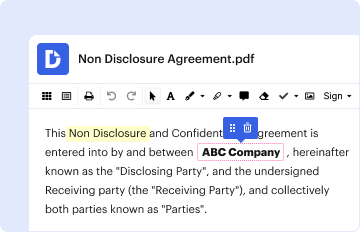
Type text, add images, blackout confidential details, add comments, highlights and more.
02. Sign it in a few clicks
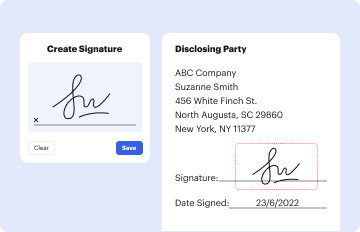
Draw your signature, type it, upload its image, or use your mobile device as a signature pad.
03. Share your form with others
Send 1125a instructions via email, link, or fax. You can also download it, export it or print it out.

How to use or fill out type 1125a with our platform

Form edit decoration
9.5
Ease of Setup
DocHub User Ratings on G2
9.0
Ease of Use
DocHub User Ratings on G2
  1. Click ‘Get Form’ to open the type 1125A document in the editor.
  2. Begin by entering your model number in the designated field. Ensure you select either '1125' or '1125A' based on your gauge type.
  3. Fill in the accuracy section, specifying '2%-1%-2%' as per ASME Grade A standards.
  4. Select the case style and material from the dropdown options, ensuring it matches your requirements for durability and application.
  5. Indicate the dial size (41⁄2˝ or 6˝) and connection location (Lower or Back) as needed for your installation.
  6. Complete the range limits section by selecting appropriate psi values that suit your operational needs.
  7. Review all entries for accuracy before saving or exporting your completed form directly from our platform.

Start using our platform today to effortlessly fill out your type 1125A form online for free!

See more type 1125a versions

We've got more versions of the type 1125a form. Select the right type 1125a version from the list and start editing it straight away!
Versions Form popularity Fillable & printable
2015 4.8 Satisfied (44 Votes)
2014 4 Satisfied (54 Votes)
be ready to get more

Complete this form in 5 minutes or less

Get form

Got questions?

We have answers to the most popular questions from our customers. If you can't find an answer to your question, please contact us.
Contact us
For sole proprietors and single-member LLCs using Schedule C, your COGS is calculated in Part III and included in the income section of Part I. For partnerships, multiple-member LLCs, C corporations, and S corporations, your COGS is calculated separately on Form 1125-A.
What is this form about? Form 1125-A is a document corporations and partnerships use to provide a detailed breakdown of the cost of goods sold. This form captures information about the beginning and ending inventories, purchases, labor costs, and other related expenses.
Property Types and Form 4797 Parts I, II and II Depreciable Tangible Trade or Business Property. Depreciable Real Trade or Business Property. Farmland Held Less than 10 Years With Soil, Water, or Land Clearing Expenses Deducted. Real or Tangible Trade or Business Property Deducted Under the De Minimis Safe Harbor.
This line item is for any additional costs that are not included in the previous fields, such as freight or storage expenses. Be sure to attach a schedule showing these costs.
This is the labor cost associated with producing your goods, including wages and salaries for employees involved in production.

Security and compliance

At DocHub, your data security is our priority. We follow HIPAA, SOC2, GDPR, and other standards, so you can work on your documents with confidence.

Learn more
ccpa2
pci-dss
gdpr-compliance
hipaa
soc-compliance
be ready to get more

Complete this form in 5 minutes or less

Get form

People also ask

The cost of labor is the sum of all wages paid to employees, as well as the cost of employee benefits and payroll taxes paid by an employer.
There are several factors that go into determining COGS, including: inventory at the beginning of the year; purchases less cost of items withdrawn for personal use; labor costs (generally applies to manufacturing and mining operations); materials and supplies (generally a manufacturing cost); other costs (generally
Form 1125-A is a document corporations and partnerships use to provide a detailed breakdown of the cost of goods sold. This form captures information about the beginning and ending inventories, purchases, labor costs, and other related expenses.

Related links