




01. Edit your 2014 irs form online
Type text, add images, blackout confidential details, add comments, highlights and more.

Type text, add images, blackout confidential details, add comments, highlights and more.

Draw your signature, type it, upload its image, or use your mobile device as a signature pad.

Send 2014 i via email, link, or fax. You can also download it, export it or print it out.
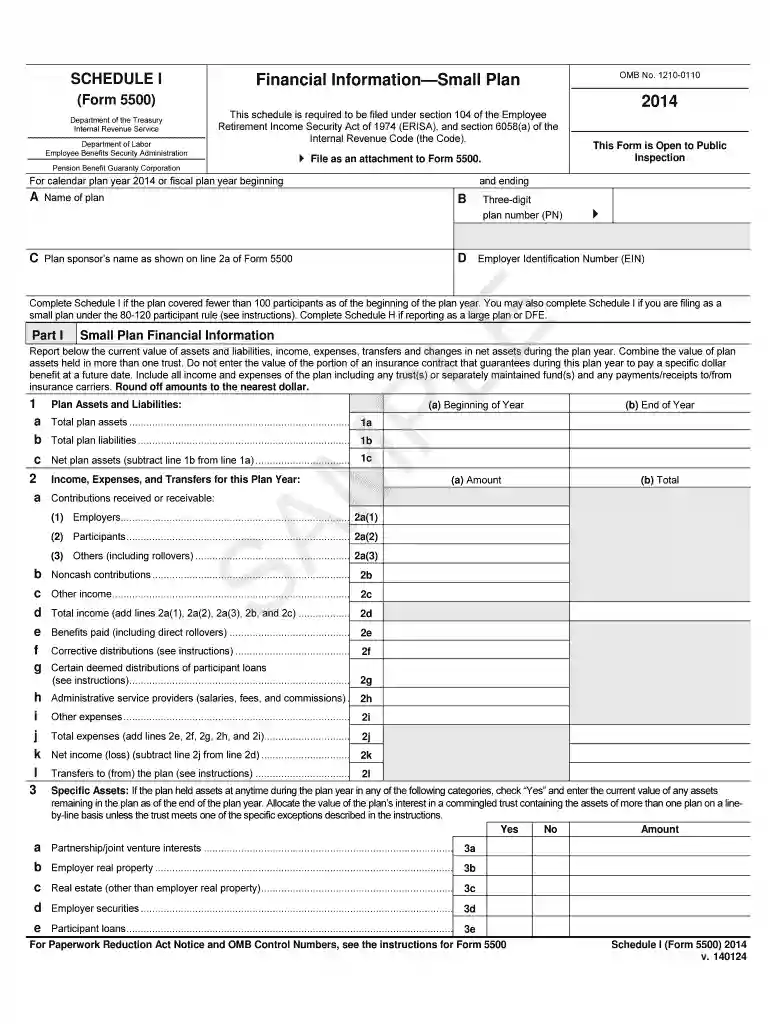
IRS Form 5500 is essential for small pension plans under ERISA and the Internal Revenue Code. For the year 2014, it helps plan administrators report financial details for plans with fewer than 100 participants. Key information includes assets, liabilities, income, expenses, and compliance questions related to plan operations.
To effectively navigate the IRS Form 5500 instructions, follow these steps:
Filling out this form involves several steps which require attention to detail:
The IRS mandates strict deadlines for Form 5500 submissions:
Ensure timely submission to avoid penalties.
The primary users are administrators of small pension plans. These may include:
Failure to comply with Form 5500 filing requirements can lead to:
Critical components of the form include:
Understanding key terminology is crucial:
The form can be filed electronically via the EFAST2 system or on paper.
For those using software, ensure the following compatibility:
Entities that often benefit from using this form include:
Each entity should ensure compliance according to its structure type.
We've got more versions of the 2014 irs form form. Select the right 2014 irs form version from the list and start editing it straight away!
At DocHub, your data security is our priority. We follow HIPAA, SOC2, GDPR, and other standards, so you can work on your documents with confidence.
Carlas full $5,500 IRA deduction is reported on Form 1040, line 32. 11. IRS Pub. 590, Individual Retirement Arrangements (IRAs). Nontaxable return of basis.Read more
Dec 31, 2020 Form 5500 Method Determine the number of participants at the IRS Form 720 Instructions (see pages 8 9). PCORI regulationRead more
Oct 15, 2009 About the Form 5500. The Form 5500, Annual Return/Report of Employee Benefit. Plan, including all required schedules and attachments (Form.Read more


