




01. Edit your domestic violence police report example online
Type text, add images, blackout confidential details, add comments, highlights and more.

Type text, add images, blackout confidential details, add comments, highlights and more.

Draw your signature, type it, upload its image, or use your mobile device as a signature pad.

Send domestic violence report example via email, link, or fax. You can also download it, export it or print it out.
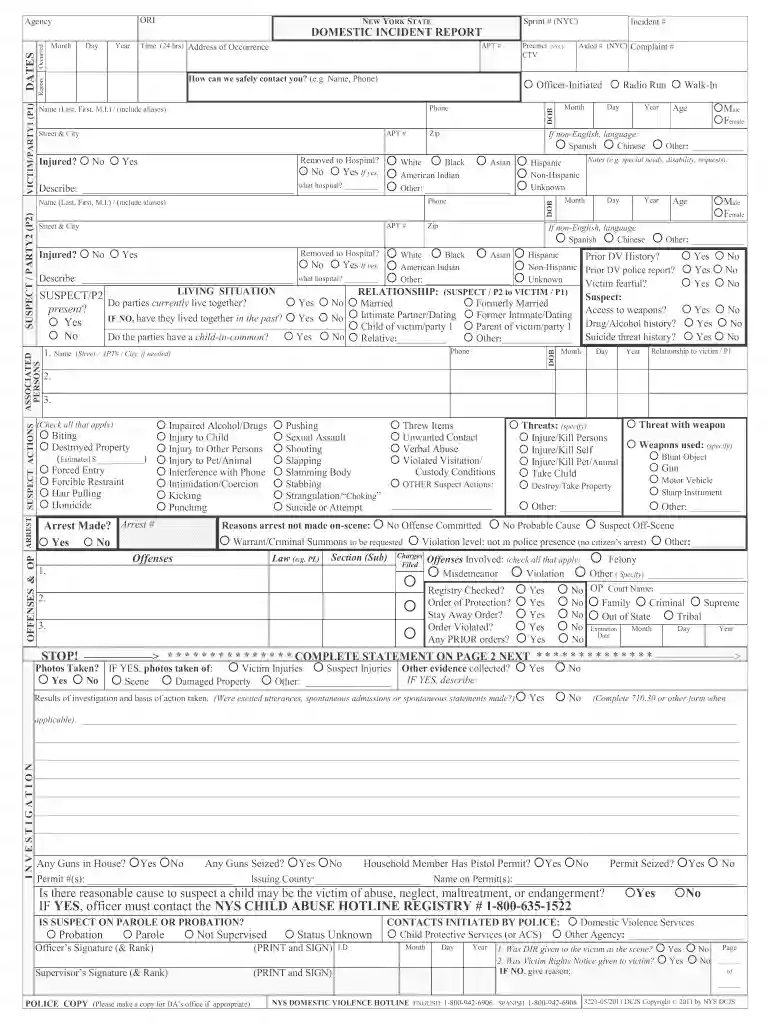
A domestic incident report format is a structured document used primarily by law enforcement agencies to record information about incidents of domestic violence or related domestic crimes. This report serves several essential functions, including the documentation of critical details concerning the individuals involved, the nature of the incident, any injuries sustained, and follow-up legal actions taken.
The format typically includes sections for:
This document is essential for legal proceedings, ensuring that both victims’ rights and law enforcement responsibilities are documented and upheld.
The domestic incident report format contains several key elements necessary for thorough documentation and reporting:
Each element plays a vital role in the report’s utility for legal and support services, allowing authorities to respond appropriately and efficiently.
Completing a domestic incident report requires careful attention to detail and adherence to procedural guidelines. Here are the steps typically involved:
Taking these steps ensures that all necessary details are captured accurately for legal and support purposes.
The domestic incident report format has significant legal implications and uses. It serves as an official record in court cases, affecting both criminal prosecutions and civil actions. Upon completion, this report may be utilized for:
Legal protections and victims’ rights are informed by the detailed accounts contained within these reports, making their accurate completion vital.
Familiarity with relevant terminology enhances understanding and the effective use of domestic incident report formats. Some essential terms include:
Understanding these terms can improve the clarity of communication among all parties involved and facilitate proper reporting and response actions.
Practical examples illustrate the application of the domestic incident report format in real-world scenarios.
Example One: A victim files a report following an incident where their partner threatened them with physical violence. The report captures the threat details, the location, and the victim's immediate emotional state.
Example Two: A family member witnesses an altercation between two partners and files a report. The documentation includes their observations, the details of what they witnessed, and any injuries noted on the victim.
Example Three: After police respond to a dispute, officers document the incident through a domestic incident report format. This includes the suspects' testimonies, injuries, and a recommendation for legal counsel for the victim.
These examples demonstrate the importance of detailed and structured reporting in facilitating legal action, providing victim support, and documenting trends in domestic violence incidents.
Different states may have variations in their domestic incident report formats, governed by local laws and regulations. Examples include:
Understanding these state-specific rules is essential for police departments and agencies involved in handling domestic violence cases, ensuring compliance with local statutes and effective victim support.
At DocHub, your data security is our priority. We follow HIPAA, SOC2, GDPR, and other standards, so you can work on your documents with confidence.
Details of recent additions and modifications to the New York State Domestic Incident Report (DIR) used by police.
by W Nussbaum 2015 Cited by 7 Users should consult local/state statues for clear guidelines about when to report abuse and regarding legal responsibilities for mandated reporting. PageRead more
Assault, Domestic Violence, Dating Violence, or Stalking, the Districts Title IX Coordinator will bDocHub out to the reporting party to gather moreRead more


