
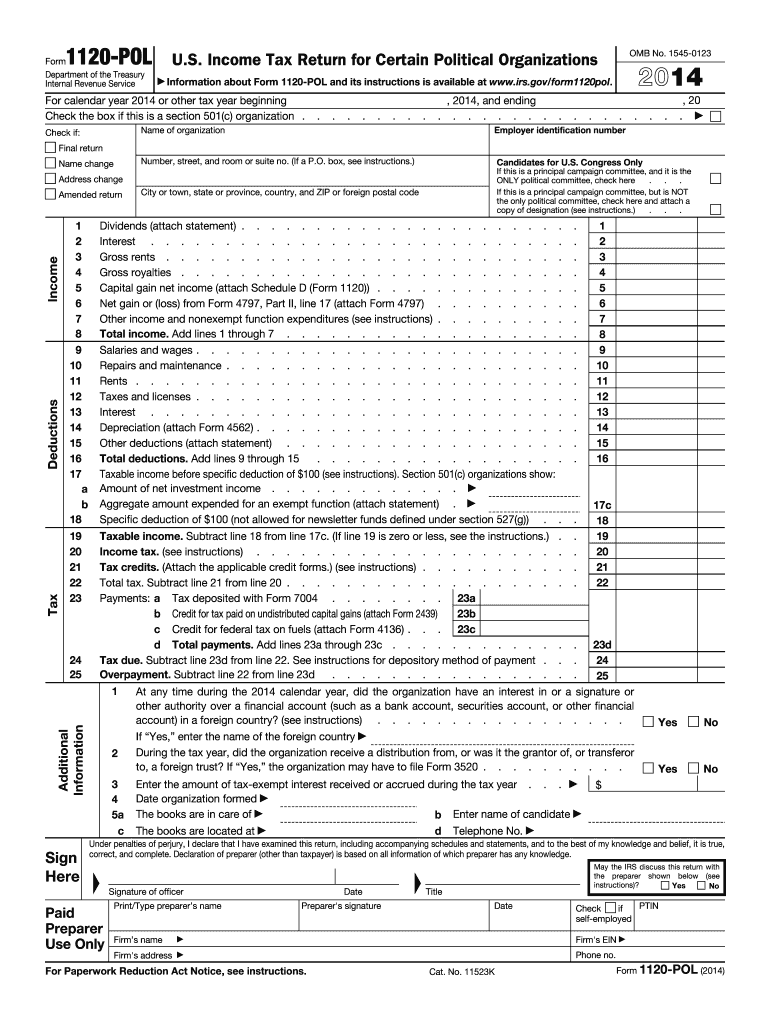







Definition and Purpose of the 2014 Form 1120
The 2014 Form 1120 is the U.S. Corporation Income Tax Return, primarily used by domestic corporations to report their financial information to the Internal Revenue Service (IRS). This form includes detailed data on a corporation’s income, deductions, and credits, providing a comprehensive view of its financial health over the fiscal year. Completing Form 1120 is essential for determining the corporation's tax liability, ensuring compliance with federal tax laws. Corporations must adhere to specific instructions on the form, accurately detailing their financial activities to avoid potential penalties or legal issues.
Reasons to File the 2014 Form 1120
Filing the 2014 Form 1120 is crucial for corporations as it determines the federal tax owed based on reported income. This form is essential for maintaining transparency with the IRS, thus minimizing the risk of audits or additional scrutiny. Providing comprehensive tax information also helps corporations build a reliable tax history, which can be beneficial when seeking financial partnerships, loans, or investments.
Key Elements of the 2014 Form 1120
The 2014 Form 1120 includes several critical sections that corporations must complete accurately:
- Income: All sources of income, including gross receipts and sales, must be reported.
- Deductions: Details about allowable business expenses that can reduce taxable income.
- Tax Credits: Information on eligible credits that may lower the overall tax burden.
- Tax Computation and Payments: Calculations for the total tax owed after deductions and credits.
Each of these sections requires precise data entry to ensure the correct computation of liabilities.
Steps to Complete the 2014 Form 1120
- Prepare Financial Statements: Compile accurate income and expenses information from the fiscal year.
- Gather Supporting Documents: Collect all necessary documentation, such as receipts and prior tax returns.
- Fill Out Income and Deductions: Enter all required data into the relevant sections of the form.
- Calculate Tax Owed: Use the provided guidelines to compute the taxable income and subsequently the tax liability.
- Review and Submit: Ensure all information is accurate, then submit the completed form to the IRS by the applicable deadline.
Completing these steps methodically can minimize errors and potential penalties.
Who Uses the 2014 Form 1120
The form is mainly used by C Corporations, which are entities taxed separately from their owners. This includes large corporations engaged in various business activities and seeking to maintain compliance with federal tax regulations. Businesses operating as S Corporations or partnerships typically use different tax forms specific to their entity types.
Important Terms Related to 2014 Form 1120
- Gross Receipts: Total revenue generated from sales and services before deductions.
- Ordinary Loss: Losses incurred in the usual operations of the business.
- Dividends: Earnings distributed to shareholders, which must be reported.
- Alternative Minimum Tax (AMT): A mandatory supplement to the standard tax aimed at ensuring that high-income earners pay a minimum amount.
Understanding these terms facilitates accurate completion of the form.
Filing Deadlines and Important Dates
Corporations filing the 2014 Form 1120 must adhere to deadlines to avoid penalties. The due date is typically the 15th day of the third month following the end of the corporation's tax year. For calendar year corporations, this equates to March 15. Extensions are available, but they must be filed before the original due date.
Penalties for Non-Compliance
Failure to file the 2014 Form 1120 on time can result in penalties, including:
- Late Filing Penalty: A penalty calculated based on the tax owed and days late.
- Accuracy-Related Penalty: Imposed for negligence or substantial understatement of income.
- Failure to Pay Penalty: Additional charges for not paying taxes owed by the due date.
Adhering to deadlines and form instructions can prevent these penalties.
IRS Guidelines and Requirements
The IRS provides specific instructions for the 2014 Form 1120, encompassing how to calculate income, report deductions, and claim credits. These guidelines ensure compliance and facilitate the proper filing of tax information. Corporations should consult the IRS instructions accompanying the form to address unique financial situations or discrepancies.
Offering both structured organization and in-depth detail, this coverage aims to maximize utility for users of the 2014 Form 1120. The guidance follows logical steps and provides comprehensive information necessary for accurate completion and submission, ensuring legal compliance and minimizing potential tax liabilities.




