




01. Edit your fire drill report template word online
Type text, add images, blackout confidential details, add comments, highlights and more.

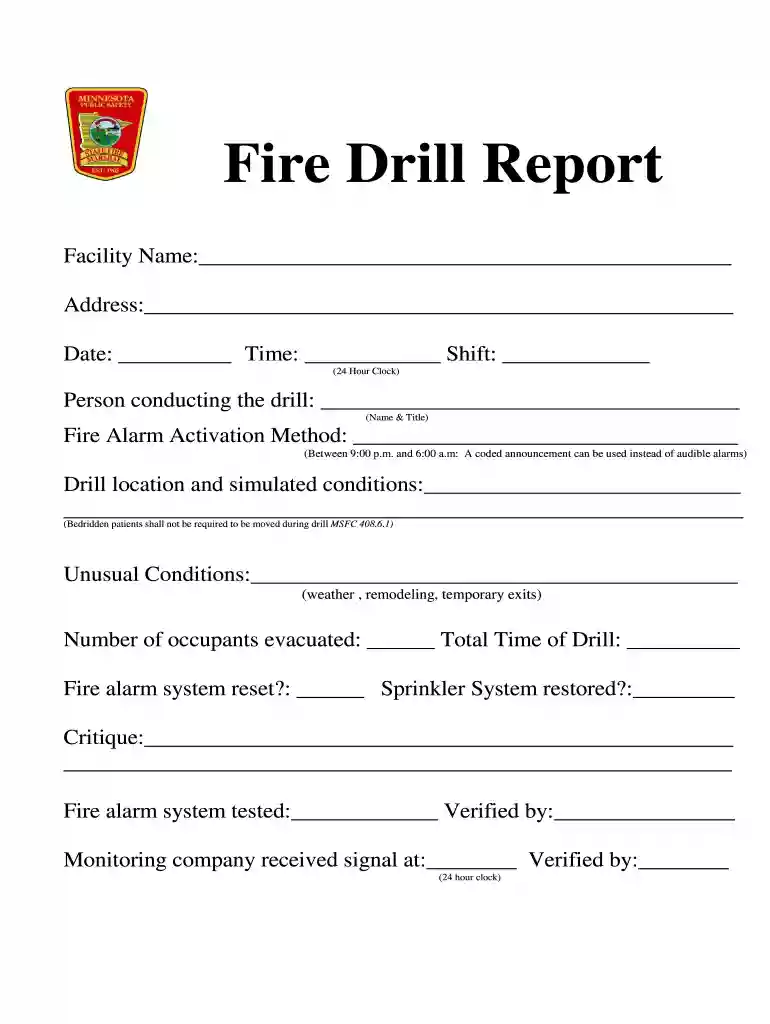
Type text, add images, blackout confidential details, add comments, highlights and more.

Draw your signature, type it, upload its image, or use your mobile device as a signature pad.

Send fire drill template word via email, link, or fax. You can also download it, export it or print it out.
A fire drill report template is a structured document used to record the essential details and outcomes of fire drills conducted within a facility. The primary purpose of this template is to ensure thorough documentation of the drills, which is crucial for evaluating the effectiveness of fire safety protocols and training programs. Typically, key components of a fire drill report include:
Understanding and utilizing this template is vital for fostering a culture of safety and compliance within any organization.
A comprehensive fire drill report template encompasses several key elements to ensure thorough documentation. These elements facilitate consistent reporting and review of fire drills, optimizing overall safety processes. The essential components typically include:
Having these elements clearly defined in the fire drill report template enhances the ability to analyze performance and compliance effectively.
Completing a fire drill report template involves a series of systematic steps for accurate documentation. These steps guide users through the process, ensuring all necessary information is collected and recorded:
Following these steps ensures a comprehensive record of each fire drill, promoting a culture of safety and preparedness.
Understanding specific terminology is crucial to navigating fire drill reporting effectively. Familiarity with these terms ensures accurate communication among team members and enhances reporting quality:
Being knowledgeable about these terms enhances the quality of discussion surrounding fire drill reports and facilitates clearer reporting.
In many jurisdictions, conducting fire drills and documenting them via a standardized report is a legal requirement. Compliance ensures that organizations adhere to safety regulations, minimizing liability in the event of a fire. Key legal considerations include:
Understanding these legal frameworks helps ensure that organizations mitigate risks and provide a safe environment for employees and visitors.
The fire drill report template is utilized by various personnel within an organization. Key users include:
Each user contributes to maintaining a high level of safety awareness and preparedness, helping to foster a culture that prioritizes fire safety.


Practical examples illustrate the utility of the fire drill report template in various contexts. Common scenarios might include:
These examples highlight the template's adaptability across various sectors, enhancing overall safety through consistent documentation.
At DocHub, your data security is our priority. We follow HIPAA, SOC2, GDPR, and other standards, so you can work on your documents with confidence.
No information is available for this page.
May 20, 2016 Fire Alarm Identification Sign. 15.7 FIRE DRILLS. When conducting annual fire drills as required by ELM, Section 853.2, the SPO coordinatesRead more
Jun 11, 2025 Idaho Residential Assisted Living Fire Drill Date of Drill: // Time of Drill: AM / PM . Shift: Day of Week: Weather:Read more


